
Election, Democracy, and Authentication

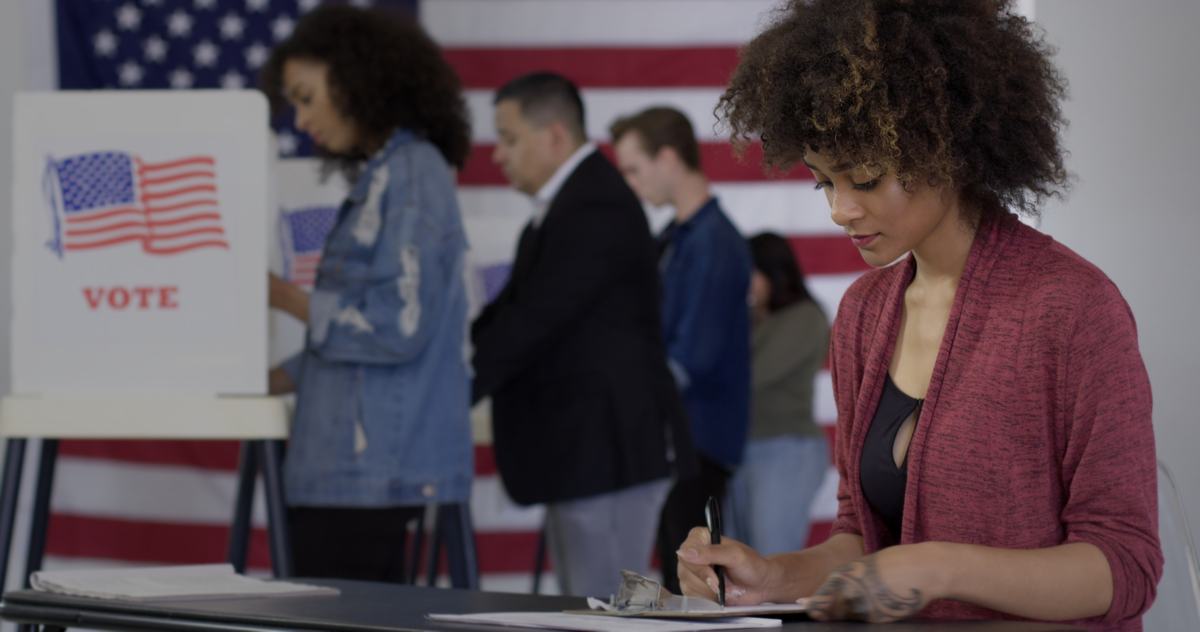
2024 promises to be an exciting year for the authentication industry, as seven of the world's ten biggest countries will be voting in national elections.
Approximately 40% of the planet's population will be casting ballots in countries ranging from the most democratic to the most autocratic. These include Iceland, India, USA, South Africa, UK, Austria, Bangladesh, Portugal, Indonesia, Taiwan, Tunisia, Russia, Pakistan, and North Korea.
While elections are a vital part of a democracy, so is authentication. A fair and authentic election cements the people's trust in its government. Elections and authentication have a longstanding relationship in that elections are usually fraught with allegations of bogus voting, fake voter identity cards, fake ballot papers and tampering with voting machines.
This article explores the use of authentication technologies in voting systems, with a brief overview of the loopholes in the current environment.
Indelible ink
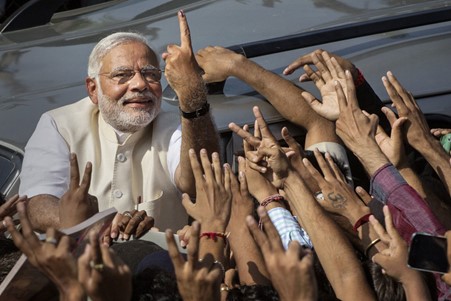
The purple fingers of voters worldwide have become almost synonymous with hopes for a transitional election and a democratic form of governance. Many countries use indelible ink – also known as electoral ink, electoral stain or phosphoric ink – as an overt security feature to ensure voters cannot cast multiple ballots.
Indelible ink sometimes complements or substitutes other anti-fraud measures, such as verifying voters' identities against official ID documents and checking voters against a registry.
In the Indian democracy, indelible ink was first used in 1962 and forms part of almost every type of election in the country. According to reports, India's Election Commission ordered 2.6 million bottles of indelible ink for use in the last national polls in 2019.
Ballot paper
Many countries, including the US, UK, Bangladesh, and Pakistan, still rely on paper as a secure way of auditing their elections and detecting potential vote tampering. For example, for its election in February, the Election Commission of Pakistan printed 250 million ballot papers carrying a watermark and security inks at a cost of $17 million. This differs from India, where people vote directly on an electronic voting machine.
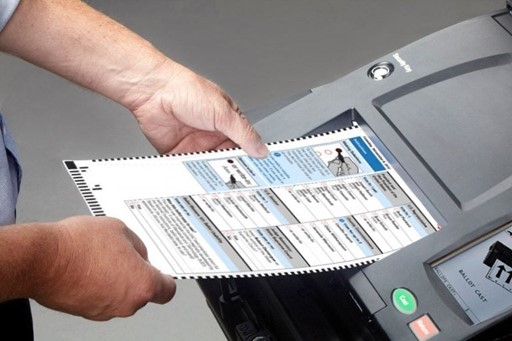
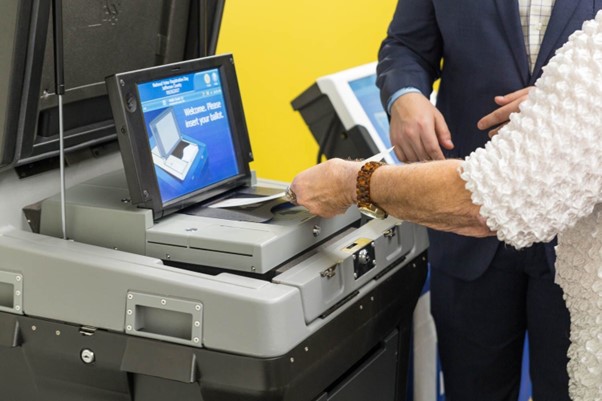
The ES&S DS200 precinct scanner and tabulator combines the attributes of a paper-based ballot system with digital image technology (source: https://www.essvote.com).
Voter identification
Generally, across the globe, election authorities rely on national documents to prove voter identification. When going to a polling location, voters in most countries are required to provide a form of photo ID to confirm they are the registered voters they claim to be.
While some countries rely on national IDs, others use specific voter identity documents. An example is India's electoral photo identity card, which exists in both physical and digital form. The physical ID card contains various security features, including hologram, guilloche and watermark.
Physical versus digital – the ongoing debate
As with many domains in the authentication world, there is an ongoing debate around physical versus digital security technologies in relation to the voting process, with arguments favouring both sides.
While the ballot paper is considered to be a tedious, costly instrument, it is also true that printing fake ballot papers requires a lot more time than hacking an electronic machine.
Furthermore, while fraudulent in-person voting is possible, it requires the fraudster to get hold of a false photo ID, which is hard to come by.
Online voting, on the other hand, relies on voter identification with some other type of credential, such as social security numbers, dates of birth, driver's licence numbers, or some other unique identifier. The problem with using these types of verification is that anyone who obtains this information could log in and vote for someone else. And if someone was able to get hold of a large amount of these identifiers through a data breach, they would be able to cast thousands of fraudulent votes.
The most significant disadvantage of an electronic voting machine is election hacking. As with any electronic device, there is always the risk that someone could illegally alter the results of an election. This could be done through physical tampering or a remote attack over the internet. Allowing people to vote using their own devices could pose significant risks, where a malicious agent could change millions of electronic votes undetected.
Consider the US election as a prime example. As the US enters a critical election year, AI-generated threats, particularly deepfakes, are emerging as a top security issue, with no reliable tools to combat them. One of the critical pillars of a democracy is trust, so ensuring that the internet is secure, reliable, and accessible for the public and those working in the election space is critical to any free and fair election.
By the time you read this article, the electoral calendar will have started. Moving forward, while the debate around physical versus digital systems continues, there is no doubt that authentication technologies continue to play a critical role in the election eco-system.
Subscriber content
Read the full article
Full access to Tax Stamp & Authentication News™ articles, newsletters and archives.