
Pharma Traceability and Authentication in India

India’s pharmaceutical industry is vital to global healthcare as it is the largest supplier of low-cost generics, vaccines, and affordable HIV medicines, as well as the third largest supplier in terms of volume, and 14th in terms of value.
The industry aims to become the world’s largest supplier of drugs by 2030, increasing its revenue to $120-130 billion, from the current $41 billion.
Thanks to a well-established domestic manufacturing base, a low-cost but skilled workforce, and a growing research and development eco-system, the Indian pharma industry is well-placed to play a more prominent role in global drug security.
Affordability and security
Despite this vital role, the industry grapples with various challenges in a multifaceted landscape where health and commerce intersect. Such challenges include counterfeiting, pricing sensitivity, and a complex global supply chain.
The industry is occasionally targeted by allegations of falsified and substandard products. For example, it received a jolt recently, when at least 19 people in Uzbekistan and 70 children in Gambia died as a result of sub-standard cough syrup.
The problem of pharmaceutical counterfeiting is a global problem, and no country can address this issue alone. The World Health Organisation (WHO) estimates that one in ten medical products circulating in low- and middle-income countries are either substandard or falsified. While these statistics could be debatable, the increasing incidents of non-compliant products pose a significant threat to India’s international image as ‘pharmacy to the world’.
How could this be happening?
Indian laws require all manufacturers to adhere to strict quality control and production practices. In fact, it boasts the second highest FDA-approved production plants. Nevertheless, there is a need to plug loopholes, identify culprits and strengthen accountability and responsibility.
In 2022, the Union Health Minister of India asked the pharma industry to act against firms manufacturing sub-standard and fake drugs. Falsified medicines are produced in large-scale pharma distribution markets such as Agra, in the state of Uttar Pradesh. Some distributors create a mix of genuine and fake drugs and pass these on to chemists. The chemists are sometimes unwitting participants in this crime, but sometimes they are actively involved.
Third party manufacturing and loan licensing (where a manufacturer allows a marketer to use its plant and machinery for making the marketer’s own pharma products) have been an integral part of the pharmaceutical industry in India for decades. According to sources, up to 80% of production may be outsourced to third parties via one of these routes. In 2017, the government issued a draft notification proposing a ban on loan licensing. However, the matter was never finalised or enforced.
Further, there has always been an issue with the sharing of accountability in cases where a manufacturer acts on behalf of a marketer (brand owner), producing drugs that are then sold by the marketer under a well-known brand name, but with the marketer not bearing any responsibility for the quality of the product.
Apart from the aforementioned challenges, several factors have contributed to the proliferation of spurious medicines, including:
Inadequate legal framework and insufficient sanctions and penalties.
Weak administration measures, not focused on fighting counterfeit products.
Pricing policies, brand awareness, fragmented distribution channels and unregulated e-commerce trade.
What is government doing?
Regulators and the government understand the gravity of the matter and have taken steps that include:
1. Making the marketer liable – to address the aforementioned issue of accountability, the Indian government amended the Drugs and Cosmetics Act, making pharmaceutical marketing firms liable for any infringements of regulations and labelling norms. The new rules came into effect in 2021.
The amendments must be viewed as a positive step in assigning responsibility for product quality to the firms whose brands, licence, and reputation are at the core of marketing those products. From a longer perspective, the initiative will lead to greater manufacturing oversight by marketing firms, enhancing the quality of products, with fewer incidents of spurious or substandard drugs in the domestic supply chain.
2. Traceability on medicine exports – in 2011, the Directorate General of Foreign Trade (DGFT) announced the implementation of a track and trace system incorporating barcode technology, as per GS1 standards, for all drugs and other pharmaceutical products exported from India.
Since then, there have been various extensions to the deadline for implementing track and trace, with the latest delay being due to pharma exporters having difficulties joining the system.
‘The date for implementing the track and trace system for the export of drug formulations, with respect to maintaining the parent-child relationship of packaging levels, and its uploading to the central portal has been extended to 1 August 2023,’ announced the DGFT in a recent communication.
3. QR codes on ingredient labels – while export regulations have existed for a long time, the domestic market has some catching up to do.
From January 2023, the use of QR codes became mandatory on active pharmaceutical ingredient (API) labels, at each packaging level, to facilitate tracking and tracing of domestic products. The codes must contain 11 data points, including a unique product identification code, name of the API, brand name (if any), name and address of the manufacturer, batch number, batch size, date of manufacturing, date of expiry or retesting, serial shipping container code, manufacturing or import licence number, and special storage conditions required (if any).
This follows a process that began in 2019 when the Drugs Technical Advisory Board (DTAB) approved a proposal mandating QR codes on APIs. At that time, DTAB estimated that the regulation would affect approximately 2,500 APIs. Later, a high-level panel was set up to build a framework for implementing QR codes on drug packs.
In addition, India also made it compulsory, from 2020, for all medicines procured under public procurement to have a barcode/QR code at the primary level of packaging.
4. Barcode or QR code for top 300 brands – this requirement will come into force in August 2023. It stipulates that eight data points must be incorporated into a ‘barcode or QR code’ printed on or affixed to the primary packaging. These points consist of a unique product identification code (eg. GTIN), proper and generic drug name, brand name, batch number, expiry date, manufacturer name and address, manufacture date, and manufacturing licence number. If there is not enough space on the primary package, the codes can be placed on the secondary packaging.
5. Testing finished goods in laboratories – in April 2023, the country’s drug regulator proposed the testing of finished goods, such as cough syrups, in government laboratories before they were exported, to avoid incidents such as those that arose in Gambia and Uzbekistan in 2022. The regulator has also proposed making it mandatory for exporters to produce a ‘certificate of analysis’ of batches exported from an approved laboratory.
Actions intensifying despite concerns
Industry observers have raised concerns with some of these measures, including the adoption of QR codes, because the industry is seeking a more practical and standardised approach for data-dense pharmaceutical labelling.
Having said this, pharma companies are intensifying their actions against spurious and substandard drugs in the country, with many brands implementing anti-counterfeiting solutions. These include 3D holograms, security labels, tamper-evident closures and seals, security labels, shrink sleeves, barcodes, and SMS authentication, as well as QR codes.
For example, Zydus Cadila, the fifth largest pharmaceutical company in India, applies a unique code, hidden beneath a scratch-off surface, to its critical drug packaging. Consumers can verify the code using the Zydus Verify app.
The company is also implementing a holographic solution for products subject to higher instances of counterfeiting. The solution carries hidden features, detected through a unique film, for identification and authentication.
Finally, Zydus Cadila is adopting the QR code government initiative on all of its products.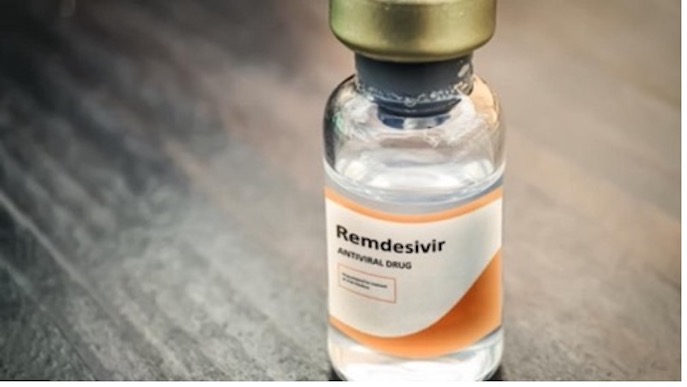

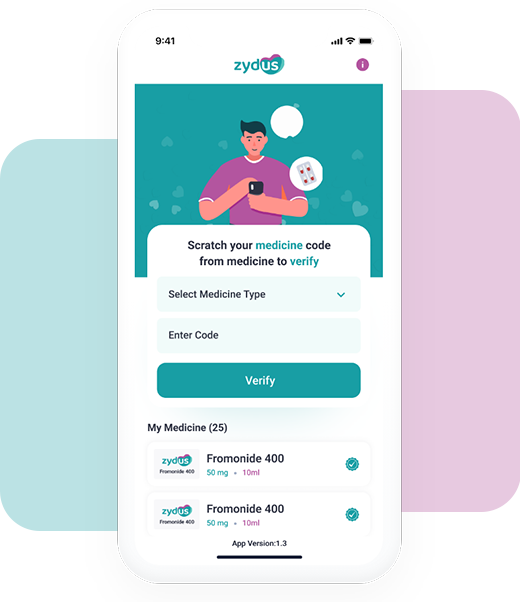 Zydus Cadila’s scratchable code and verification app.
Conclusion
The last few years have been busy for India’s pharmaceutical industry in terms of new regulations, with the government putting in place a series of measures to combat counterfeiting, diversion, and unauthorised sales.
In parallel, brands are assessing their existing infrastructure, exploring suitable technological options, and investing in upgrades needed to meet traceability requirements. However, this process needs to speed up, given that the adoption rate of different solutions is still low compared to developed economies.
Deploying integrated solutions also requires redesigning how healthcare has traditionally been provided and funded. It requires a coordinated, comprehensive approach between industry, government, and technology solution providers.
Subscriber content
Read the full article
Full access to Tax Stamp & Authentication News™ articles, newsletters and archives.