
Countering the Counterfeiters


The counterfeiting of money has been going on ever since the invention of physical money around the 6th century BC.
The main deterrent for counterfeiting in historical times was punishment – generally capital punishment, as it was considered a crime against the state. In our more enlightened times, technology is providing the deterrent.
In this article, we take a look at four new developments to protect gold bars and commemorative coins from counterfeiting.
Digital passport for gold
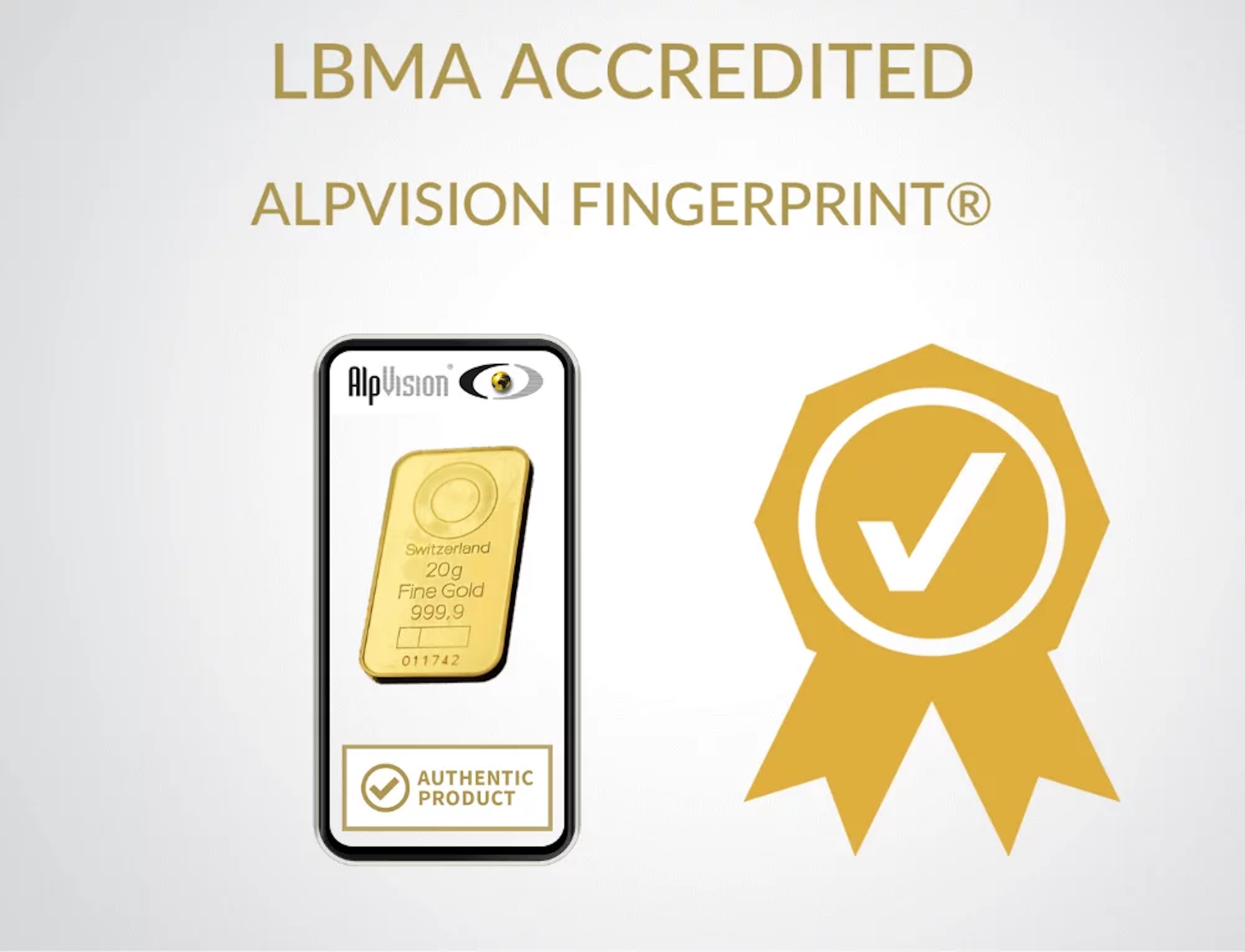
First, digital fingerprinting specialist AlpVision has announced that it has been accredited by the LBMA Gold Bar Integrity (GBI), which will allow the company to partner with major players across the global precious metals industry as part of the GBI Security Features initiative.
Launched by LBMA and the World Gold Council (WGC), the GBI initiative aims to digitally monitor gold as it moves through the entire global supply chain, making it easier to mitigate illicit trade risks and reduce the likelihood of fraudulent bars entering the formal supply chain.
AlpVision’s Fingerprint® technology identifies the unique microscopic characteristics on an item’s surface (its ‘fingerprint’) and converts this to a code that can be verified with a smartphone app. The solution, which is simple to deploy and involves no changes or additions to the product, can be implemented both during production and for products that are already in the market.
According to Fred Jordan, CEO and co-founder of AlpVision, ‘this exclusive LBMA accreditation is the ultimate pledge of trust. It is a testament to the quality and conformity of our digital invisible anti-counterfeiting technologies that can be integrated into the manufacturing processes with no additional cost, and last for a bar’s entire lifecycle. It’s the gold’s digital passport!’
The LBMA and WGC introduced the GBI Security Features initiative in 2020, and the associated application process opened in 2021. LBMA’s panel of technical experts reviews the application and determines it if meets the criteria, which include:
Bar integrity – the security feature must not significantly affect the integrity or quality of the bar in terms of weight or purity.
Applicability – the feature must be applied during the production of the bar and prior to storage or dispatch.
Robustness – the feature must be robust and readable over the lifecycle of the bar.
Readability – it must be readable under normal vault conditions.
Infrastructure – it should not require significant investment in additional reading or handling equipment and should be readable using existing technology such as barcode readers or high-resolution cameras.
Longevity – the security feature should be adaptable to ensure future-proofing, in particular to ensure that unforeseen threats are mitigated against.
Cost – the feature should not significantly add to the production costs of the bar.
Ink-based security
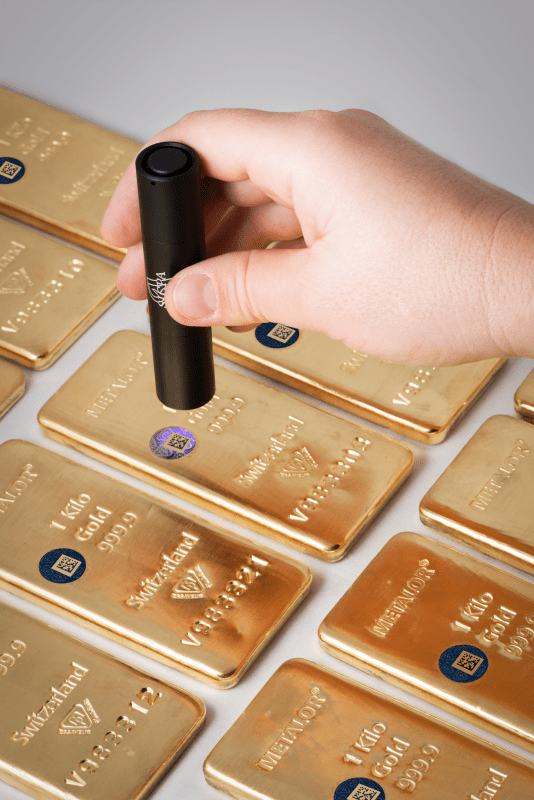
Another company that has just announced that it is now accredited by the GBI is Swiss-based security ink specialist SICPA, with BullionProtect®.
As described in the September issue of Authentication & Brand News™ (ABN), BullionProtect, which was jointly developed with the Swiss-based refiner and coating specialist Metalor Technologies, is an integrated solution comprising a security image applied directly to the bar and bespoke validation devices.
The security image is based on SICPA OASIS®, an ink comprising liquid crystal pigments, which produce a colour-changing design effect when viewed under a polarising filter. The ink adds negligible weight to the bar. Verification can be made in seconds, with a credit-card sized validator with two polarising lenses; under one lens the design turns green and under the other the pattern brightens.
Visual authentication can also be performed with a specific flashlight – which is best suited for poor lighting conditions or large volume verification, and which reveals, through two alternating beams, the same colour and pattern changes as the credit card-sized validator. With the flashlight option, up to 100 secure seals can be validated per minute.
In addition to the visual elements, a unique QR code is also embedded in the image, readable by any smartphone.
Creating a digital twin
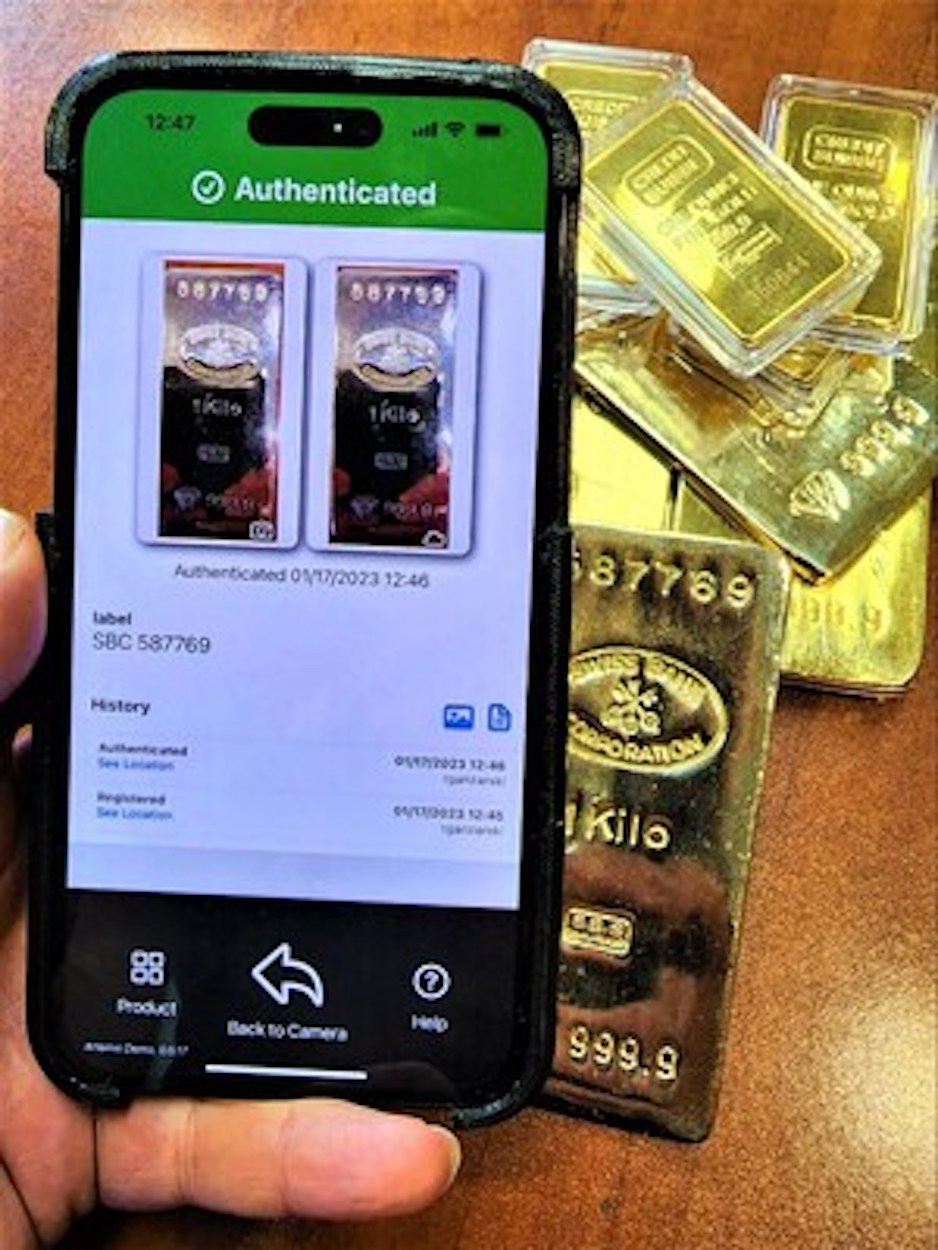
A third company accredited by the GBI is US-based Alitheon which, like AlpVision, also offers a digital fingerprinting solution.
As covered in the January issue of ABN, FeaturePrint® is an optical AI technology that digitises items to create a unique identifier that, again, does not involve any marking, modification, or addition to the product, and that is, effectively, a digital twin of the item. Using a camera, FeaturePrint enables identification, authentication, and traceability of individual items out of millions of similar ones.
In October 2022, Alitheon signed a letter of intent with blockchain-based platform aXedras to link and integrate its FeaturePrint technology into aXedras’ blockchain-backed Bullion Integrity Ledger™. The aXedras solution is the underlying data platform ensuring data and product integrity in the bullion market along the value chain of precious metals.
The other two companies that are GBI-accredited so far are the Australian truGold Consortium and the Royal Canadian Mint for its Bullion DNA™ technology.
Security and visual enhancement for coins
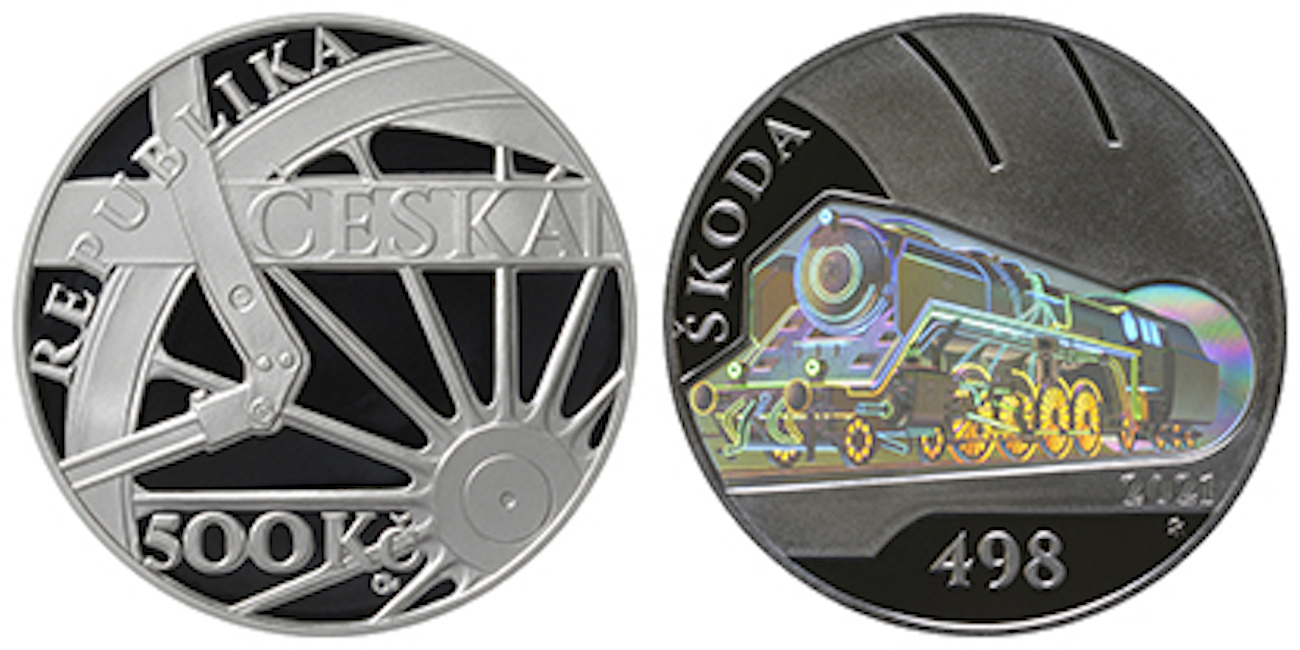
The fourth example is IQ Structures, a Czech-based specialist in optical nanostructures, which has launched IQ Mint, a technological solution for anti-counterfeit protection and the visual enhancement of precious metal objects, such as coins, medals, and investment bars.
According to the company, the unique technology for transferring holographic relief to metals enables the creation of art objects with a unique and breath-taking look, where the shimmering shine of the metal is combined with the distinctive colours and effects of holograms.
‘Investing in commemorative coins and other precious metal items is on the rise. This also means a growing demand for anti-counterfeiting protection,’ said IQ Structures CEO, Petr Franc. ‘An advanced hologram provides a huge advantage, making it possible for the genuineness of an object to be recognised by virtually anyone. This means the owner of an investment item is not dependent on a limited number of professional dealers and banks.’
Some of the visual effects of IQ Mint include rainbow colours, 3D objects with colour suppression, two-dimensional flip-flop and three-dimensional displays.
IQ Structures refers to the silver CZK 500 coin with the Skoda 489 Albatros Locomotive released last year by the Czech National Bank, which reviewers describe as an ‘eye-catching innovation’, to demonstrate some of the possibilities presented by the IQ Mint. The coin carries effects that evoke the movement of a steam locomotive, such as spinning wheels and smoke from its chimney.
Other areas of use are also emerging, such as the physical form of cryptocurrencies, says the company. Also, protection for regular, circulating, coins will come in the future, with better protection for banknotes leading to counterfeiters turning their attention to coins instead.
Holograms on coins are nothing new, having first made their appearance in the mid 1990s on an Isle of Man ‘noble’ produced by Pobjoy Mint. But, says Robert Dvorak, Managing Director, ‘when you hold an object with an IQ Mint hologram, you’ll see a huge difference’, describing it as a revolutionary technological breakthrough.
Subscriber content
Read the full article
Full access to Tax Stamp & Authentication News™ articles, newsletters and archives.