
Cracking the Case of Counterfeit Eggs

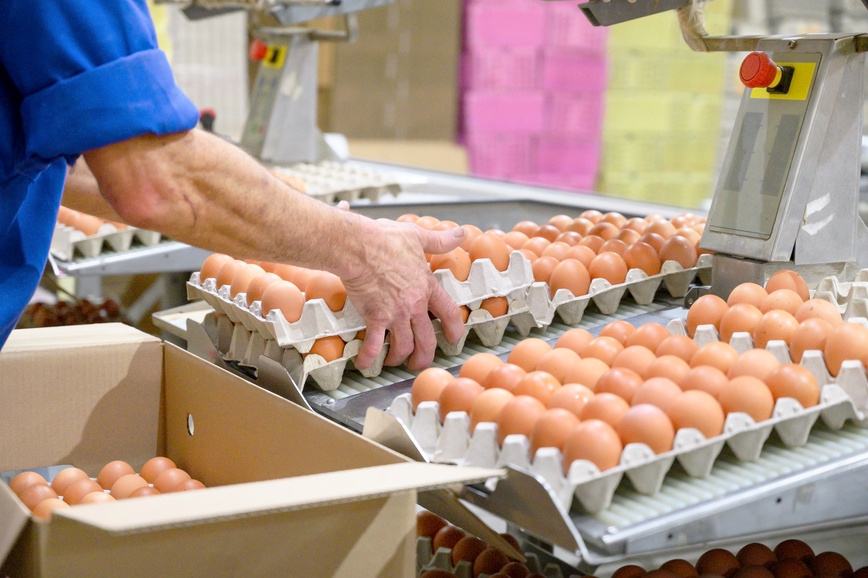
The worldwide rising cost of food, due in equal measures to the war in the Ukraine, rising shipping costs and the increase in energy bills, is in danger of creating fertile ground for an increase in food fraud. This often under reported aspect of authentication and brand protection is set to become of growing concern to producers and consumers alike.
The 2020 Annual Report of the EU Agri-Food Fraud Network (EU FFN) and the Administrative Assistance and Cooperation system for Food Fraud (AAC-FF) 1 found that the number of cases per year has more than doubled in the past five years, going from 157 in 2016 to 349 in 2020. The increase is in some part due to the sharing of information on suspected cross-border fraud violations, which has proven to be essential in better identifying, investigating and protecting EU customers against illegal practices.
Despite these measures aimed at bringing visibility to the shady world of counterfeit and adulterated food stuffs, there still persists a notion that something as fundamental as the food we put in our mouths must be immune from fraud.
A few years back, reports of counterfeit eggs being sold in China were all but written off as an urban myth, but it turns out, the problem is real – and now researchers are looking into ways to detect the fraud.
Since the initial report, there has been a steady stream of other cases of eggs with whites and yolks made from sodium alginate, gelatine and other chemical ingredients like colourings, with shells made of calcium chloride.
Fabricated eggs lack the nutritional value of real eggs, but more worryingly they pose a risk of severe side effects due to potentially hazardous chemical ingredients, including increased blood pressure, upset stomach, nausea, and vomiting.
The fakes are apparently fairly easy to make and hard to distinguish from the real thing, often being introduced alongside real eggs in shipments to try to hide the scam.
Researchers in South Korea and the US have been looking at techniques that could be used to screen for fake eggs rapidly at an industrial scale and in a non-destructive way, and think that an approach based on Fourier transform infrared (FT-IR) spectroscopy could be the answer.
The team combined FT-IR spectra with statistical analyses for discriminating fabricated from real eggs and concluded that the technique was 99% accurate.
They compared eggs bought at a market in South Korea to eggs they manufactured using off-the-shelf lab ingredients – sodium alginate, tartrazine for the yolk colouring, and calcium chloride for the shell.
‘The entire fabrication process was conducted at room temperature and required five minutes to produce a single fabricated egg,’ wrote the authors, whose work is published in the journal Infrared Physics & Technology 2.
The study shows that it is feasible to build an advanced detection technique for fabricated eggs using FT-IR spectroscopy and multivariate analytical methods, they conclude.
‘This research will be pursued further in the future using other varieties of egg samples to examine the potential of the developed model for detecting other adulterations of eggs in real-time samples.’
1 - https://ec.europa.eu/food/system/ files/2021-09/ff_ffn_annual-report_2020_1. pdf
2 - www.sciencedirect.com/science/article/abs/pii/S135044952200144X
Subscriber content
Read the full article
Full access to Tax Stamp & Authentication News™ articles, newsletters and archives.