
Weaving Barcodes into the Fabric of Clothing

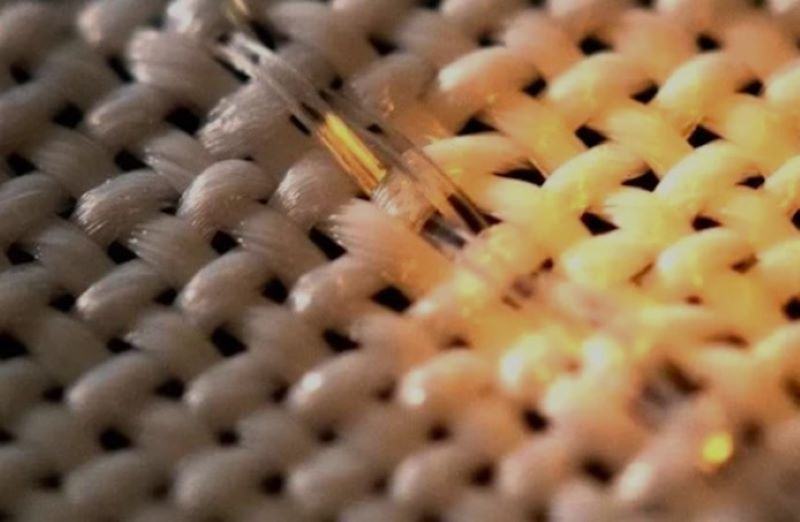
A startup from the University of Michigan in the US, Fibarcode, is developing a technology to weave barcodes into fabrics that could help make clothing and other textiles more recyclable and harder to counterfeit.
The company is developing the technology – based on photonic fibres – with the help of a $1.6 million grant from the National Science Foundation (NSF). The fibres can be customised to absorb specific wavelengths of light, ranging from ultraviolet to infrared, by varying the amount and thickness of acrylic and polycarbonate layers inside.
While the materials are clear on their own, they bend and refract light when combined, creating optical effects that can look like colour – similar to the wings of a butterfly, according to the company.
Less than 15% of the 92 million tonnes of clothing and other textiles discarded annually are recycled, in part because they are so difficult to sort, according to Fibarcode.
In part, that is because ordinary tags or tagless labels often don't make it to the end of a garment's life, as they may be cut away or wear off.
‘Recycling, repair operations and counterfeit prevention could be more effective if a difficult-to-fake tag was woven into the fabric, invisible until read,’ said Fibarcode.
Photonic fibres could enable this by creating combinations of absorbed wavelengths that act like barcodes, giving fabric a unique identity that can be linked to information like fabric content, care advice, and the thread supplier, which can be accessed using a scanner.
The company said the NSF grant will be used to launch its first pilot programme and partner with industry stakeholders and recycling centres. It is currently seeking additional collaborators to accelerate the adoption of its technology across the supply chain.
Fibarcode was founded in 2024 by Brian Iezzi, a University of Michigan materials science and engineering doctoral graduate, who co-invented and developed the technology in the lab of Max Shtein, professor of materials science and engineering and chemical engineering.
Get the TSAN Weekly News delivered free to your inbox.