
Robots That See Like Insects

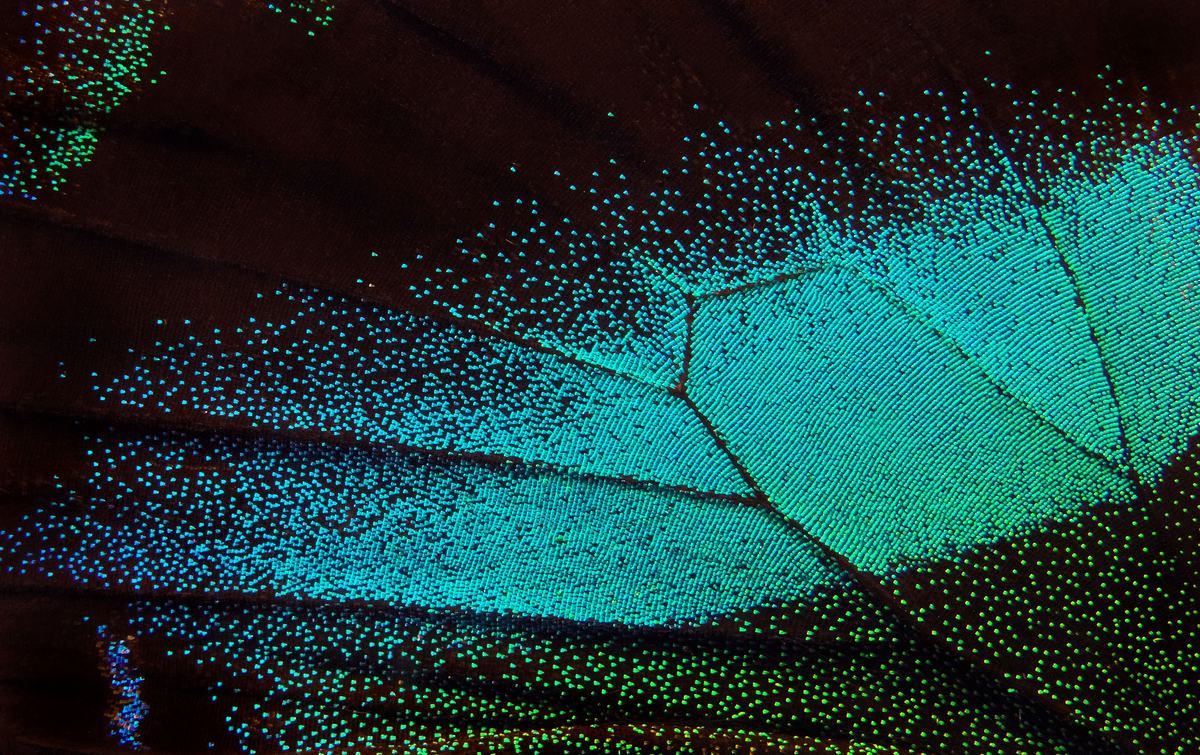
Researchers at the University of Hong Kong have developed a rubber-like colour-changing system called Morphable Concavity Array (MoCA), with the potential to bestow robots with compound vision, similar to an insect.
This unique material comprises numerous pixels, each of which can be manipulated separately to achieve a desired colour pattern. ‘We believe this pixelating strategy can be used to design further hierarchical interfaces and multiple optical systems such as artificial compound eyes or crystalline lenses for biomimetic and robotic applications,’ the researchers noted.
Compound eye vision is observed in insects, where, unlike human eyes, insects see pixelated images. Although human eyes can produce colourful images with high clarity and resolution, they can’t focus on multiple objects simultaneously or see UV rays.
Insect eyes, on the other hand, have multiple lenses, which give them a wide field of vision, ie. they can capture wavelengths ranging from UV to red light. The compound eyes also enable them to focus on numerous objects at once.
So, imagine what such a vision system could do for sectors such as healthcare, manufacturing, and product traceability and authentication.
Robots with ‘eyes’ (ie. artificial vision systems) are already used for quality sorting and traceability in food manufacturing environments.
Whereas blind robots – ie. those that operate without vision systems – are often deployed to complete simple repetitive tasks, robots with machine vision react intuitively to their surroundings and, when programmed effectively, can identify and remove unsafe foods from production.
With a 2D vision system, the robot is equipped with a single camera. This approach is better suited for applications where reading colours or textures is important, like barcode detection. 3D systems, on the other hand, operate with multiple cameras and can check for product defects, inspect packaging and inspect the end product.
Machine vision systems are now being recognised as more effective and less costly for detecting food fraud than conventional detection techniques such as ‘electronic tongues’ or ‘electronic noses’, which assess whether something tastes or smells real, or spectroscopy, which assesses the absorption and emission of light to determine if something is authentic.
One example where machine vision has been used to detect food fraud relates to ginger powder, where researchers used an automated grading system based on image processing and deep learning techniques. The results showed that machine vision was able to rate ginger powder images with 99.7% accuracy.
The question now is: how much further could artificial compound vision in robots take the fraud detection process?
Subscriber content
Read the full article
Full access to Tax Stamp & Authentication News™ articles, newsletters and archives.