
‘Local Footprint’ is Key to Tackling Counterfeits in Africa, Says Risk Management Specialist

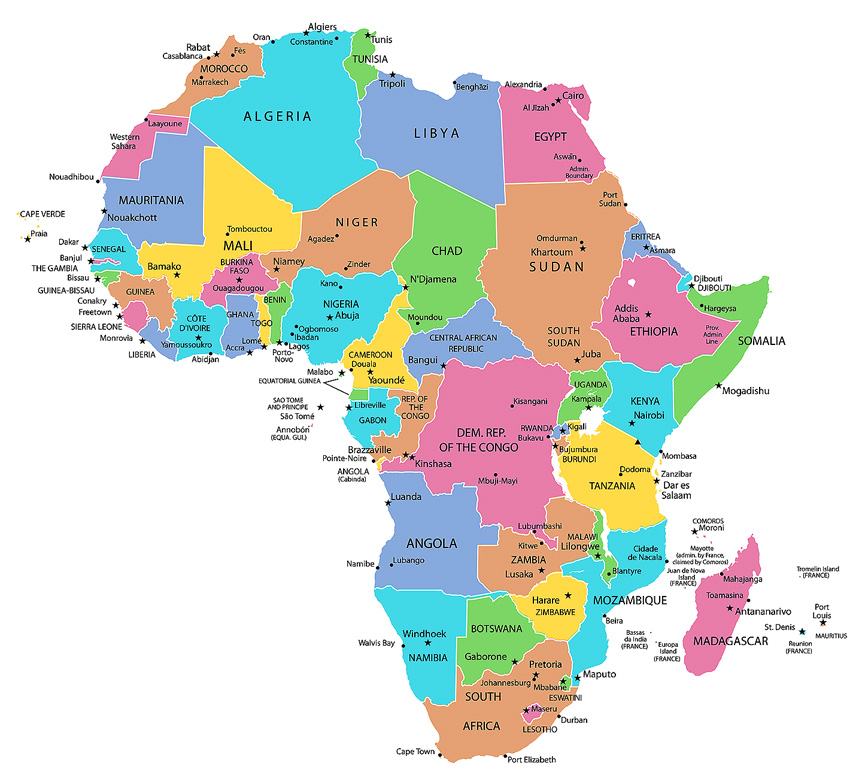
At the recent Anti-Counterfeiting World Law Summit, in London, Vincent Helluy, Head of Illicit Trade Risk Management – Content & Brand Protection at Forward Global spoke about brand protection field operations in Africa.
‘Many brands are reluctant to initiate brand protection operations (in Africa) because they believe it will be very complex or because they don’t really know what is going on,’ he said, in a pre-conference interview with Global Legal Post.
To counter this problem, he believes the key to success in Africa is to have a ‘local footprint’. This doesn’t just mean having local field investigators in place, but a broad network of stakeholders, not just in towns but also in the countryside, composed of decision-makers, lawyers, merchants, NGOs, academics, and researchers. These stakeholders carry a lot of information with them as they know a lot of people on the ground. It is also important to develop relationships with the police and regulatory bodies, he added.
‘Every layer of society is important, which is not so true in North America and Europe, where you can do your job without knowing people on the street,’ argued Helluy. ‘We know brands that are having great success in Africa fighting counterfeits and have better results than in Europe. That is because of adopting this more local approach’.
Having a local network in place makes it easier to operate in this highly agile, highly flexible region, where businesses can be easily established, with a lot less paperwork, and where it is easier to cross borders compared to other parts of the world.
‘You have to fight this flexibility, this agility, which is very good for legitimate business but very challenging when it comes to fighting criminals,’ he explained.
Another quality that is unique to Africa is that most business decisions and transactions are done offline and not online. While investigations carried out in Europe can be conducted from a desk, in Africa ‘most of the work has to be done on the ground, especially in Francophone countries, because there is an oral tradition and not a written tradition’. Most deals are done verbally, he pointed out.
There are also many places in Africa that do not have street names or have houses with no number, or registries that are not kept up to date. This makes finding information from a desk very difficult.
Many individuals will also exploit poverty in Africa to recruit and corrupt people. So that is a big challenge, he added.
Hence the need for a local, ‘boots on ground’ approach when it comes to tackling counterfeits in Africa.
Subscriber content
Read the full article
Full access to Tax Stamp & Authentication News™ articles, newsletters and archives.