
Demax Pushes e-Beam to the Maximum

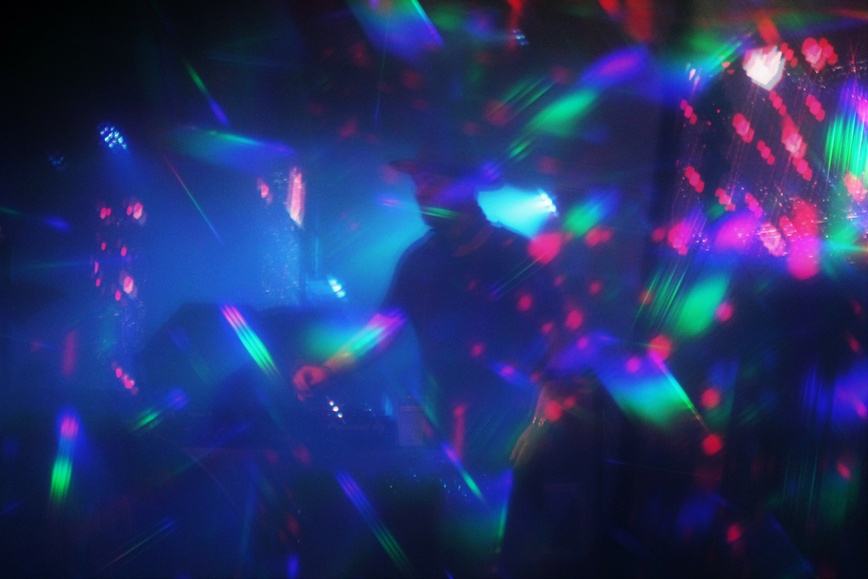
Demax Holograms was one of the first manufacturers of security holograms in eastern Europe and now sells its products to over 70 different countries. It took the opportunity to present its latest nano-optical elements for physical security at the recent Tax Stamp & Traceability Forum™ in Tbilisi, Georgia (2-4 October 2023).
Demax’s in-house electron-beam lithographic lab is used to fabricate nano- optical structures under the e-LIDOGRAM range, which fulfil all three levels of deterrence against counterfeiting: visual, aided and forensic.
Three of the excise and traceability programmes fulfilled by Demax were described by Valentin Monovski during his presentation: two for holographic tax stamps on alcohol (in Kazakhstan and Uzbekistan) and the third for the Kosovo Medicines Agency.
Valentin then moved on to discuss some of the challenges associated with viewing fully 3D holographic imagery in normal diffuse white light. The primary challenge is that many existing diffractive techniques don’t contain vertical parallax, which in turn reduces 3D perception. Also, the images blur under scattered light.
With Demax’s e-MOTION, as Valentin explained, a contrast flipping effect and object morphing can be achieved without compromising full parallax. (‘Parallax’ refers to the apparent movement of objects when viewed from different positions. An everyday example of this can be observed by holding one finger of each hand at arm’s length in front of your eyes, one in front of the other, so you can see only the front finger; then move your head from side to side to see the finger behind.
The next optical technique to be reviewed was the control of fixed pastel colours that remain constant over a wide range of viewing angles. When the e-LIDOGRAM is tilted through a large angle, the nano- optical pastel colour undergoes a distinct switch, which differentiates it from the ones printed with pigments or inks on a document. Controlling the nano- structures of the e-LIDOGRAM creates a palette of pastel structured colour, which Demax calls the ‘Pastel Fountain Fill’, with a smooth gradient transition to fill the background of image scenes.
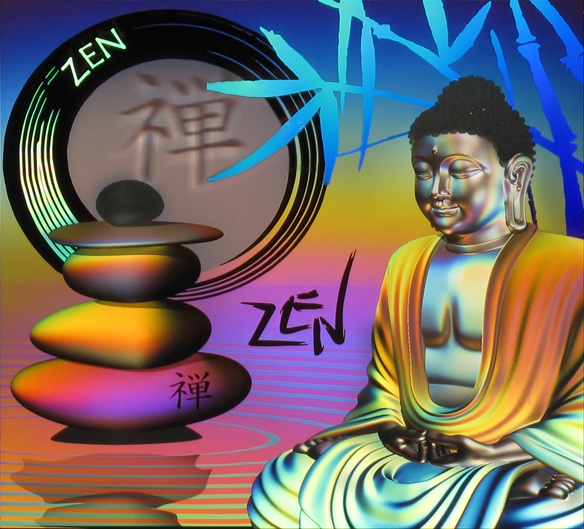 Pastel Fountain Fill (© Demax).
Valentin’s paper went on to describe a series of three distinct bas-relief effects that appear to project out from the hologram’s surface as a 3D object element.
The first was a pastel bas-relief effect.
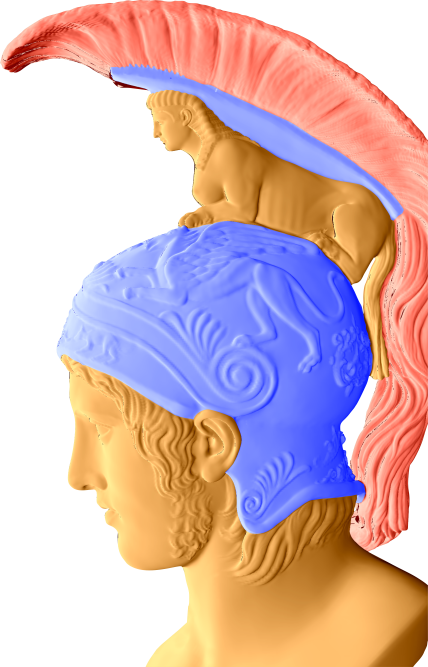 Bas-relief pastel.
The second was a bas-relief achromatic element that creates a matte and glass effect on projected parts of the object. And the third was a bas-relief black element that projects a striking light and shadow effect.
Valentin concluded his presentation by summarising that Demax has created nano-optical elements rendering black 2D and 3D images that allow modern designs that appear dark at the prime viewing angle but then shift to saturated red, blue and green when the document is tilted to an oblique angle.
Subscriber content
Read the full article
Full access to Tax Stamp & Authentication News™ articles, newsletters and archives.