
Optical & Digital Document Security Conference 2023 – An Indepth Review


The Optical & Digital Document Security™ (ODDS) conference and tabletop exhibition, held in Prague, Czech Republic from 17-19 April 2023, attracted 172 delegates from 94 global organisations, along with 24 representatives from government and research academia.
ODDS continued with its global commitment to provide a platform for showcasing developments that integrate optical and digital science into solutions for securing identities and documents.
The conference was preceded by an afternoon workshop on 'Smartphones in the New ODDS World: Effective and/or Convenient?' conducted by Dr Alan Hodgson, an expert in material science and fellow of the SPRITE+ university collaboration.
Dr Hodgson shared with the audience a broad landscape of smartphone technologies, lifecycles, challenges, and opportunities in the digitisation era, from a political, economic, social, and technical standpoint. Key questions debated were: are we becoming over-reliant on smartphones? And do convenience and security make good bedfellows?
The workshop ended with case studies on smartphones used as substitutes for cash, provers of identity, and readers of codes.
The workshop was based on Reconnaissance's upcoming special report 'Smartphones for Authentication', for launch later this year. For more information or to book an advertising space, contact [email protected].
Day 2
Following the workshop on the first day, the conference was opened on 18 April with a keynote address from Ian Lancaster, Conference Chairman, who thanked the conference committee, exhibitors and delegates for their commitment to building the new ODDS world, where physical meets digital.
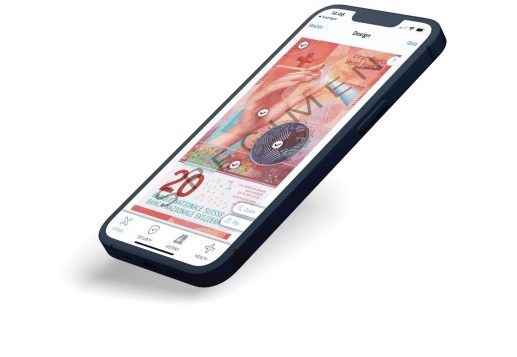
As an example of the physical/digital link, Duncan Reid from Smithers gave a demonstration of several apps developed by banknote providers and brand owners for public education, showing key security and identification features. These included the Orell Füssli Discovery app, the Dutch National Bank's 'Check Your Banknote' app, and Koenig & Bauer's ValiCash™ app (for authenticating intaglio print), and Public Smill™ app for storing digital content on banknotes.
MagVision then shared how the combination of two different magnetic codes could enhance the security of documents.
UnderCurrency, Mexico, shared its PerceptNote™ software for introducing rapid iteration testing to banknote design. PerceptNote simulates payment transaction conditions with new banknote designs, taking into account human capabilities to perceive colour, denomination, and security features. This gives the designer a first insight into the ability of a new banknote design to accomplish its function and allows it to be compared to other banknotes.
The session's highlight was a presentation from the Bank of Spain on Neurocash. Developed by the Bank together with the LENI Institute, the technology uses artificial intelligence (AI) algorithms to measure how humans behave when interacting with a banknote, in order to gain insights into visual interest, tactile perception, attention to certain areas, emotions, motivation, mental load and level of stimulation.
Koenig & Bauer Banknote Solutions presented its new authentication solution based on non-artificial microstructures. According to the company, next-level authentication solutions must address high security, sustainability, the ability to work offline and the ability to act fast. In addition, given that the micro-characteristics of documents offer myriad high-security possibilities, in Koenig & Bauer's view there is no need to integrate additional features such as chemical taggants and 'phygital' security.
There was an exciting presentation by the Institute Industrial IT on how AI was used to prevent supply shortages of masks during COVID-19, as well as to develop a semi- automated system for validating the authenticity of certificates for personal protective equipment kits.
The Secure Identity Alliance provided an overview of the evolution of biometrics in document security and the need to build a cohesive and interconnected biometric ID infrastructure and services.
Veridos in Germany provided details of government Public Key Structure (PKI) usage in electronic ID documents.
Bundesdruckerei presented the world's first e-passport to meet the security requirements of post-quantum cryptography. This was the result of the company's 'PoQuID' joint research project with Infineon Technologies, under the leadership of Fraunhofer AISEC, and funded by the German Federal Ministry for Economic Affairs and Climate Action.
Bundesdruckerei explained that quantum computers present a potential threat to the security of electronic documents in that they could break widely-used cryptographic algorithms. The good news, however, is that quantum-secure cryptographic algorithms already exist. These algorithms are based on mathematically complex problems, and their standardisation is ongoing.
Day 3
Day 3 of the conference began with a review of ways in which digital security features could be counterfeited.
Thymaris shared examples of various processes by which barcodes can be copied and why there is a need to layer barcodes with covert and forensic authentication features. While the first layer of the barcode facilitates fast screening by smartphones, the second layer, carrying the authentication features, facilitates anti- counterfeiting applications. Thymaris sees optical and digital security features as complementary twins that work together to defeat attempts to copy overt barcodes.
The University of Twente, Netherlands, along with InverID, shared their new product, ReadID. The idea is to design machine-readable travel documents with machine learning-based systems to automate tasks that were previously performed by humans. An example of this is banks that perform identity-proofing remotely. If a customer wants to open a bank account online, they can do so by scanning their identity document and extracting information automatically from it.
Bundesdruckerei shared an overview of the German identity card and the use of polycarbonate inks to personalise polycarbonate documents.
There were interesting papers from IQ Structures on applications in DOVID design and a fresh approach by a young researcher from Chromatir who is developing structural colour technology for security, decorative and optical sensing applications.
Distinkt showcased its near infrared- induced colour/fluorescent changing inks (see ABN February 2023), and 4 Plate presented a new feature based on reflective optically variable image devices (ROVIDs) to protect laser-personalised data.
OVD Kinegram shared the company's wide range of security features based on structural colours and the methods for preparing these features. The company also presented the Rotation-Induced Colour Shift (RICS) feature, based on linear gratings, which offers colour movement upon rotation of an ID document or by tilting it from left to right.
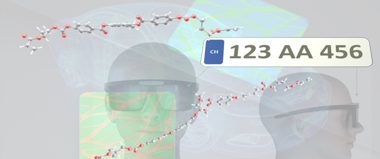
SICPA provided a different perspective for identifying vehicle plates, using liquid crystal technology. Worldwide, incidents involving illegal licence plates are increasing. Criminals are hiding their identities by using counterfeited, forged, or stolen licence plates on their motor vehicles and, according to estimates, this practice rose by over 280% between 2013 and 2019.
While there are existing solutions to secure licence plates, the paper outlined how liquid crystal technology could be used to facilitate the identification of fake licence plates from a distance – connecting physical with digital.
The BIG debate – is there a future for physical security documents?
Ian Lancaster, as Conference Chairman, led the 'big debate' of the conference, with panellists from Institute Industrial IT, Secure Identity Alliance, Document Security Alliance, and Bundesdruckerei.
The questions addressed were:
Digital is coming and we should embrace it. But what about the future of physical security? Are we driving enough innovation to digital?
Do convenience and security make good bedfellows?
Are our documents fit for security features?
What about our privacy? Does relying too much on digital security pose a threat to personal privacy?
It was agreed that these issues are actually much bigger than we think, and require the support of our entire community to amplify debate, and create awareness among the younger generation about the need to create a balance between physical and digital.
There are pros and cons with both physical and digital solutions and we need to address these in combination to create a secure and safe world. New generation security features must be clever and convenient. There is a no future for digital alone, mobile is not the answer for everything, and we need human-machine relationships with space for both physical and digital technologies.
The next ODDS will take place in Lisbon, Portugal in April 2024.
Subscriber content
Read the full article
Full access to Tax Stamp & Authentication News™ articles, newsletters and archives.