
Raising the Counterfeiting Bar with Double-Exclusive LEP Secure Inks
High security printing is based on features made available exclusively for that market. In the case of special inks, for example, this includes pigments with several modes of fluorescence, rare earth pigments, or different types of color shifting.

LEP Electro-Ink. Pigments encapsulated within resins floating in a liquid carrier.
But it’s all too common that after an exclusive pigment is released for the high security printing market, several similar alternatives become available. And from that point on, the amount of time to get hold of an alternative ink that may be used for counterfeiting is quite short. Why?
Producing inks for widely used print technologies such as offset, gravure, flexography, dry-electrophotography, and inkjet is basically a matter of engineering effort. As a result, the high security printing market finds itself in a continuous race to invent more and more novel pigments.
How can we stop, or at least slow down, that race? A good option is to use a print technology in which the ink-making process is exclusive and not available to counterfeiters. With such technology, even non-secure pigments can be used to create a security ink. Another condition for using such exclusive ink technology is that it will be possible to identify the technology of the ink on the printed security document.
HP Indigo’s inks are based on Liquid Electro-Photography (in short LEP). LEP is a proprietary HP Indigo digital printing technology, used by thousands of print service providers around the world, for commercial and industrial applications, and now also for a Secure Press version for the high security market.
HP Indigo LEP is a thermal offset printing process in which each color separation is transferred from a reusable photo imaging plate (PIP) onto a heated blanket. The heated blanket then causes the pigment-carrying particles within HP Indigo Electro-Ink to melt and blend into a smooth film. As this warm film makes contact with the cooler substrate, it solidifies quickly and adheres firmly to the substrate with almost no change in dimension or shape.
The LEP ink reacts with electric fields forming the liquid electrophotography proprietary print engine. That is why it is named Electro-Ink.
The ink is also unique in the sense that it can employ pigments of almost any dimension, from nano sizes to many microns, and types such as spot colors, UV and IR fluorescent, color-shifting, taggants, conductive, magnetic, and others. All inks are printed digitally to an offset-like quality.
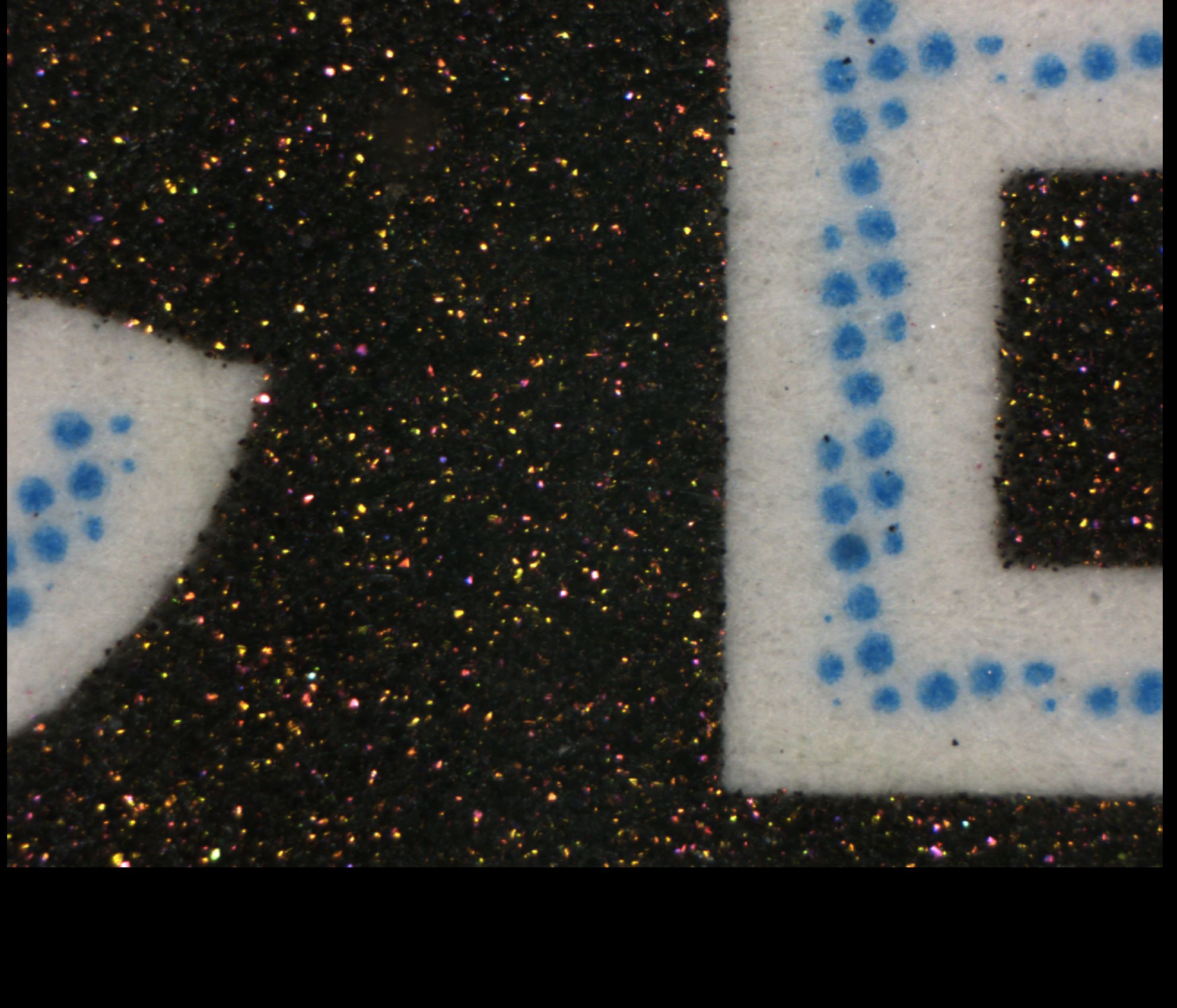
Digitally printed color-shifting Electro-Ink. Only 1 µm thick.
The LEP ink-making process is an HP Indigo proprietary technology of its own. The inks are designed and produced exclusively by HP Indigo for HP Indigo presses, including the HP Indigo Secure Press.
So, what’s the bottom line?
Any ink that HP Indigo offers exclusively to the high security market is really exclusive, since there is no other player able to produce such electro-inks. Electro-Inks containing exclusive pigments are regarded as double-exclusivity Inks, placing a very high bar for counterfeiters to rise above. The only way to imitate them would be to both find the pigment alternative, and also a way to develop and produce the unique Electro-Ink.
Another key compatibility of these inks with high security applications stems from the ability to detect forensically that the document was printed by LEP technology. Since LEP print technology uses liquid ink and an offset-like blanket, the printout is mostly similar to offset printing.
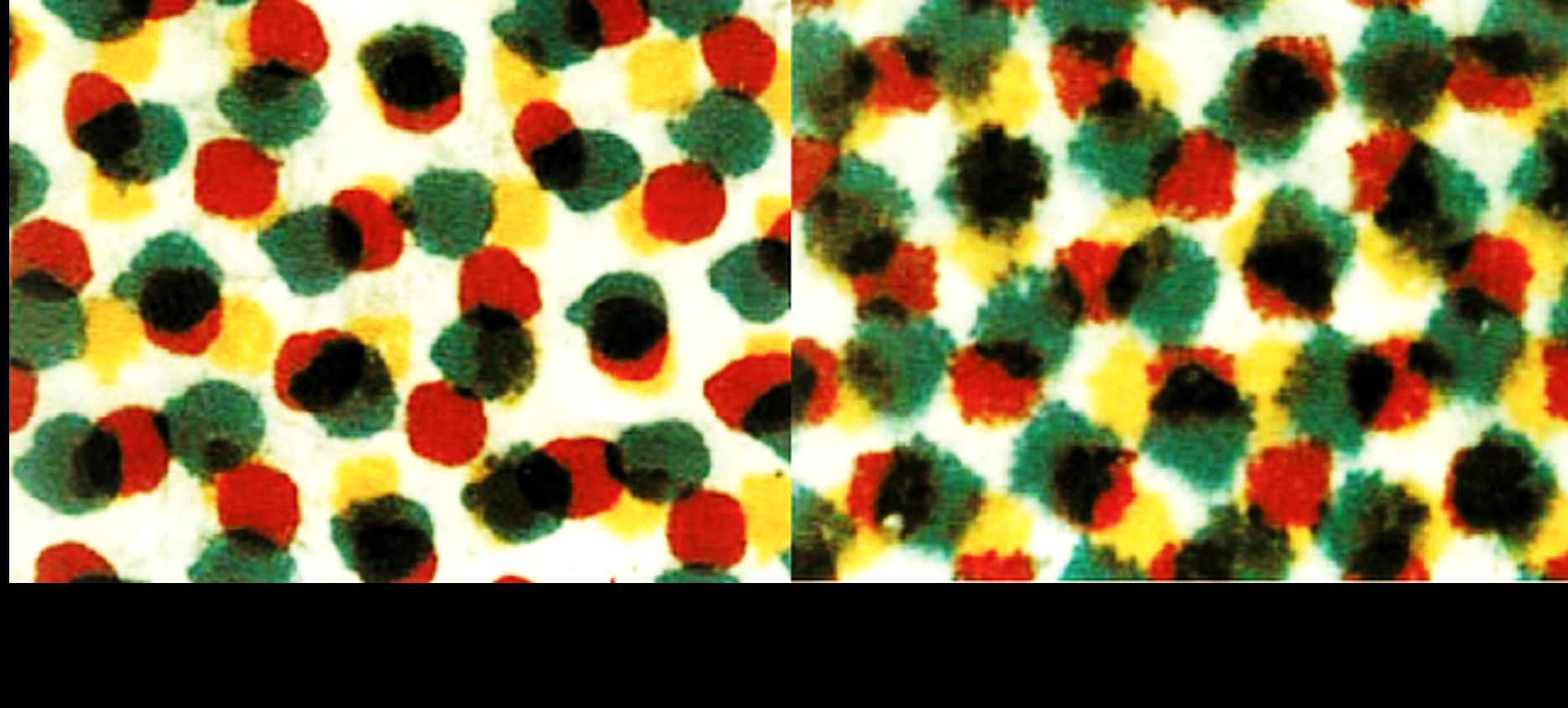
LEP dots (left) versus offset dots (right).
There are several differentiators and identifiers forensic experts can use, such as a simple magnifying glass, as well as second level identifiers that HP Indigo can analyse in the physical and chemical properties of the ink. The simplest, non-destructive identifier for forensic experts is to look at the shape of the edges of the dots and lines.
In LEP technology, the edges of LEP-printed dots or lines are smoother than in offset. This is because with offset printing, the image is transferred under pressure in a wet form, which causes the ink to squeeze out of its original shape. With LEP technology, the image is dried-out on the blanket before the transfer, so it’s less deformed.
For additional useful references on this subject, please refer to the DP3, digital print preservation portal at www.dp3project.org/resources/newsletter-archive/v19/id-tips.
The HP Indigo LEP digital printing proprietary technology allows exclusive inks even when using non-exclusive pigments. With the use of exclusive pigments, HP Indigo Secure Printing is the only provider on the market able to provide double-exclusivity inks, setting a high bar for counterfeiters.
Subscriber content
Read the full article
Full access to Tax Stamp & Authentication News™ articles, newsletters and archives.