
Canada’s Cannabis Industry Calls for Single Tax Stamp


As the first G20 nation to legalise recreational cannabis, Canada is well-placed to set the regulatory blueprint for the world. But there are still kinks to be ironed out, including a call by operators for a single national excise stamp to replace the current provincial stamps.
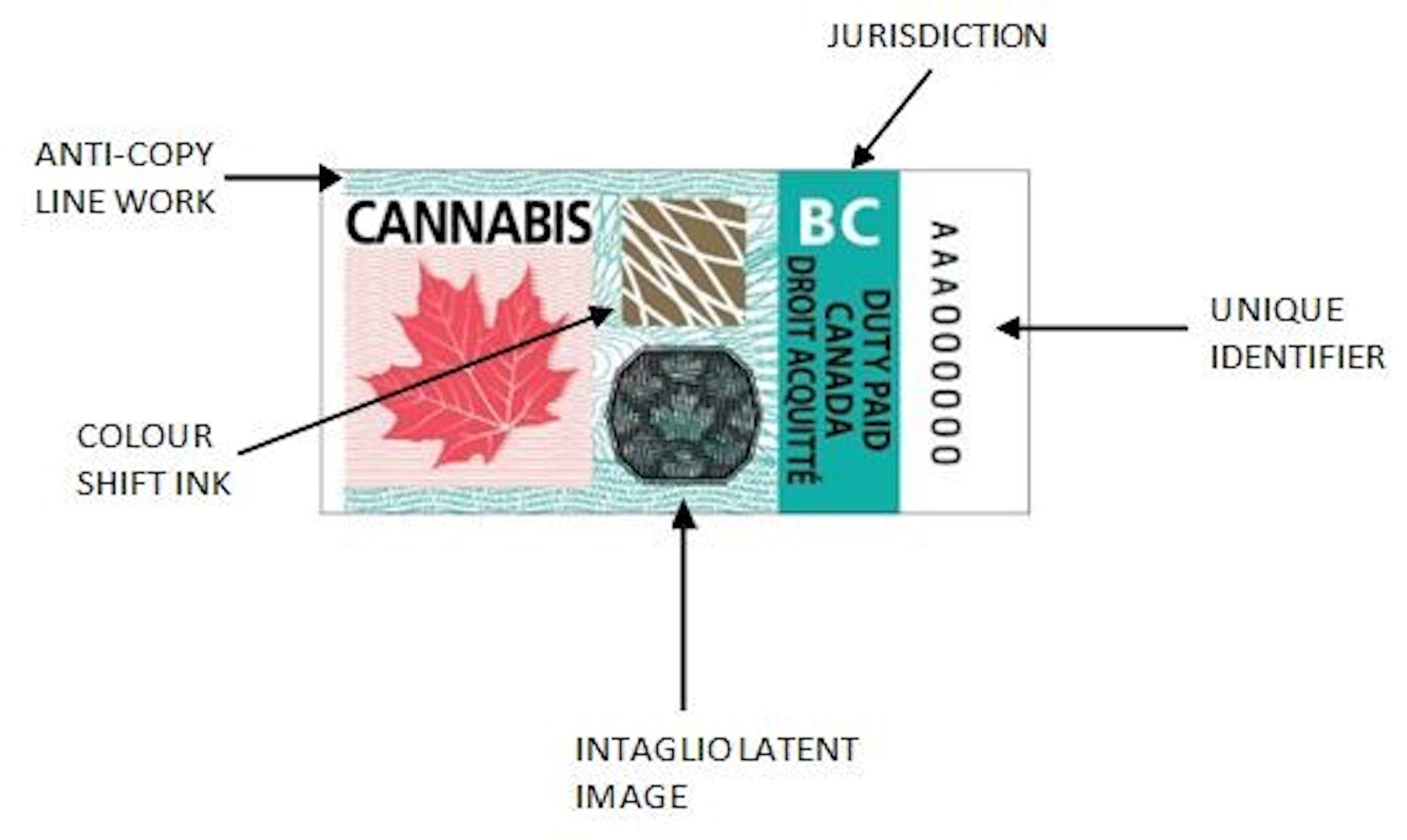
© Canada Revenue Agency.
As highlighted in EY Canada’s ‘state of the industry’ report, the Canadian cannabis market has continued to grow at a double-digit rate since legalisation – rising from a market size of $1.2 billion in 2019 to $4.7 billion in 2022 – with more than 3,000 retail locations in the country.
In an EY Global Cannabis survey of CEOs, executives identified excessive competition and ongoing pricing pressure as their primary concerns. Others pointed to oversupply and inventory build-up, inefficiencies in the supply chain, and excessive government taxes and markups that made it difficult to compete with the unregulated and untaxed illicit market.
One regulatory measure that has provided relief and helped to keep profits out of the pockets of criminals is a reduction in price margins. In addition, cannabis operators are now calling for a single national excise stamp to replace the current requirement for a different stamp in each of Canada’s thirteen provinces and territories, which significantly increases packaging costs. This would be contingent on harmonising existing federal and provincial excise duty rates into a single uniform national rate.
Current tax stamp system
Cannabis stamps were first introduced by the Canada Revenue Agency (CRA) in 2019 as an extension to the country’s existing tobacco stamp contract, awarded to Canadian Bank Note Company (CBN) with SICPA as sub-contractor.
The tobacco stamp programme provides a precedent for the design, manufacture, and distribution of stamps in Canada. The stamps serve as proof of tax payment and enable the CRA to maintain a comprehensive database of stamp orders, ensuring transparency and facilitating audits by the provinces.
Both the tobacco and cannabis stamps carry the same design, with similar informational elements and security features.
While the current stamps are available in both a ‘federal’ version (marked ‘CAN’) and a suite of provincial versions, the CRA has sole authority over the stamp design, manufacture and distribution, which includes the authority to limit the quantity of stamps issued and to whom. This has resulted in a uniform stamp design across all states, with different colours and abbreviations (eg. ‘AB’ for Alberta and ‘MB’ for Manitoba’) for differentiating the stamps.
The stamps currently provide proof of tax payment at either federal level only, or at federal and provincial level, depending on whether the province in which the product is sold has adopted the regime (which is not mandatory at provincial level). However, only one stamp needs to be applied to each product, not two.
Implementing a single national excise stamp system in Canada’s cannabis industry will streamline operations, reduce packaging costs, and improve competitiveness. Harmonising federal and provincial excise duty rates will be a crucial step in achieving this goal.
By embracing this change, Canada can solidify its position as a global leader in cannabis regulation and provide a model for other nations seeking effective and efficient regulatory frameworks.
Subscriber content
Read the full article
Full access to Tax Stamp & Authentication News™ articles, newsletters and archives.