
Massive Seizures of Illicit Cigarettes in the Heart of Europe

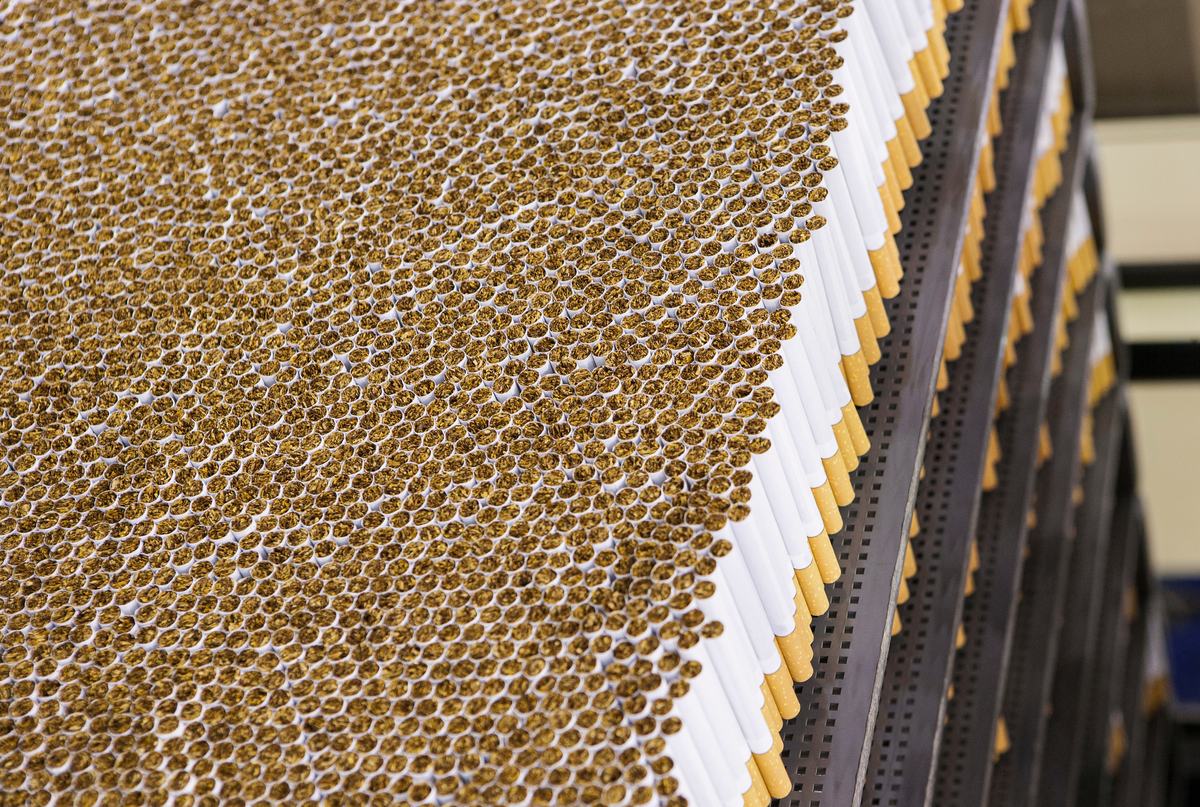
Several large-scale seizures over the course of this year have shown that a concerning development, identified during Europol’s Serious and Criminal Organized Crime Assessment 2021 (SOCTA-21), has unfortunately not abated.
The development in question relates to organized criminal groups systematizing the use of corruption and the abuse of legal business structures to advance their illicit activities.
In its report, Europol highlighted that criminal organizations are increasingly producing their own illicit tobacco products, either counterfeit or illicit whites, rather than smuggling genuine products across state borders or from outside the EU. The production facilities are modern, sophisticated, located within the EU and close to the intended destination markets.
I’m going to summarize three of the largest Europol enforcement actions of 2022 to highlight several common themes amongst these criminal operations: that the operations span multiple EU countries, that large and modern production facilities continue to operate in the heart of Europe, and that illicit networks continue to increase in complexity and sophistication.
Enforcement example 1: Slovenia and France, January 2022
In January 2022, French and Slovenian authorities dismantled an illegal production line of cigarettes flooding the French market, with millions of counterfeit cigarettes produced in Slovenia. This was the result of a multi-year investigation initiated in October 2020.
As part of the investigation, French authorities, in April and May 2021, apprehended several suspects involved in the distribution of these counterfeit cigarettes after two successful ‘action days’ in France. As a result of this action, and in coordination with the French, Slovenian authorities started a mirror investigation, to arrest the individuals producing the illegal cigarettes in Slovenia.
In January 2022, over 100 officers from the Slovenian National Police Force and Slovenian Financial Administration raided 11 sites simultaneously, including industrial premises and private residences across Slovenia. The enforcement action was supported by the French Gendarmerie and Europol. The synchronized raids uncovered several production sites established in warehouses located in remote areas of Slovenia.
During the raids, law enforcement seized over 26 tonnes of tobacco, 29 million filters, 10 tonnes of printed packaging, as well as several cigarette manufacturing machines. Authorities estimated that the criminal organization could have produced illicit cigarettes worth €13 million on the French market.
After the raid, law enforcement arrested the two leaders in charge of the criminal network through European arrest warrants, one in Croatia, one in Slovenia. The case showcased the pan-European nature of these criminal networks.
Enforcement example 2: Belgium and Eastern Europe, March 2022
Just a few months later, Belgian Customs, supported by Europol’s European Financial Economic Crime Centre (EFECC), raided and shut down a massive illegal cigarette factory located in a former pet hotel in Arlon, Belgium. During the raid, law enforcement also apprehended 14 workers, mainly from Eastern Europe, who had been operating the production facility.
On the premises, law enforcement seized over four tonnes of tobacco, two million counterfeit cigarettes, as well as cigarette manufacturing machinery. An additional 40 million counterfeit cigarettes, presumably manufactured at the illegal factory in Arlon, were seized in trailers in an industrial area in Duffel, Belgium.
The authorities have assessed that these cigarettes were most likely destined for the black market in France and the UK. The tax loss in Belgium alone is estimated at €20 million and likely to be double or triple that amount once losses in France and the UK are counted.
This law enforcement action was only one of a series of actions that also included an investigation by French Customs, which seized over 25 tonnes of counterfeit cigarettes and 16 tonnes of tobacco in France belonging to the same organized crime group. According to Europol, the group under investigation is involved in the large-scale production and distribution of counterfeit cigarettes across Europe, and a number of investigations are ongoing against them in several European countries.
As identified in the SOCTA report, illicit tobacco production facilities are often located in large warehouse areas in remote industrial areas, within larger metropolitan areas, to avoid detection.
Strategically, though, they are located close to transportation hubs like motorways, border crossing points or ports. This strategic placement of these production facilities allows organized criminal groups easy access to Europe’s extensive railway system, which they use to smuggle illicit products across the EU.
Enforcement example 3: Belgium, Poland, Lithuania
In August 2022, Belgian Customs, with close support from Europol, executed an ‘action day’ in Belgium, resulting in the seizure of over 57 million cigarettes and more than 48 tonnes of cut tobacco worth an estimated €32 million. The ‘action day’ was supported by local Belgian law enforcement, the Belgian Federal Police, the Polish Border Guard Control Service, as well as intelligence provided by the Lithuanian Criminal Police Bureau.
These tightly coordinated operations are increasingly important as, in this case, raw materials were secured by and smuggled through Lithuania across the Polish border and then trafficked to Belgium for production with the goal of illegal distribution in Belgium, France, and the UK.
The raid was partly the result of intelligence gathered by the Lithuanian Criminal Police Bureau, which had detected suspicious deliveries to addresses in Belgium.
Belgian customs authorities then carried out searches in warehouses and at a private residence in Belgium based on this intelligence. During their raid, law enforcement officers discovered two full production lines for cigarettes bearing a variety of well-known brand names.
The seized cigarettes would have an estimated worth of €73 million in the UK, which was the assumed destination country for the majority of the illegal products.
Additionally, law enforcement was able to secure a massive number of empty packaging blanks, filters, cigarette paper, glue, cardboard, and packaging film, as well seven machines intended for an additional production and packaging line.
As part of their search, and as a result of the synchronized multi-location raids, law enforcement was able to discover a variety of clandestine production sites, as well as warehouses for storage of enormous quantities of tobacco products. In some locations, sleeping quarters for workers were also uncovered on the premises.
Along with confiscating massive amounts of material used for counterfeit cigarette production, authorities seized various vehicles and arrested several individuals of Lithuanian, Polish, Ukrainian and Jordanian nationality.
The action day contributed further to an already impressive record of enforcement for Belgian authorities.
In 2022 alone, five illegal tobacco production sites and 15 storage warehouses were uncovered and dismantled in the country. Over the same period, more than 274 million cigarettes, 88 tonnes of cut tobacco, 65 tonnes of water pipe tobacco and 40 tonnes of raw tobacco were seized. The total payables on these seized illicit tobacco products – consisting of the excise duty, special excise duty and value added tax – totaled more than €139 million.
According to Europol, factors such as proximity to the French and British borders, rising excise duty rates in neighboring countries, and short distances to certain black markets, have led to Belgium becoming a major hub for illegal tobacco production and trade.
Implications
This shift in illicit tobacco trade towards more localized production, which is closer to or potentially even within the intended market, will have a significant impact on the enforcement models of law enforcement, industry partners and technology providers going forward.
When illicit markets shift from global systems, where illicit or counterfeit product is manufactured overseas and illegally imported, or from global trafficking of genuine products, to localized sophisticated production facilities, the enforcement models need to be localized as well.
This shift to localized production models is a move that had been predicted by law enforcement, illicit trade experts, industry leaders, and this author, for several years when warning of the emergence of illicit whites. Illicit whites, similarly, are produced locally, close to their destination markets.
The benefits for criminal organizations are obvious. The proximity of production eliminates the need for lengthy global smuggling operations, reduces the risk of detection at ports of entry and simplifies the raw material supply chain.
To combat this new sophisticated localized production model, enforcement will have to shift its focus to cutting off illicit production:
Global track and trace of raw materials: raw materials for illicit cigarette production are widely available across the globe, but several key inputs, including raw leaf tobacco, cellulose acetate (for filters) and cigarette paper, are unique to cigarette production and should be globally monitored and tracked. These materials were present in all three law enforcement actions.
Increased funding for localized tobacco enforcement: localized intelligence to identify, investigate and enforce against these tobacco facilities requires human asset intelligence and boots on the ground. Law enforcement across countries needs to be funded to sustain significant human intelligence.
Increased cooperation of law enforcement from various countries: when raw materials are illegally imported from Lithuania, smuggled across Poland to production sites in Belgium and then trafficked to the intended markets in the UK, Belgium, and France, significant cooperation is a necessity.
The EU is fortunate to have Europol as the central resource in place. Europol’s EFECC supports investigations with its secure communication platform as well as by facilitating international cooperation between countries, running cross- checks, and providing analytical support and operational expertise. Europol has developed the European Multidisciplinary Platform Against Criminal Threats platform, which provides an adaptable and efficient enforcement action framework for 24 member states.
Registration, limitation, and destruction of production machinery: cigarette production machinery is specialized, and access should be limited to registered industry participants. Governments need to embark on efforts to catalogue and register existing equipment and then restrict the movement, sale, or disposal of obsolete equipment.
Governments should require the destruction of obsolete equipment and ban the resale of old equipment. It is all too often that equipment from defunct legitimate manufacturers, or old equipment, end up in the hands of illicit manufacturers.
Increased asset seizure and forfeiture authorities: criminal organizations are driven by illicit profits. Disrupting the wealth creation and accumulation by illicit trade organizations through aggressive seizure and forfeiture laws is the key to disrupting and disincentivizing criminal actors. Europol refers to these as asset recovery and advises the EU to considerably strengthen its asset recovery regime.
Innovative technology deployment to aid enforcement: deployments of new technologies such as drones are needed to help identify production facilities, especially in more remote or desolate locations. And technologies for tracing illicit money movements or investigating crypto currency payments will need to become common place.
Comprehensive implementation of tobacco tax stamp programs: while tax stamps themselves won’t stop illicit actors from producing illicit tobacco products, they will provide an important measure for the fast assessment of excise tax evasion. In combination with effective penalties these become an increasingly powerful tool.
Increased penalties and fines for tax fraud, tax evasion, stamp forgery and money laundering: criminal tobacco operations will not be utilizing genuine tax stamps for their illicit operations. As such, they will either not apply any tax stamps or apply counterfeit stamps. Increasing and escalating penalties for crimes related to these criminal acts will provide an important deterrent, especially when paired with a strengthened asset recovery regime in the EU.
Sophisticated pan-European cigarette trafficking looks like it is here to stay and is just going to get more sophisticated, unless there is a massive, coordinated shift in focus by enforcement authorities.
These days, raw materials get smuggled in through one country, laborers are provided by another country – often involving human trafficking – while production occurs in the heart of the EU itself, close to or within the intended target market, using state-of-the- art cigarette manufacturing equipment.
The networks are complex and sophisticated, they are distributed across various locations, warehouses, and stash houses, and they utilize the excellent highway and train system Europe has to offer.
So, a mighty task indeed to put an end to this burgeoning activity.
Sven Bergmann is the founder and CEO of Venture Global and advises brand owners, technology providers and governments on anti-counterfeit strategies, programs and technologies. Send your comments to [email protected].
Subscriber content
Read the full article
Full access to Tax Stamp & Authentication News™ articles, newsletters and archives.