
G+D Signs its Move into the Secure Packaging Market

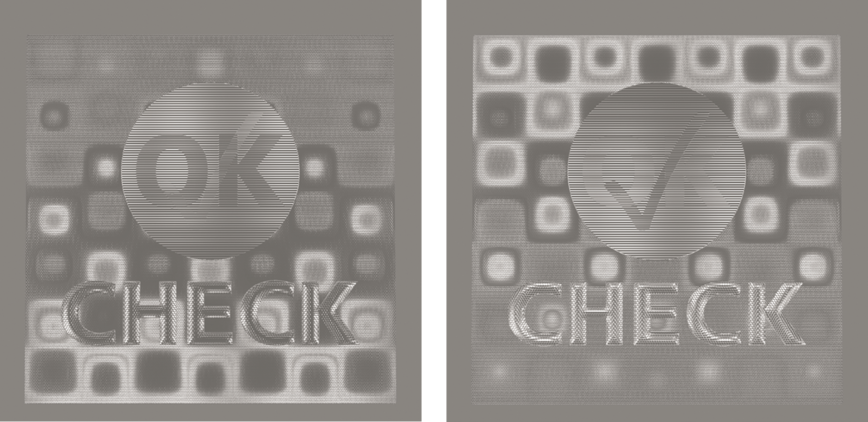
Giesecke+Devrient (G+D) is probably better known for producing banknote paper and printing banknotes than it is for protecting brands. Its catalogue of secure technologies includes proprietary products for threads, foils and windows as well as a full range of printed security features. Having explored the brand protection market in the past, the company is now returning to protecting brands with its new SIGN® technology.
To find out more about SIGN and G+D’s strategy for tackling the brand authentication market, Authentication & Brand News™ (ABN) caught up withOliver Paul (Sales/Business Development Security Features) and Felix Ehrtmann (Product Manager Integration + Print) to find out more.
 Oliver Paul (Left), Felix Ehrtmann (right).
Q. Hello Oliver, hello Felix – thank you for agreeing to reach out like this to ABN readers. Perhaps I can start by asking you to give some background to your current roles at G+D?
A. Oliver: As G+D’s responsible Sales Manager for the brand and product authentication and postage stamps business I’m dealing with customers such as pharmaceutical and tobacco companies as well as packaging producers and Germany’s Deutsche Post and Federal Customs Service. In this role I’m supporting them with our comprehensive portfolio in fulfilling their security requirements with a holistic approach.
A. Felix: Primarily, I work for the Banknote Solutions division as a Product Manager for Integration and Print, but also supporting the product authentication business as an interface between marketing, sales and R&D.
Q. What are the current market factors that have convinced G+D to re-enter the brand protection market?
A. Oliver: Actually, G+D has never left the product authentication market but has been working with reliable partners in the security printing business for many years.
For example, more than 1 billion packages in the pharmaceutical business have been secured with technologies from G+D until today.
Moreover, just last year in 2021 G+D supported and considerably contributed to Deutsche Post’s digitisation initiative with new postage stamps featuring a datamatrix code.
Q. SIGN has some intriguing dynamic visual features. Can you explain (without giving away commercially sensitive information, of course) how these effects are produced?
A. Felix: The fully customisable effects such as surface relief, dynamic and flip effects are being created with a special proprietary software by G+D’s experts. The structures are then being transferred to an embossing tool at G+D’s secure production environment in Munich. These embossing structures are also protected by our patents.
Our partners and customers in the packaging business, which have been audited by G+D according to various security requirements, are then using the embossing tools in their standard production processes to produce the feature SIGN. To create the highly attractive and dynamic effects, a reflective surface such as a standard hot stamping foil in silver or gold is necessary.
Q. SIGN removes the need for offline specially printed labels by applying the image directly to the packaging. Does this work on all types of packaging material?
A. Felix: Our focus for SIGN is cardboard boxes, where the feature works for all standard packaging material such as cardboard and paper. Other packaging material such as PET, PP etc. hasn’t been tested yet as we also see a clear trend towards paper-based packaging made from renewable fibres.
Q. What are the benefits, financial and environmental, of applying the image directly to the packaging?
A. Oliver: The integration in existing production processes and an inline application supports cost-efficiency; moreover, less material usage and fewer transports will help our partners and customers to fulfill their sustainability goals.
An additional label application process is not necessary, which reduces the energy consumption and the investment in additional machinery. The production KPIs of the packaging producers are therefore not affected with the application of the inline produced feature SIGN.
Q. Can SIGN be integrated with other security features?
A. Felix: The feature is mainly a classic Level 1 security feature, where tilting the box equipped with SIGN leads to clear movement and image flip effects. Therefore, no additional authentication tools are required. But we have many options in our portfolio for additional upgrades by integrating machine- readability to the feature.
Q. Can you say a little more about the investigation that Fogra conducted into potential counterfeiting attacks and the level of security that SIGN provides?
A. Felix: Fogra was trying to reproduce and imitate the effects of the SIGN feature with commercially available methods. To achieve this, they were trying to cast the embossing structures from our printed and embossed samples and transferring these to an embossing tool. In the end, this didn’t lead to success and the imitation and reproduction was clearly different to the original SIGN feature at first glance.
According to Fogra’s evaluation, SIGN is therefore a highly secure feature for product authentication.
Q. G+D is a large organisation with business units in, amongst others, payments, connectivity, identity and digital security. Where does SIGN and your activities in brand protection fit into this structure?
A. Oliver: The product authentication business is part of the G+D Currency Technology business unit, where we produce and distribute banknote paper, banknotes, and technologically advanced security features and provide banknote processing systems.
The feature development for SIGN is within the high-security area of banknote production.
Q. Has the company decided on its route to market for SIGN? For instance, will you deal directly with brand owners or sell through intermediaries?
A. Oliver: G+D is happy to support with an existing broad and reliable partner network where we are already dealing directly with brand owners as well as with packaging producers.
However, we are looking to expand with SIGN to new partners and customers on the brand owner as well as on the packaging production side. In case the brand owner wants to use SIGN, we will support the chosen packaging printer with the application of the feature with our intense knowledge and technical support team.
Subscriber content
Read the full article
Full access to Tax Stamp & Authentication News™ articles, newsletters and archives.