
Tax Stamp & Traceability Forum 2022 Malta – A Review

The Tax Stamp and Traceability Forum™ (TSTF) returned as an in-person event in May 2022 with 194 registrants from 99 organisations and 35 countries. Although this is slightly lower than previous years it does reflect both a recovery in conference attendance and the challenges facing some delegates in getting into Malta.
The conference was organised into eight sessions spanning two full days plus a pre-conference workshop day. With refreshments (sponsored by Jura/HP Indigo Secure) served in an exhibition with 23 booths there was ample time for meetings and discussions. A number of key themes emerged in the presentations and exhibits at the conference, and these are summarised hereunder.
Digital security printing
Digital security printing emerged as a key theme at TSTF 2022, with both a conference session and a pre-conference workshop. With an exhibition presence and presentations from HP Indigo Secure, Komori, De La Rue JetSecure, Luminescence Sun Chemical Security, and Xeikon, the field was well represented. Integration of digital security printing into a secure workflow was also covered in presentations by the Authentication Solution Providers’ Association and Jura.
It was noted in one presentation that digital is ‘a world to discover’, and from the wide range of systems on show this did seem to be the case. To counter this, another presentation noted that ‘trust is needed on top of technology’. TSTF 2022 proved to be a good forum to explore these issues and the breadth of digital security printing solutions that are available for programmes to support excise taxation.
TSTF 2022 extended this topic into digital marking where it was noted in presentations by SICPA and OPTEL that different solutions may be needed for tax stamps and direct marking. This breadth of solutions was illustrated with reference to novel materials for taggants by Stardust Materials and Quantum Base. In this case, these materials can be incorporated into inks for both analogue and digital printing.
Physical/digital solutions
The combination of physical and digital features was another key theme for TSTF 2022. A case study describing the tax stamp solution of Liberia, a relatively new user of this technology, was given by Madras Security Printers, where an element of digital verification is associated with physical tools and devices. The Liberia programme also has a component of population preparation – ‘how much stakeholder engagement is too much’ is a great proposition.
In terms of features, QR codes were covered by U-NICA and Securikett, visible digital seals by LEONHARD KURZ and Securikett/Advanced Track & Trace, and physically unclonable functions by U-NICA.
Smartphones for verification
Country solutions featuring smartphones were presented for Georgia, Chile, Portugal (presented by the International Tax Stamp Association) and Malta (presented by OpSec Security). As presented by Madras Security Printers, in Liberia the smartphone is a compelling platform as 80% of the population have access to a basic smartphone but only 40% have internet access.
Company solutions were presented by De La Rue, OPTEL, KURZ, Jura, Nanografix and SICPA, illustrating the breadth of alternatives available for tax stamp and traceability programmes.
One element of the use of smartphones for authentication explored at TSTF 2022 was their use across inspectors and consumers. Substantial examples were presented on their use for inspectors and the evidence here appears compelling. Contrary to this, there was little evidence presented of significant use by consumers.
Other electronic technologies
In addition to the smartphone platform, other electronic technologies featured strongly at TSTF 2022. For cannabis solutions, in particular, both Metrc and SICPA cited the use of RFID to maximise track and trace opportunities in this sector. The SICPA solution features a QR code on cannabis packaging for smartphone interaction, leading to a blockchain implementation.
Blockchain/distributed ledger solutions also featured in presentations by Securikett and Quantum Base. This topic opened out into presentations on artificial intelligence and machine learning from OPTEL and Internet of Things from KURZ.
Sustainability
Sustainability was noted as a driver in a number of presentations, notably those of OPTEL, Securikett, Alan Hodgson Consulting and the Authentication Solution Providers’ Association. Sustainability has become a strong political and social driver to industry and ours will be no exception. A number of relevant technologies featured in this debate.
Direct marking was noted as having the additional benefit of contributing to sustainability – printed barcodes can be used not just for track and trace solutions but to also contribute to sustainability by marking the packaging for recycling.
The topic of recycling was also mentioned from a digital perspective, where tags embedded in or placed on a product can be used to identify the materials used in packaging.
International standards
The benefits of participation and the relevance of international standards in the tax stamp and traceability market was the subject of significant discussion both from conference presentations and in the exhibition. Various aspects of these were covered by Securikett, Kenya Revenue Authority, KURZ, Alan Hodgson Consulting and Reconnaissance International. Some of the key standards pertinent to our industry are due for review in 2023 and delegates were reminded to look out for the commencement of this process.
Extension into other areas
The conference cited many other market sectors that could benefit from tax stamp and traceability programmes. Some are already under way at country level and others are in the planning stage. TSTF 2022 proved to be a great forum for the exchange of ideas and relevant case studies in this area.
The debate on extension was started by Nicola Sudan as Conference Director at the beginning of the conference and continued by OpSec Security when describing the Malta tax stamp programme. Following on from this, SICPA, the Authentication Solution Providers’ Association and Kenya Revenue Authority described further ideas on extension for revenue enhancement.
Throughout TSTF 2022, ideas were shared on areas of extension ranging from cement to sugar, but out of these ideas two specific areas kept reappearing. The revenue opportunities from cannabis products were the subject of an entire session in the Forum and they were described as ‘an industry in search of normal’. Vaping was described by the Canadian Bank Note Company as set to be as big an opportunity as cannabis.
The Framework Convention on Tobacco Control (FCTC) also deserves a mention here as it featured in a number of debates, notably with presentations by De La Rue and SICPA.
Collaborative working
Supporting and initiating collaborations is one of the deliverables of meetings such as TSTF 2022 and after a long gap there was a palpable sense of these being built into discussions in and around the forum sessions. Presentations from the Kenya Revenue Authority and the Jura/HP Indigo Secure collaboration illustrated these well. It will be interesting to see what further programmes come out of these debates.
The sharing of information is another deliverable from these events. The University of Cape Town presented an economic model that creates a cost/benefit analysis in financial terms that is transferrable to other markets. This sharing of relevant information is what a forum is all about.
Networking
After a long gap caused by the pandemic, the community present at TSTF 2022 was ready to meet again in person for real face-to-face discussions. There were multiple opportunities for networking at this meeting, opportunities that were much missed over the last few years. The exhibition, lunches and receptions were well attended as delegates took advantage of these.
The exhibition, in particular, gave the opportunity to touch, feel and see actual solutions, materials and print. For the younger members of our community, this was seen as a key learning experience. It also reinforced the sense of trust that comes from face-to-face interaction, the basis for future collaborations.
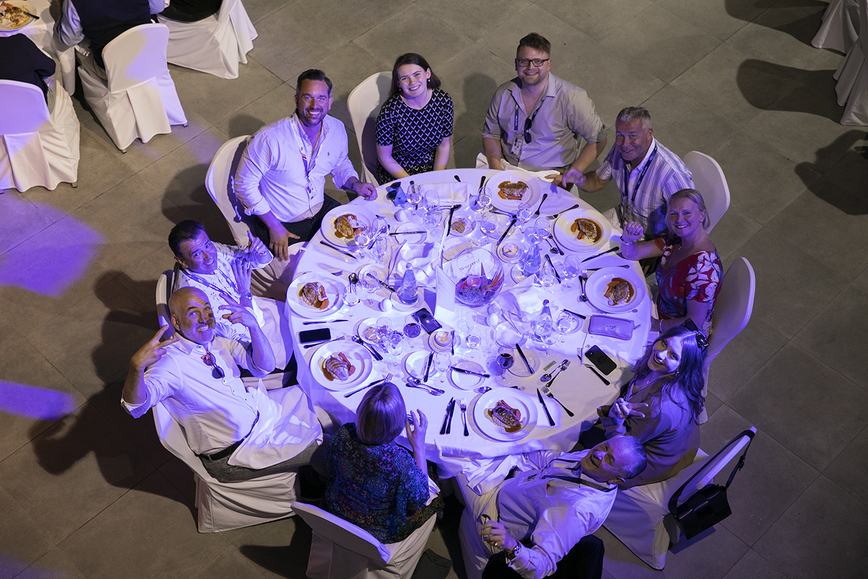
With refreshments and lunches sponsored by Jura/HP Indigo Secure, receptions sponsored by SICPA, Madras Security Printers and KURZ, and an outdoor conference dinner sponsored by OpSec Security, the networking was well supported. As Nicola Sudan noted as Conference Director, these opportunities bring a renewed sense of connection with the industry.
It was announced at the end of the conference that the next Tax Stamp & Traceability Forum will be held in Tbilisi, Georgia in September 2023.
Subscriber content
Read the full article
Full access to Tax Stamp & Authentication News™ articles, newsletters and archives.