
Dow to Provide New EU Common Fuel Marker

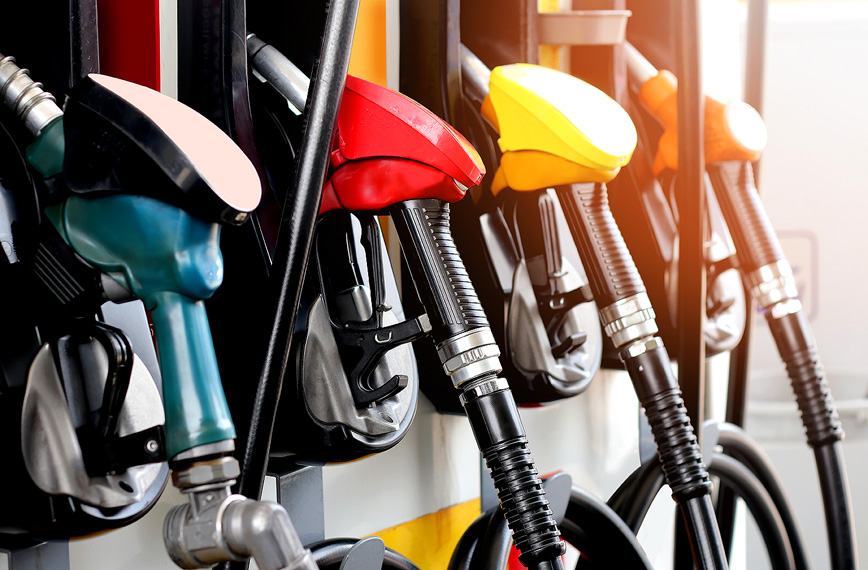
The European Commission has appointed NYSE-listed Dow (one of the three largest chemical producers in the world) to supply the new common fiscal marker for tax rebated fuels in the European Union.
The decision to adopt a new fiscal marker, also known as Euromarker, was made with the aim of providing member states with a safer, more resilient marker to support governments’ fuel fraud prevention programmes, said Dow in an April press release. (The ‘original’ Euromarker is a yellow azo fuel dye that has been used in the EU since 2002 to distinguish diesel fuel for heating from a higher taxed motor diesel fuel.)
The adoption of Dow’s ACCUTRACE™ Plus Fuel Marker as the new Euromarker follows from a number of independent technical and safety assessments of the latest fuel marking technologies conducted by the Joint Research Centre (JRC) and the Scientific Committee on Health, Environmental and Emerging Risks (SCHEER).
Assessment results demonstrated that ACCUTRACE, which is a molecular fuel marker, provides unique resilience to the most common illegal removal techniques, outperforming alternative technologies, including the incumbent Euromarker.
‘Dow has a proven track record in providing effective launder-resistant fuel marker technologies which have already been used for years by governments, including the United Kingdom and the Republic of Ireland,’ said Daniel Saiz, Technical Service and Development, Dow Industrial Solutions. ‘Dow’s new patented ACCUTRACE Plus Fuel Marker builds upon the proven success of these technologies, with added unique resistance to known laundering techniques, including distillation removal methods.’
Another benefit of the solution is that it maintains a unique fingerprint in the fuel, which alerts authorities to its intended use and enhances supply chain governance and product identification, advised Dow.
Furthermore, although invisible to the naked eye and completely undetectable to those who don’t know what to look for in a lab, the marker can be detected in a traditional laboratory or in the field using portable equipment.
The European Commission has established a 24-month transition period where both markers – ACCUTRACE™ and the current Euromarker – will co-exist in the market in order to allow the fuel industry to smoothly adopt the new Euromarker.
The solution was already introduced in 2014 in the UK and Ireland to help HM Revenue & Customs and the Irish Revenue Commissioners tackle the criminal market in off-road diesel – marked with a red dye in the UK and green in Ireland – and also kerosene primarily used for heating oil.
Fuel Dye Versus Molecular Markers
When oil is refined it results in a wide range of grades of hydrocarbon products, ranging from gases to heavy oils. These products all command different values and therefore provide an opportunity to fraudsters to adulterate high-quality fuels with cheaper but miscible oil-based products (for example, the dilution of high-octane gasoline with lower octane fuel or even diesel), or to dilute authorised product with smuggled fuels from outside the country.
There are a number of technologies used to counter these illicit practices, which include:
Dyes – the adding of coloured dyestuffs to fuel products to distinguish one grade from another (for example ‘red diesel’) has been used in some regions, such as the EU, for decades to identify fuels with differing tax rates.
However, criminals have been able to launder or ‘wash’ the dye out and then sell the resulting ‘white fuel’ at full price, sometimes co-mingled with genuine tax paid or normal-priced product. In addition, because many fuels have some inherent colour, visual identification can be difficult for many people.
Molecular marking – in order to address the weaknesses of dyes, fuel marking systems have evolved into irremovable, invisible and molecular markers, which are added to the fuel at sufficiently low levels so that they don’t affect the performance of the fuel.
The markers can be customised to a particular fuel type in terms of their properties and density of application, and are detected and analysed with portable, dedicated devices, thereby removing the need to rely on the human senses alone.
For programmes that require an even more sophisticated solution, it is possible to incorporate a second layer of security in the form of an additional, molecular marker based on gas chromatography- mass spectrometry (GC-MS) technology.
Fuel marking technologies, together with the field kits and devices for reading them, continue to be a backbone of many fuel integrity programmes. The markers are relatively inexpensive and allow non-technical personnel such as police and revenue inspectors to have some level of rapid field indication of illicit activity. This enforcement work is usually backed up by laboratory tests to confirm the identity and amount of marker present in the fuel and provide admissible evidence for prosecution cases.
Subscriber content
Read the full article
Full access to Tax Stamp & Authentication News™ articles, newsletters and archives.