
Creating Caustic Surfaces

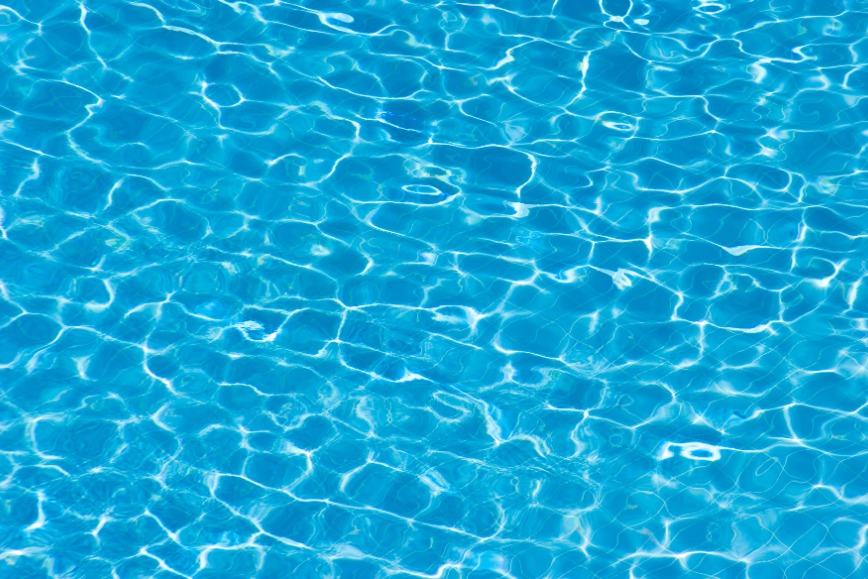
Over the last few years, I have been following a number of technologies to see how these may work together to create eye-catching security features. One good example of these is the use of arrays of micro-lenses to produce caustic surfaces. This is the topic of this article.
A reminder from the 2020 IACA awards
The Excellence in Currency Technical 2020 Awards from the International Association of Currency Affairs (IACA) were published a year ago in association with Currency News™. One of the finalists for these awards was a projection-based image feature from the Reserve Bank of Australia in association with The Walt Disney Company. This feature combined caustics and micro-lens arrays to create a feature that caught the collective eyes of the judging panel.
The award contained a concise definition of caustics as ‘the envelopes of light rays produced by refraction or reflection of light from a curved or complex surface’. Caustic projections are seen in everyday life as patterns projected onto a table through a glass of clear liquid or on the bottom of swimming pools. Caustics can also be projected from transparent surfaces by refraction from structures such as micro-lens arrays or other embossed structures.
Over the past few years, the combination of caustics and micro-lens arrays has evolved into a security feature. However, it would be useful to cast a wider view of technologies in this area to see where further opportunities could lie. In the IACA awards case, the caustics are produced by rays of light refracted by an array of micro-lenses, but this is just one way of producing effects using caustics and there are other players in these technologies too.
For instance, Rayform SA, in conjunction with the École polytechnique fédérale de Lausanne (EPFL), has learnt to engineer surface relief patterns to generate features for a variety of applications. And the Norwegian University of Science and Technology has been working on the materials appearance link between caustics and translucency perception.
The link with micro-lens arrays
The use of micro-lenses to generate caustic features is but one interesting use of this technology. It was marketed by 3M to generate ‘floating image’ features for passport and ID cards. It also finds application in integral imaging, an interesting autostereoscopic technique that can be used for stereo display purposes, for example.
For many years, the preferred method to generate micro-lens features was by embossing. A master plate would be cut, usually on a hard metal surface and this would then be used to emboss the array into a softer plastic layer to produce a component such as a laminate. And rather like the computed pattern used to generate caustics, a printed pattern was calculated to deposit behind the micro-lens array.
Much has happened in recent years. To support the specifications of these materials, ISO 20328 (Imaging materials – Lenticular lens sheet – Measurements and specifications of dimensions) was published in 2016 and new printing technologies have opened up some interesting opportunities for micro-lens features. It may be time to re-examine the potential for these as optical features.
Micro-lenses are now being printed for commercial applications in a number of sectors. Companies such as Luxexcel have been printing lenses for some years and are now producing printed prescription lenses. Closer to our applications, Unijet of South Korea is producing inkjet equipment for the manufacture of micro-lens arrays for the display industry.
In common with other digital printing technologies, materials deposition for refractive features is only going to get faster and acquire new applications. There is the potential here to generate personalised features, adding further to our lexicon for optical document security. We should remain aware of where these technologies are progressing and who are the key groups involved.
Subscriber content
Read the full article
Full access to Tax Stamp & Authentication News™ articles, newsletters and archives.