
On the Record with Panama General Directorate of Revenue


During the last Tax Stamp and Traceability Forum™, held in Malta in May of this year, Tax Stamp & Traceability News™ was able to interview Milagro J Mendoza, a Panamanian lawyer who specialises in tax-related issues in her country and who works for the General Directorate of Revenue (DGI – or Dirección General de Ingresos) in Panama.
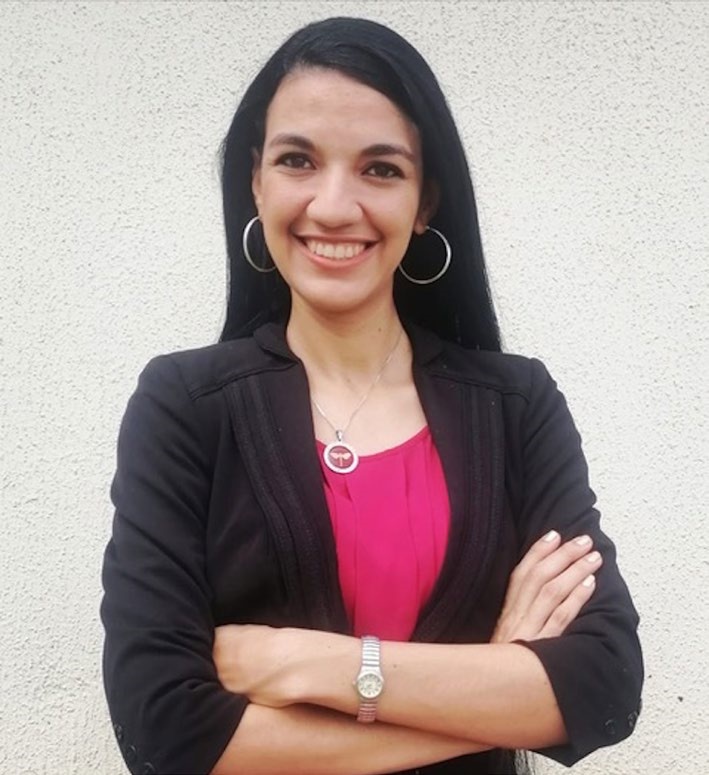 Milagro J Mendoza.
Q: Hello, Milagro. Thank you for meeting with us today. Can you first tell us a little about your background? What exactly is your responsibility as a lawyer within the government and what institution/ organisation do you work for?
A: My name is Milagro Mendoza, and I am a lawyer in the Department of Taxation and Auditing of the General Directorate of Revenue of Panama. I am responsible for overseeing audits and reviews of specific taxpayers, as well as everything that the auditing process entails from a fiscal perspective in our organisation.
Q: We understand that the population of Panama is around three and a half million today. To perform your job adequately, we imagine you need quite a few employees. How many people work at the General Directorate of Revenue?
A: We are around 900 people in our office, 600 people in the main building in Panama City and about 300 in the provinces.
Q: Does your work entail auditing direct and indirect taxes, duties, customs?
A: Yes, I work on all kinds of tax formats. It is important to note that the Office of Customs for Panama and Social Security collect their own taxes, but like our area, we all report to the Treasury Directorate and the Comptroller General of the Republic.
In general, each ministry collects taxes according to its activity; but the one that handles the largest proportion of tax collections in Panama is the General Directorate of Revenue, where I work.
Q: What is, according to you, the most complicated tax issue related to illicit activity in Panama? Counterfeit or contraband cigarettes? ITBMS (VAT) evasion? Illegal liquor?
A: In relation to my direct experience, what I see most regularly is how people attempt to manipulate their bank accounts, or their accounting reports, to avoid paying the correct amount, and when we can prove this manipulation we can then consider such behaviour as evasion of taxes.
In Panama, there is a tax rate for many different products, so it is often cheaper to import some things to avoid paying the appropriate tax. We see smuggling in cigarettes and sometimes in liquor.
However, in most cases, these findings are made by the customs authority, the naval air service, and the national police rather than by my office. But, we are of course aware of their findings and have input into how to fight this type of activity.
Where the Revenue Directorate does have to investigate is when the match between taxes to be paid and earnings declared are not quite on target. When any anomaly is observed, the Revenue Directorate starts an audit, conducts more detailed information- gathering from the person or company being audited and then, if the errors are not corrected or explained, we proceed, by means of resolutions, to sanction the taxpayer.
To be fair, I also believe that on some occasions, perhaps due to ignorance more than cunning, some income is declared as part of an activity in a tax-free zone within Panama. This mis-assignment can lead to an audit and often we can see that the activities carried out by a certain company are not solely in the tax-free zone, but in other territories where the tax to be paid is always higher.
Q: So, to rephrase: some people lie about whether they are in a free zone or not, they lie about the type of product, etc., and your department must investigate. Does this happen with the sale of liquor or cigarettes? Do importers and/or producers try to avoid paying the correct duty imposed when they sell?
A: Many people lie to the tax authorities. We cannot escape reality; the smuggling of contraband products, as in several countries within the region, of course occurs, but more often the issue is with drugs, more than legally sold products.
Q: Correct me if I am wrong, but imported goods are stamped when they arrive in the country, marked somehow to identify and record their sale, are they not? For instance, for liquor, aren´t tax stamps in use today?
A: Yes, there are tax stamps, at least what we call tax stamps, but they are nothing as sophisticated as the stamps and markings that we have seen in this Forum. Part of the reason to attend this important event for us was to see and learn about what is out there with respect to traceability and tax stamps. We want to try to move away from the manual system that we currently use and make everything more digital and agile.
Today, when an imported product arrives in Panama, at that moment, not before, the importer/company representative informs customs of the product’s arrival into the country, following which an official puts the stamp on the product. Naturally, there are some holes in our traceability during this process.
Q: I see, and I imagine that given the current process, there are a series of legal loopholes that can be used by the importer to explain any potentially illicit activity. What about cigarettes, do they also have stamps?
A: Yes, they exist in a similar vein as the liquor stamps, but you should know that cigarettes do not have as strong sales as they used to have in Panama. Since the passing of a law in 2008, banning smoking in many public places, smoking has declined tremendously.
Q: Can you tell us if your country has signed the protocol of the WHO Framework Convention on Tobacco Control? Are you aware of it?
A: Yes, in fact, as I mentioned, although Panama is a relatively small country in terms of inhabitants, we do have a comprehensive tobacco control policy, especially since Panama has been a party to the WHO Framework Convention on Tobacco Control since 2004.
Q: Understood. Now, for those who smoke, I imagine the value of a pack of cigarettes must be exorbitant for the average Panamanian.
A: Yes, it is very expensive. A pack sometimes costs between $5 to $6, which is a significant amount if you think that the lowest earners make between $400-$1,000 a month.
Q: We imagine that that is incentive enough for some companies to avoid selling with the appropriate tax stamp. So, let’s go back to the question of general illegal or illicit activity related to taxation. In your view, more than smuggling, more than counterfeiting, and more than adulteration of existing tax stamps, do you believe that the biggest problem is under-declaration of income and/or sales tax?
A: Exactly. We focus, on a daily basis, on auditing under-declarations, but we also cannot hide the fact that the illicit traffic of counterfeit goods is something that occurs all over our region and Panama is not free from this activity, which naturally negatively affects public revenues.
Q: Do you think a VAT traceability solution, for example, would be a welcome option for Panama’s government?
A: I would imagine so. In Panama, VAT is called ITBMS; it is a tax paid by the consumer for the purchase of a product or service, as long as it is not related to schooling, medicine, or food.
The problem is that, too often, smaller commercial operations fail to register much of this income or do not deliver the respective invoice and that affects the registration of the tax in our analysis. The small business owner will sell a product and discount the ITBMS for cash payments, with no receipts. Panama has been researching and testing electronic invoicing, and we expect this to continue improving this situation.
Q: Are you telling us that there are no electronic invoices, not even for large companies?
A: Not many, although electronic invoicing is already in operation. In fact, a pilot project was carried out with 43 companies, and I understand that the largest car company in Panama is already invoicing electronically. CIAT (Inter-American Center of Tax Administrations) helped us put that system into place, for which we are very grateful, and I am sure it will continue to grow.
Q: Milagro, would you mind circling back to the use of tax stamps? From what you have mentioned, it is my understanding that in the upcoming bidding process, Panama is going to request a more modern tax stamp and traceability system for special items such as cigarettes and liquor. Is that correct?
A: It is. Panama is very interested in something such as what you describe. In fact, customs are leading this crusade and it is public news, so I am not saying anything that has not already been mentioned in the local media.
What customs want is software. They have not been specific about the stamp itself or its design, except that it should be traceable (where it comes from, where it goes, when is the tax levied or marked) and the General Directorate of Revenue should know who bought it, why they bought it, how much they declared, how much they did not declare, etc. And customs are in favour of a digital solution, initially.
Q: We see and evaluate many tax stamp systems, and I am certain you understand that the ideal traceability system would combine the benefits of digital and physical security to avoid security breaches and public confusion. We all know how attractive purely digital systems sound until one is hacked into.
Panama will be issuing a tender bid in the coming months, and I imagine that in the upcoming tender bid in your country, the specifications of what is needed will be very clear to the potential participants. Is that correct?
A: Well, we have certainly been advancing, but I would not be able to say when the bid will be issued, as I am not involved with that decision or its communication.
The Director of the Revenue Department, Mr Publio de Gracia Tejada, has an excellent logistics and multimedia team that help him with any important announcements. He is the person who most appears in videos and TV, as he is very animated and professional. You can check for any new announcements on the DGI’s social media pages.
Q: You understand that the International Tax Stamp Association (ITSA) recommends that tax authorities should not involve the industry in its control decisions: the best system is one that gives the authorities the tools required to best control taxpayers’ behaviour, right?
A: Yes, I understood that very clearly during several of the presentations I attended at the Forum, and I am certain that our authorities have been informed of these recommendations. I am sure Panama will try to have the best potential tender bid. We pride ourselves on doing things appropriately and in the best interest of our people.
Q: Good to know.
A: I do want to be clear that in Panama, we are still analysing all options for the next tender. Panama may decide to assume the cost of the stamp as a government expense in lieu of improved tax revenues. Or our country may accept alternative proposals, since from what I learned at the Forum, not all governments assume the costs directly, and there are many different service and costing options, which I found fascinating.
Q: We naturally have to agree with you. The tax stamp industry is fascinating and tax stamps provide an excellent way for countries to collect and track legal revenues.
A: Today, we work with a tax stamp that is currently printed by a company in Colombia, if I am not mistaken, but due to the pandemic, there were changes made and there is a shortage of tax stamps, and our system needs to be less manual.
Q: Would it be fair to say then that what is missing today is a software system with secure traceability?
A: Yes, I think that is what we need: a system that can hopefully provide us with tools to help reduce manual audits or, at least, make our work more efficient by using technology that is today more readily available.
Q: Today, what do you use, in terms of control and inspection? Do you have your own equipment, or do you hand over the inspection to other areas of government, for example the police? Or customs? Or is the control done specifically with people hired by the Revenue Department?
A: Customs has its own inspection controls, directly on the merchandise. We, the Department of Taxation and Auditing, we audit and verify the taxpayers’ information.
Q: Of the 900 people you mentioned, how many work in this department?
A: There are 120 of us; however, we have different functions, not only auditing.
Q: Mostly in the field? Or is some of your work done digitally?
A: In the past, it was mostly in the field or on site, but COVID has introduced a new form of digital auditing, called e-Tax.
Through the platform of the General Directorate of Revenue, where everyone must file their returns, my department now makes what we call digital scans, or runs. We choose a law that we think may be being violated or where we have seen, in practice, several unusual returns. We then conduct quick digital scans over many declarations and subsequently contact the person or company in question, who have an opportunity to defend their case, negotiate payment terms, or appeal our decision.
The law is quite clear in this regard, but it is a time-consuming endeavour for us, and a digital system has been very helpful and would certainly benefit from better traceability.
Q: What would you say have been the results, for instance in terms of additional revenues, that could be measured from initiatives deployed by your department in the last four years?
A: I would not take all the credit. I think it is the result of a team effort at the DGI, and I can tell you that much of the increase has been achieved thanks to digital auditing.
Q: Can you provide us with those figures?
A: I am not at liberty to discuss these figures, as that is not within my purview, but the amounts collected are published in a bulletin which is posted on the websites of the Ministry of Economy and Finance and the Comptroller General of the Republic.
Q: Milagro, we have taken up quite a bit of your time but now we come to the last question. If you had a magic wand to implement a traceability system, or a tax stamp system, or whatever you think would be the best way to control revenues in your country, what would you do?
A: In terms of traceability, I would implement a stamp/marking system that would not be made of paper, but that would be printed directly on the bottle or on the can. And I agree that the company making the product should ideally not be the ones marking the product. In my personal opinion, the DGI would be 100% in control of that.
The system would notify the DGI of the amount of product stamped and this could be compared with what is produced/ delivered by the business. It would be like a basic inventory system, but secure. In this way, the DGI would actually know how much was sold and how much was left in waste, loss or remaining stock. Both producer and importer would easily have access to the exact amount of tax to be paid and collected. Similarly, if a liquor product is recorded on an invoice, which did not go through the above filters, we would know that tax had not been paid on it.
Thank you very much for your time, Milagro. We hope to see you again in Tbilisi, Georgia, for the next Tax Stamp and Traceability Forum, in 2023.
Subscriber content
Read the full article
Full access to Tax Stamp & Authentication News™ articles, newsletters and archives.