
Illicit Trade Thrives During the Pandemic

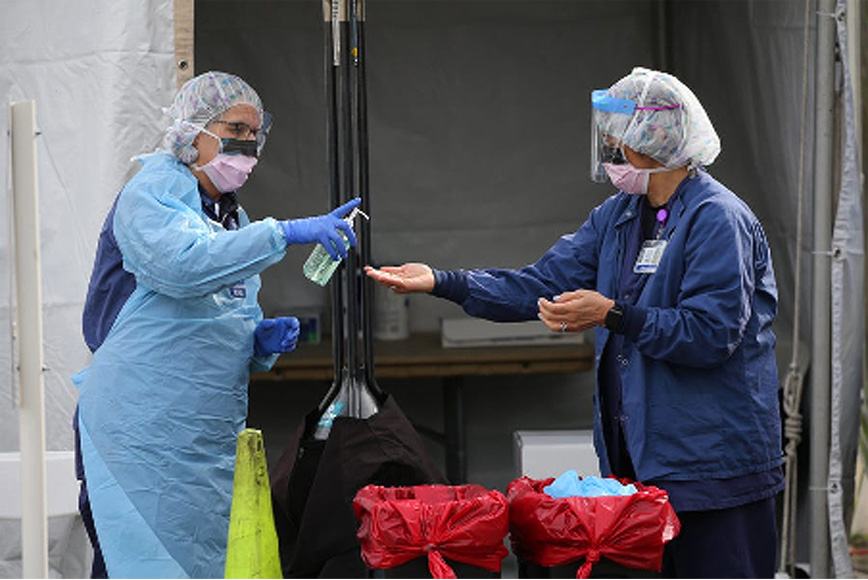
The COVID-19 pandemic has disrupted the lives, health and financial well-being of many across the globe. Unfortunately, though, it did not disrupt illicit trade, which is not only alive and well but actually thriving as the pandemic rages on. Countless government and news reports show that the pandemic has created ideal conditions for illicit trade to grow and present an ever-increasing threat.
Ideal conditions for growth
Illicit trade occurs when the well-regulated market of supply and demand is disrupted, often by external forces, which creates an imbalance in the marketplace that criminals can exploit through the trafficking of illicit goods. The COVID-19 pandemic has created the ideal conditions for illicit trade to grow by amplifying the underlying key drivers that contribute to market imbalance:
Disrupted supply chains: a plethora of factors has disrupted most regulated, normally highly efficient supply chains across the globe. The operations of supplier countries and factories were disrupted by shutdowns, lockdowns or social distancing requirements at manufacturing sites.
Simultaneously, global demand went off balance – with the shortage of toilet paper and sanitizing wipes being one of the most well publicized examples in the early phases of the pandemic, and the shortage of personal protective equipment (PPE), sanitizers and medicines the most tragic. The disruption of supply chains however went well beyond these goods and impacted a broad range of goods.
Government interventions: in addition, governments across the globe intervened with drastic measures in an attempt to blunt the impact of the pandemic or prevent supply shortages. They closed borders, banned certain items from export (especially PPE, sanitizing equipment and medicines) and banned the consumption of certain products (tobacco and liquor) to boost public health at a critical time. Most of these actions were well-intentioned but triggered significant unintended illicit trade consequences as a result.
Altered consumer behavior: simultaneously, consumers’ lives were shifting at a rate and with a speed not previously seen in modern times. Whether quarantined or on lockdown, consumers went increasingly online for goods and services. Many consumers experienced economic hardship through the loss of work and income. Some consumers, on the other hand, suddenly had significant excess disposable income due to a lack of entertainment, gastronomy and travel expenses.
Confronted with scarcity and supply shortages, consumer behavior became increasingly irrational, which manifested in excessive bulk shopping, online shopping from unknown sources or unknown brands and the exploration of unconventional shopping outlets, such as street sales or purchases from ‘friends’ and strangers.
The rise of the internet is the foundation for this growth. A plethora of online platforms enables criminals to market their illicit goods across the globe. The pandemic accelerated the growth of online shopping exponentially and as a result unleashed a wave of small parcel shipments across the globe. Already faced with significant enforcement challenges of small parcel shipments through the international mail system, this increase made effective enforcement virtually impossible.
Stretched government resources: while the above factors created ideal conditions for illicit trade to thrive (increased demand, lack of supply, change in economic rationale, overwhelming inspection need), governments became increasingly hindered in trying to enforce against a rising illicit trade.
Government resources, rightfully so, were reallocated to address the pandemic. Social distancing negatively impacted enforcement efforts and routine inspections. Regular enforcement operations, such as traffic stops were curtailed to reduce transmission risk.
Enforcement officers themselves were not spared from supply shortages caused by the pandemic. PPE shortages amongst law enforcement were well publicized and resulted in significant outbreaks in correctional institutions.
Furthermore, officers on the frontline of the pandemic and without PPE protection themselves fell increasingly ill with COVID-19. For example, nearly 20% of New York Police Department (NYPD) officers were off sick during the height of the pandemic.
Criminals were quick to exploit these opportunities to expand their criminal activities in scope and scale, while continuing to run existing trafficking operations.
Criminal organizations adapted fast
While legitimate businesses were struggling to maintain business operations during the pandemic, criminal elements adapted to the altered conditions with remarkable speed. With air traffic and air cargo significantly reduced, traffickers increasingly utilized land shipments, international mail small parcel shipments and relocated production facilities closer to destination countries.
Illicit drug shipments for example increasingly utilized land transportation. The three largest seizures of illicit drugs in the United States all occurred in just the last few months along the southern border. In the two largest seizures, law enforcement seized more than 6,000 pounds of meth, heroin, cocaine, fentanyl powder, and fentanyl pills – enough illicit drugs for ‘every man, woman, and child in the United States and Mexico,’ according to the Drug Enforcement Administration.
One of the shipments was hidden in a truck delivering medical supplies from Mexico, highlighting how criminals will ruthlessly exploit every opportunity and loophole. Similar law enforcement experiences of hidden contraband, counterfeit and illicit goods under medical cover loads have been reported across the globe. In India, law enforcement discovered millions of illegally imported cigarettes in trains designated for COVID-19 emergency and medical supplies.
Increased illicit trade in excise goods also results as an unintended consequence from well-intentioned public health efforts to blunt the impacts of the pandemic. Several countries, including South Africa banned both the sale of liquor and tobacco products during lockdown resulting in unprecedented levels of illicit trade. According to news reports, over 90% of smokers were able to buy their cigarettes from illegal sellers and illicit alcohol sales are starting to have a material impact on South Africa’s legal liquor industry.
Many fear these levels of illicit trade will persist long after the pandemic finally subsides. Tobacco bans in Malaysia and alcohol bans or sales restrictions in India, Thailand, and Kenya resulted in similar illicit trade spikes.
Europol is also reporting record seizures and remarks that ‘organized crime groups (OCGs) remain resilient and are adapting their modi operandi to the current situation, further exploiting secure communication channels and adapting transportation models, trafficking routes and concealment methods’.
Criminals exploited new opportunities from pandemic
The pandemic also opened up several new illicit business opportunities for criminals and criminal organizations. Driven by supply shortages, staggering demand, ease of production and the limited risk of punishment, criminal organizations rapidly exploited the production, trafficking and sale of counterfeit medicines and medical supplies. This included counterfeit PPE, hand sanitizers, as well as fake COVID testing kits and even counterfeits of highly publicized COVID related medicines, such as Remdesivir and Hydroxichloroquine.
By early June 2020, Customs and Border Protection (CBP) had seized over one million fake COVID-19 test kits, counterfeit PPE face masks, fake cures and counterfeit medicines. CBP, customs organizations around the globe and the World Customs Organization (WCO) have reported record seizures and continue to warn consumers of fraudulent medicines and medical products.
The criminal networks involved in these operations include some of the world’s most notorious crime and terror groups, including an ISIS operated website selling PPE across the globe. The Department of Justice (DOJ) seized over $2 million in cryptocurrency reaped as illicit profit. The DOJ believes that the proceeds were utilized to facilitate weapon purchases for these terror organizations.
The worst is yet to come
Even as the global community continues to make progress in its fight against the coronavirus, these illicit trade developments unfortunately are here to stay for the foreseeable future. Not only will these criminal activities persist, but several drivers are likely to worsen several illicit markets.
The continued global economic downturn and rising unemployment will continue to drive the economic incentive for consumers to look for cheaper substitutes of products, which can and will often include illicit products.
The illicit trade in highly taxed excise goods, such as liquor and tobacco are especially vulnerable to this escalation in illicit trade due to the high prices of legitimate regulated product and the drastic price difference between legitimate and illicit untaxed product.
Revenue authorities will need to be increasingly aware of this ever-increasing threat of smuggled, unlicensed and counterfeit products. Similarly, policymakers and legislators will need to resist the urge to drastically increase excise taxes to compensate for revenue shortfalls caused by the pandemic. While alluring, these tax increases are likely to trigger further unintended consequences and fester existing illicit trade which will outweigh the anticipated benefits.
In addition, the threat of counterfeit and contraband products will continue to increase for several other industries due to continuously disrupted supply chains and the resulting scarcity of certain products. Pharmaceutical products, medicines and medical supplies will continue to experience significant illicit trade pressures, as the world demands and is looking for treatments, cures and protective equipment. Rising infection rates will further exasperate the need for PPE and continue to provide opportunities for criminals to supply counterfeit PPE instead.
Another expected watershed moment will be the discovery and announcement of a proven vaccine. Criminal elements will seize upon this moment to offer fake vaccines for sale before the first genuine vaccine has even been administered to the public.
This will likely also include fake vaccine injection sites, akin to the fake COVID testing sites that popped up around the United States. In addition, law enforcement across the globe and especially in the Unites States will be experiencing budget, funding and resource cuts driven by budget shortfalls caused by the pandemic.
The way forward
The illicit trade increases sparked by the pandemic are likely here to stay. Criminal organizations and terror networks will continue to exploit opportunities, demand shortages and supply chain weaknesses, and act on market disruptions caused by government actions. Governments, NGOs and private industries will need to collaborate more than ever to stem the flood of illicit goods:
Governments need to increase or enhance penalties, fines and sanctions for production, distribution and sale of counterfeit products
Law enforcement, customs and other enforcement agencies will need increased resources, authority and cooperation across countries and with private industry. This needs to include increased training and taskforce initiatives
Customs organizations across the globe will need to develop more efficient and effective processes to screen and inspect the rising volume of small shipments for illicit products
Private-public partnerships will become increasingly more important to augment public resources with private ingenuity and expertise
Corporations and brand owners will need to increase their anti-illicit trade efforts and cooperation with industry and government partners
Governments will have to deal with and provide actionable solutions to some of the underlying enabling conditions of illicit trade, including online platforms, free trade zones and small parcel shipments
New technology solutions will be needed to provide effective and efficient solutions against some of the most persistent illicit trade issues, including online monitoring, small parcel inspection and real-time authentication tools for law enforcement
Finally, governments will need to evaluate if legislative, administrative or executive actions are likely to worsen illicit trade. Policymakers and legislators will be well advised to examine the unintended consequences of drastic market interventions, such as tax increases, import/export restrictions, product bans, termination of trade agreements or imposition of tariffs.
Coronavirus has shown us that the globe is one large organism. Illicit trade, like the virus, can infect all parts of the globe and is not deterred by borders or policy dogma. This crisis has shown us that only by working together will we be able to beat this virus and hopefully also finally be successful against the burgeoning global illicit trade.
Sven Bergmann is the founder and CEO of Venture Global and advises brand owners, technology providers and governments on anti-counterfeit strategies, programs and technologies. Send your comments to [email protected].
Subscriber content
Read the full article
Full access to Tax Stamp & Authentication News™ articles, newsletters and archives.