
Advanced Fluorescent Nanomaterials Transform Forensic Fingerprint Analysis

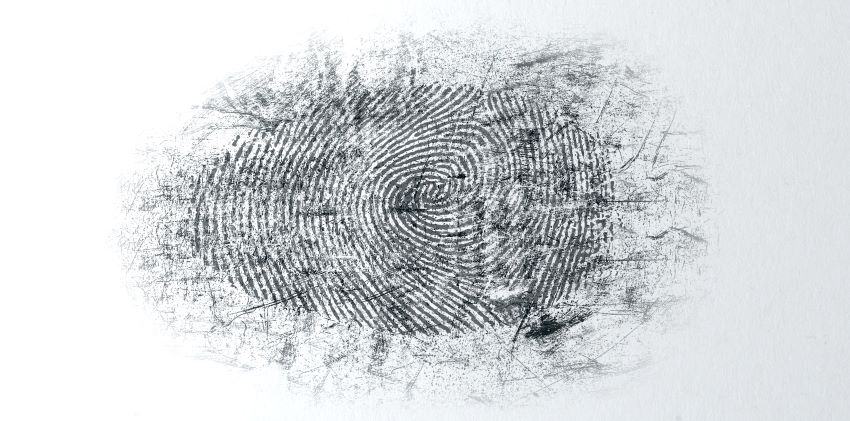
Since the late 19th century, fingerprinting has been an indispensable tool for identity verification and forensic investigation. After the initial idea of cataloguing to allow comparisons between prints for purposes of identification was formulated by Sir Francis Galton, fingerprinting became the first biometric measure accepted globally for criminal investigations. This approach provided a standardised method, eventually leading to extensive fingerprint databases used in law enforcement.
Traditional fingerprinting methods, such as powdering or chemical treatments, often require controlled laboratory environments and can be limited by surface type or age of the fingerprint. Recent research, published in RSC Advances, introduces a new fluorescent nanomaterial made of mesoporous silica nanoparticles combined with chitosan and dansyl-based dye, addressing these limitations by enhancing visibility and durability.
How it works
The nanomaterial binds to the natural oils left in fingerprints, creating a highly luminescent visual that is compatible with non-porous and porous surfaces alike, including glass, metals, and even skin.
Subscriber content
Read the full article
Full access to Tax Stamp & Authentication News™ articles, newsletters and archives.