
The Exploding Growth of Free Trade Zones: Challenges and Opportunities – Part 1
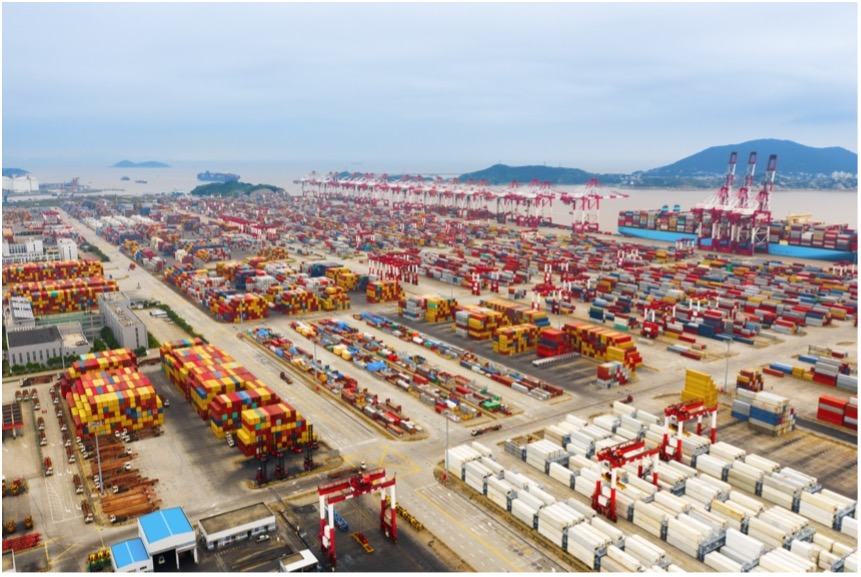
This article represents the first in a series that aims to educate readers on the dynamic nature of Free Trade Zones (FTZs) and key issues that need addressing, as well as, ideally, offer a means by which suppliers of secure track and trace technologies can address this heretofore untapped potential new market.
The establishment of FTZs – also referred to as special economic zones, free ports, bonded areas, etc. – has exploded over the past decades, from 79 in 1975 to over 5,000 today, representing a growth rate of over 6,200% over that period and accounting for about 20% of all global trade in goods.
There are many drivers behind this explosion in growth, including trade liberalisation, just-in-time manufacturing and other economic factors generally associated with trade globalisation. For many countries, FTZs are a key source of foreign investment and tax and duty revenues and have provided infrastructure and opportunities that would have otherwise not materialised.
The goal of most FTZs is to facilitate trade and stimulate economic growth by eliminating or delaying tariffs and other taxes (eg. VAT), minimising bureaucratic requirements, eliminating and/or dramatically reducing customs procedures and providing other business-related incentives. The general idea is to entice investors to produce and trade goods out of these zones, creating employment, stimulating business growth, and generating tax revenues.
FTZs have indeed proven to produce economic benefits, not just for their local economies but for global trade in general, and have been heavily promoted by development organisations such as the World Bank and IMF.
However, in addition to the benefits FTZs offer, they have a dark underbelly as a safe haven for illicit activities and criminal organisations. Indeed, FTZs provide fertile ground for illicit activities, so much so that they have been referred to as the problem child of global trade.
There is undisputed evidence that illicit trade flourishes in and around FTZs for a wide variety of reasons. Proximity to trade routes, relaxed regulatory regimens, private ownership and management of zones, and of course, the duty and tax benefits, make FTZs attract many forms of illicit trade. These include, inter alia, narcotics, counterfeits, grey market goods, protected wildlife, weapons, money-laundering, and even human trafficking.
According to the World Customs Organisation (WCO), around 90% of global trade flows through maritime transport, and a significant portion of this trade passes through FTZs. This makes FTZs an attractive target for organised crime groups, which seek to exploit the low tax and regulatory environment to facilitate their illegal activities.
There is no single, legally binding regulatory instrument governing FTZs like there is for trade in general (eg. WTO, WCO, WIPO, IMO), which makes it extremely difficult for local and international law enforcement to police FTZs. However, there are some rules and guidelines in place. Unfortunately, these are inconsistent and, with respect to controls, generally weak.
For example, Article 12 of the World Health Organisation’s Framework Convention on Tobacco Control (FCTC) Protocol requires, within three years of the entry into force of the Protocol, that parties implement ‘effective controls’ with respect to the manufacture, sales and trans-shipment of tobacco products. The FCTC Secretariat and parties have made some progress in this respect by disseminating a survey and commencing work on a policy document, but to date no clear guidelines have emerged. Furthermore, any forthcoming guideline will be limited to tobacco products only.
Are excisable goods that are produced and traded in FTZs considered to be the low hanging fruit for the tax stamp and secure marking industry, given the high rates of illicit trade for these goods? Or are they just the tip of a very large iceberg in combatting the many manifestations of illicit trade? Either way, developing ‘fit for purpose’ solutions that would be palatable to private industry will be no easy endeavor.
FTZs are complex, differentiated, and unique in terms of the trade related practices that occur within them, their overall ownership and management (government, private, PPP etc.) and the controls that regulatory authorities either have or don’t have over them.
More about free zones
FTZs have developed as an economic concept for both businesses and governments to achieve a wide variety of economic and trade policy-related objectives. Typically, this translates into goods from foreign nations not being subject to local export, import and other laws. But this is by no means a new idea.

Predecessors to what we now call FTZs existed at the time of the ancient Roman Empire, if not earlier. Traders from foreign lands who crossed the Empire’s borders were often mistreated, robbed, or even enslaved. The Empire offered them a space where they could be free from mistreatment by posting centurions inside and outside the zones for security and protection of both the goods and the traders, allowing business to flourish.
Later, when the shipping trade between European countries grew in the late Middle Ages, many port cities in Europe became the equivalent of today’s FTZs, allowing foreign ships to dock so that they could assemble, repack, and manufacture their goods before bringing them to market.
Today, governments and FTZ operators offer a range of incentives for businesses that choose to operate in FTZs, which typically include:
Duty exemption – no customs or excise duties are charged on imports into, manufacturing in, or exports out of FTZs.
Simplified procedures – goods declarations and other related regulatory documents (eg. certificates of conformity and origin) are not required for entry into or exit from the FTZ.
Accounting and record keeping is relaxed – bookkeeping for cargo movement is not required inside the FTZ – only company-level bookkeeping is required, and raw material consumption reporting may not be required.
Tax/duty delay and improved cash flow – goods may remain inside an FTZ for an unlimited duration.
No restrictions on sales and resales – there are no restrictions on the number of times goods can be sold within an FTZ.
Access to foreign markets – FTZs provide businesses with a strategic location to access foreign markets and customers, without having to establish a physical presence in that country.
Improved infrastructure – FTZs often have better infrastructure than other parts of the country, with modern transportation, communications, and utility systems, making it easier and more efficient to conduct business.
Regulation of FTZs
The term ‘regulation’ must be used carefully here since, in truth, it may not be entirely accurate with respect to many, if not most FTZs.
Regulation of zones is determined by the specific country or legal entity operating the zone. The only international convention that formally defines and procedurally seeks to provide regulatory guidance with respect to FTZs (on a voluntary basis) is the International Convention on the Simplification and Harmonisation of Customs Procedures, known as the Revised Kyoto Convention (RKC). It lists 21 standards covering a wide range of customs procedures but is not binding nor has any legal standing with respect to international law (eg. World Trade Organisation).
There are other voluntary guidelines and best practices that are advocated by organisations such as the World Free Zone Organisation. However, without any legal standing these are, for the most part, toothless when it comes to combatting illicit trade.
Regulation/management of zones is also not a ‘one size fits all’ exercise, since there are many different types of zones, including, inter alia, free trade zones, commercial free zones, duty-free areas, export processing zones, free-ports, enterprise zones, single factory zone schemes, and storage zones. While the specific requirements, rules, procedures and even ownership/management may differ, they all relate to a delineated area offering special incentives and regulatory regimes aimed at promoting trade.
A main incentive for illicit trade is in the form of simplified, or even absent customs procedures in the FTZs. This translates into goods entering zones without having to provide data for risk management purposes, effectively allowing goods to enter the country without technically or legally being there. Connections with customs information technology and risk management systems are very rare, if non-existent, in most zones, so customs and regulatory authorities are rendered nearly blind when it comes to FTZ related consignments.
A fertile breeding ground for illicit trade
As much as the incentives offered by FTZs attract legitimate businesses trying to facilitate trade and promote economic growth, they also attract the negative element of businesses trying to subvert rules of law and regulatory controls, who use the FTZ as a haven for illegal goods to be manufactured, stored, and traded. Criminal organisations can use the FTZs as a hub for their operations, where they can trade in illegal goods without the risk of detection by law enforcement agencies.
Another way that FTZs contribute to illicit trade is through the use of shell companies. Criminal organisations can set up shell companies within FTZs that have no legitimate business operations, but that are used solely for the purpose of smuggling illegal goods.
These shell companies can be used to avoid taxes, tariffs, and other regulatory requirements, making it easier for criminal organisations to move their illegal goods across borders undetected. The use of shell companies within FTZs also makes it difficult for law enforcement agencies to track the movement of illicit goods, as the companies themselves may be difficult to trace back to their owners.
Any mechanism put in place to facilitate trade by relaxing regulatory control, such as an FTZ, is only as safe and secure as the ability to monitor and enforce controls over the area and the businesses within it. The lack of proper regulation and oversight within these zones can make it difficult for law enforcement agencies to identify and prosecute those involved in illicit trade, posing a significant challenge to global efforts to combat organised crime.
According to a World Customs Organisation (WCO) survey, almost 40% of member customs administrations are not involved in the establishment of FTZs, and more than 40% are not involved in approving the applications of companies wanting to operate in the FTZ. Even if they were involved, customs only very rarely conduct substantive checks of applicants. The ease of setting up entities inside FTZs has been highlighted by several papers as a key enabling factor for illicit trade.
In 2019, the European Commission explicitly designated FTZs as one of the new risk factors for money laundering and terrorist financing, and a report from the European Parliament proposed the ‘urgent phasing down’ of FTZs in the European Union.
Also in 2019, The Organisation for Economic Co-operation and Development (OECD) issued the Recommendation of the Council on Countering Illicit Trade: Enhancing Transparency in Free Trade Zones to provide a framework for member states to address this growing problem. The OECD stated, ‘…the gains from reduced customs presence in FTZs can offer opportunities for illicit trade’.
A joint report by the OECD and the European Union Intellectual Property Office found that the higher the number of firms operating in an FTZ, the higher the probable value of illicit products flowing through it. The report focused on illicit tobacco trade specifically and contained a number of other key insights, including:
Seizures of illicit goods highlight the prevalence of intra-regional trafficking – all of the seizures of illicit tobacco in FTZs in the Americas, Asia Pacific and West/Central Africa are reported to have originated in the same region; 56% of seizures in the Middle East and North Africa came from the region itself, and 39% from Asia Pacific; 62% of illicit tobacco seized in FTZs in Europe originated in Europe, and 18% in the Middle East/North Africa.
Around 10% of seizures inside FTZs relate to tobacco (62 out of a total of 626 seizures, the largest being for drugs, 23%, and IPR, 22%).
Around 16% of customs seizures of goods coming from other countries’ FTZs involve tobacco.
34% of respondents to a survey had encountered tobacco smuggling in FTZs (given the limited scope of customs activity in FTZ the real prevalence of smuggling is likely much higher).
How can FTZs continue to provide benefits but also serve to combat illicit trade?
FTZs are clearly delivering considerable benefits to both government and traders alike. However, on the downside, they are providing a haven for illicit trade to flourish, diminishing the intended benefits and placing an unfair burden on national and international governments and law enforcement entities.
Illicit trade feeds a booming multi-trillion-dollar global illegal economy that puts public health and safety at risk, upends the rule of law and negatively impacts the investment climate. It is a threat multiplier that helps fuel transnational crime, corruption, and greater insecurity and instability around the world.
Clarifying and strengthening regulatory authorities’ roles and empowering them to enforce regulations may indeed be a needed first step to better address illicit trade that flows from FTZs. But what can the secure marking and supply chain security markets bring to the table? Can world-class technologies used in the traditional functions of product and currency security, track and trace and authentication play a much larger role?
These authors think the answer is yes!
The next articles in this series will delve into FTZs and their role in illicit trade, and provide further thoughts on how this potential market can be addressed.
Michael Eads is the CEO of Sovereign Border Solutions (SBS), a global consultancy specialising in global trade and customs policy and related systems and technology.
Sarah Smiley is the Associate Director of Trade Policy and Regulatory Compliance of SBS.
Subscriber content
Read the full article
Full access to Tax Stamp & Authentication News™ articles, newsletters and archives.