
The Exploding Growth of Free Trade Zones: Challenges and Opportunities – Part 3
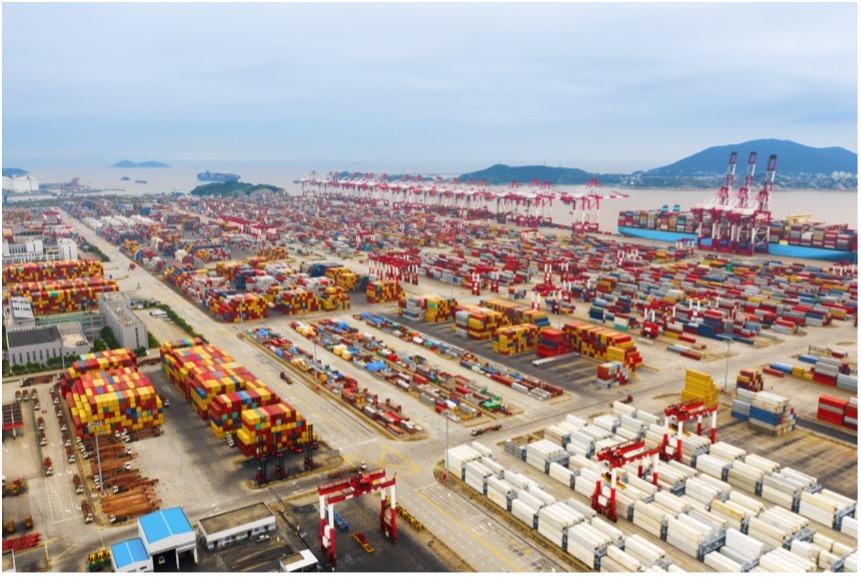
This article is the third in a series on the topic of illicit trade and its relationship with free trade zones (FTZs). It is intended to foster consideration and discussion for secure traceability solutions, building upon the analyses provided in the articles published in this newsletter in March and August 2023.
Pandemic of illicit trade
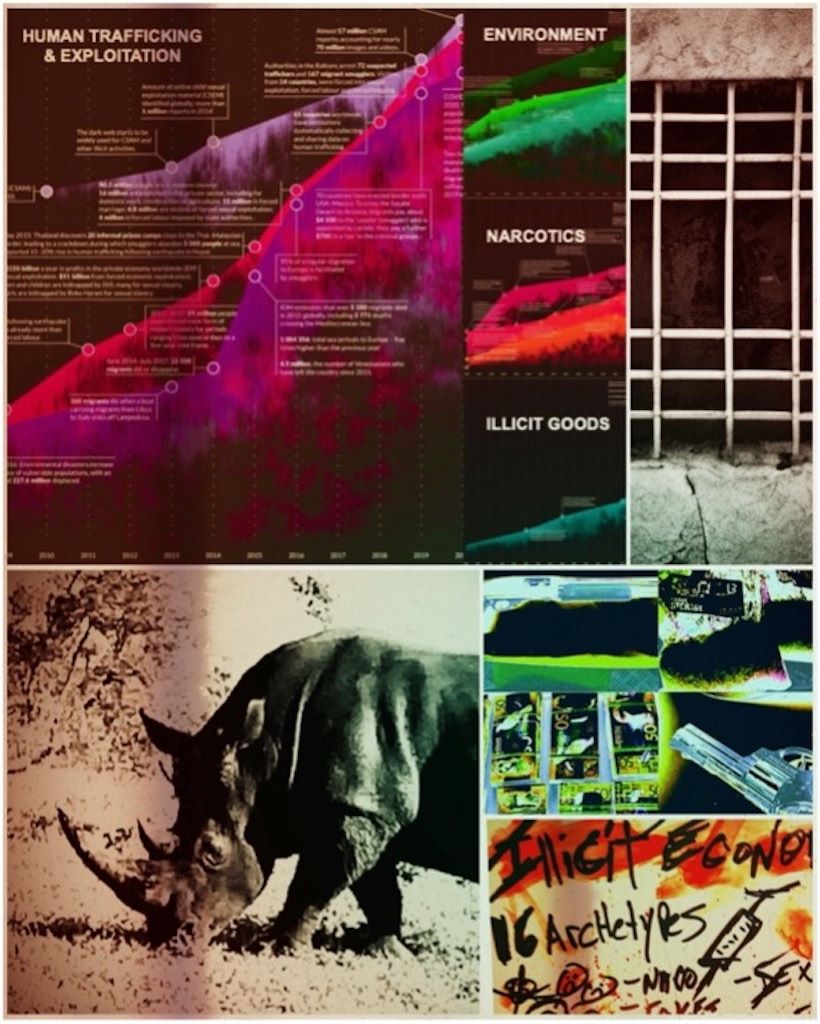
Illicit trade, across the spectrum of at least 16 topologies and interrelated criminal activities (hereafter grouped within the term ‘illicit economy’) is growing at an alarming rate. Despite massive efforts by global regulatory and law enforcement authorities, good practices developed by some of the world’s most qualified NGOs, thousands of research studies, robust investigative journalism, industry-driven initiatives and, a binding global treaty (covering only tobacco products), the illicit economy has only flourished.
FTZs have become the preferred base of operations for illicit traders. Their geographic advantages in terms of access to transport/shipping, raw materials, low-cost labor, and strategic access to markets, coupled with a lack of regulatory requirements (eg. customs formalities), controls, oversight, and enforcement, have turned FTZs into the perfect neighborhoods for criminal organizations to call home.
FTZs have thus fueled the viral growth in the illicit economy, which poses a harrowing threat across a wide spectrum of economic activity and society in general. Even worse is the fact that the most vulnerable communities and species across the planet are getting hit the hardest.
Alarmingly, there is no clear cure on the horizon and no united, global response. Despite longstanding efforts by the aforementioned stakeholders to provide a counterforce to the illicit economy, the battle is not going well.
For the most part, stakeholders are acting in their own silos, restrained by conventional thinking and structures, and not adapting fast enough to the dynamic nature of the illicit economy. It’s like watching a football game where the teams have no playbook, quarterback, or game plan – where each player does his own thing.
Conversely, the illicit economy is evolving, becoming ever more complex, interconnected, innovative, and taking advantage of all that the digital age has to offer. If nothing changes, the current trajectory is dire, by virtually every measure.
Radical and disruptive change is imperative. Without this, the world may very well be reaching a tipping point where the illicit economy is so pervasive, entrenched, profitable, and even tolerated, that it becomes a permanent ‘failed state’ in the geography of global trade.
Size of the problem… who knows?
The only thing we know about the size of illicit trade, as a whole, is that it is some measure of ‘very big’. There is no consensus on its size and no unified methodology or formula on how to quantify it. Estimates are all over the place.
According to the Organization for Economic Co-operation and Development (OECD), illicit trade encompasses 3-5% of global GDP, which equates to 3-5 trillion US dollars. But this is a massive underestimation as it does not include the ripple effect across a broad ‘impact spectrum’ that factors in the environment, sustainability, public health, and geopolitical stability, to name a few areas.
How much is the extinction of the rhino worth? Every 10 hours, a rhino is poached in Africa, and, at this pace, experts predict they will be gone by 2036. 37% of all extinctions are a direct result of illegal hunting and fishing to supply the illicit market.
This year, the World Economic Forum stated that the illicit trade in wildlife ‘is one of the world’s largest – and most profitable – criminal activities’, estimated to be worth $20 billion per year. But this number explodes to over $44 trillion (nearly half the global GDP) when considering the entire value chain that relies on nature and interlinked economic activities.
The inability to quantify illicit trade should come as no surprise. The illicit economy is embedded in the same structures used by the licit economy. It exists in plain sight but is, and strives to be, mostly invisible. It encompasses a multitude of activities and actors. Like dark matter, we often can only detect it by seeing the gravity of its corrosive impact.
Perhaps this uncomfortable lack of clarity has distracted policy makers, academics, and the business community by perpetuating a loop of analyses at the expense of collaboration, innovation, and action. We may never be in the position of having complete, accurate and irrefutable metrics, but we do have enough data to move forward. Illicit trade is big, it’s bad, and growing faster than its opposing forces. This is enough to go on.
EU TPD implementation – a fumbled start for track and trace
The April edition of this newsletter featured an article, titled ‘Disagreement Reigns Over Role of EU Track and Trace’, highlighting the rift between tobacco stakeholders and the European Commission (EC) on the practical value of the European Union’s (EU) track and trace system.
EU representatives have provided no concrete metrics on the performance of the system in terms of its intent: to combat illicit trade. Instead, the EU relied on ambiguity and vainglory in defending the system, stating that it had collected data on 100 billion packs of cigarettes. And? It’s very difficult to argue with the Secretary General of the European Smoking Tobacco Association, Peter van der Mark, who stated that ‘the reason the EU has not communicated concrete information… is probably because there is nothing to be proud of’.
Despite the glaring shortcomings and the big letdown, there are at least four lessons we can learn from this missed opportunity: 1.It provides us with a benchmark of what not to do.
2.Information technology-centric systems should not be designed by politicians or bureaucrats. Secure track and trace solutions need to be designed and built by the professionals.
3.If you’re going to put money and effort into better regulating a sector, or sectors, of the economy with secure track and trace, alignment to the entire problem set is essential. This can provide other aligned stakeholders with features, functions, and benefits to unlock the collaboration required to empower as many stakeholders as possible.
The EU’s system was narrowly focused on capturing supply chain events to detect anomalies in the legal tobacco trade. The system only validates licit supply chains in the hope of creating a mirror view of the illicit. Although the underlying legal mandate was based on public health, there is no reason it could not be designed to allow extension to a whole government solution.
Limiting a solution to only one sector of the economy is a missed opportunity to address other typologies of illicit trade (for example, the EU has mandated a completely different system for the pharmaceutical industry).
4.If there are applicable industry standards available, incorporating them is a no brainer. It begs the question why the EC left this open-ended.
A fundamental step change across the board
When one does a search on the words ‘illicit trade’, tobacco dominates the results. Does that mean tobacco products pose the highest risk to humanity?
Excisable goods serve as a key pillar and ‘cash cow’ across the illicit trade value chain. To paraphrase the author Kurt Vonnegut, they provide a myopic view of the topic that can be characterized by ‘looking at a landscape with one eye, through a pipe on a moving train’. Has this fostered ‘tunnel vision’ at the expense of other illicit topologies and related manifestations, actors, and impact?
Additional efforts to map the ‘genome’ of illicit trade in tobacco will unlikely provide the revelations they once did. Sticking to the status quo will only perpetuate the current siloed approach that is a big part of the problem. What collaboration does exist between stakeholders is typically limited (eg. country-to-country, agency- to-agency) and sporadic, with limited data and information sharing.
Government is not known for its willingness or ability to embrace change, and particularly if the change is transformative. This is not going to change any time soon, as this is cemented in how government entities operate (mandate, labor laws, funding etc.).
Adaption and innovation are the stage upon which the private sector shines. The disruptive, technology-driven advances over the last decade should serve as a model of how change can be realized quickly and redefine the status quo.
Perhaps the most fundamental problem with FTZs is the absence of standardization or regulation, and legal constraints on law enforcement entities in the countries where they are located. This creates a veritable free-for-all that allows each FTZ to define its own rules and operating and governance models and find ever more incentives to attract investment in a regulatory race to the bottom.
The regulatory gap has recently attracted the attention of the global business and regulatory communities and efforts to clean up FTZs are ramping up. Multiple stakeholders, including the OECD, World Customs Organization (WCO) and business community groups have issued best practice guidelines and initiatives within the last five years. Key players in the excisable products industry are also pushing for more regulation of FTZs and their input should not be dismissed.
The OECD recently issued recommendations for the development of a certification scheme for ‘clean free trade zones’. It provides a solid framework for FTZs to implement transparent governance tools that adhere to broader international standards set by the World Trade Organization (WTO) and WCO. The framework is composed of 140 steps: from governance, due diligence and capacity building to audit and risk profiling. The World Free Zones Organization has also launched its own Safe Zone program.
This is a very good start and represents a growing demand for change. However, there are a few missing components in these initiatives that require consideration: they are not binding under international law, leaving them essentially ‘toothless’, and they are not supported by clearly defined incentives or disincentives to facilitate adoption by stakeholders from both the public and private sectors.
Eating the elephant
From one perspective, the lack of a global, regulatory framework for FTZs can be viewed as a bridge too far. However, from another perspective, the absence of structures and formalities represents an open playing field yet to be defined. Industry-driven standards materialize much faster than anything governments can achieve.
After the 9/11 attacks, supply chain security standards, such as the SAFE framework of standards, authorized economic operator programs, and others, were set up quite quickly. Although not legally binding, governments offered preferential treatment to supply chain actors that signed up to the standards. The voluntary nature of these standards, coupled with the ‘carrot and stick approach’, worked.
The ‘good guys’ in the global regulatory and enforcement world have another key advantage over the illicit economy, even though many may not fully appreciate it. Today’s data rich environment and technology innovations provide the opportunity to unlock the unrealised and transformational advantages of collaboration within new and existing frameworks and structures.
90% of all data that exists today was generated in the last two years and this is predicted to increase by 150% by 2025. With disruptive technologies such as blockchain and AI, traditional constraints related to trust, privacy and actionable intelligence are diminishing.
If deployed smartly, erosion of the opaque veil that masks the illicit economy is within reach. The illicit economy, although highly collaborative, is only so within distinct, tribal-like cells and their interrelated supply chains. There is no trust amongst thieves.
However, the structures that currently exist within multilateral trade agreements and longstanding relationships (eg. Interpol, United Nations, WCO, WTO) can become the game changer. Outdated frameworks for data sharing are no longer relevant, now that we have tools like blockchain at our disposal to launch a data-rich, coordinated assault on the illicit economy. This can leverage collective knowledge, skills, resources, and existing structures to dramatically change the playing field and gain back lost ground.
A potential way forward
What is required is more effort towards orchestrating a global counterbalance to the illicit economy. The building blocks required to enable this paradigm shift are mostly there. We have divided them into six categories: policy and collaboration; standards and best practice; knowledge archive and fact base; innovative technology; market-based drivers and incentives/dis-incentives; strategy for collaboration amongst key stakeholders.
FTZs are used by some of the world’s most reputable and trusted companies with brands, shareholders, and a reputation to protect. These companies are not happy with their naughty neighbors. The last thing they want is to be lumped in with illicit actors by virtue of their legitimate and beneficial usage of FTZs.
Emerging best practices prove that there is a growing consensus and demand for more control over FTZs. How can this demand be transformed into business opportunities for innovators and experts in the supply chain domain?
Ports and FTZs already rely on a multitude of service suppliers, including those providing products and services mandated by governments. Certification and testing, product conformance, origin and provenance, and fumigation, are longstanding service sectors that are only growing.
As for the track and trace sector, this is expected to grow from $6.42 billion in 2023 to $20.10 billion by the end of this decade – a CAGR of 17.7%. Furthermore, 61% of the world’s consumers are now concerned with sustainable and environment-friendly products, and this is growing rapidly.
Therefore, corporate responsibility is no longer a vapid beauty pageant to placate shareholders and consumers. It has developed into real-world, tangible, and measurable activities. Companies are making investments to protect their brands, reputation, and profitability.
What is lacking are targeted service offerings to preserve the benefits that FTZs offer whilst providing assurance to multiple stakeholders that the supply chains utilizing FTZs are, in a sense, ‘authenticated’.
Addressing this unique but clearly emerging market will require outside-the- box thinking, a break with tradition, and risk. Can the highly innovative, secure track and trace sector be part of the solution?
The track and trace sector is characterized by unique, leading-edge technology, and first-hand insights into licit and illicit supply chains. The potential client base is primarily made up of governments, brand holders, and NGOs. The innovation that exists within the secure track and trace industry is laudable, but is its potential being constrained by a ‘box’ of its own making?
Michael Eads is the CEO of Sovereign Border Solutions (SBS), a global consultancy specializing in global trade and customs policy and related systems and technology.
Sarah Smiley is the Director of Trade Policy and Regulatory Compliance of SBS.
Subscriber content
Read the full article
Full access to Tax Stamp & Authentication News™ articles, newsletters and archives.