
The Exploding Growth of Free Trade Zones: Challenges and Opportunities – Part 2
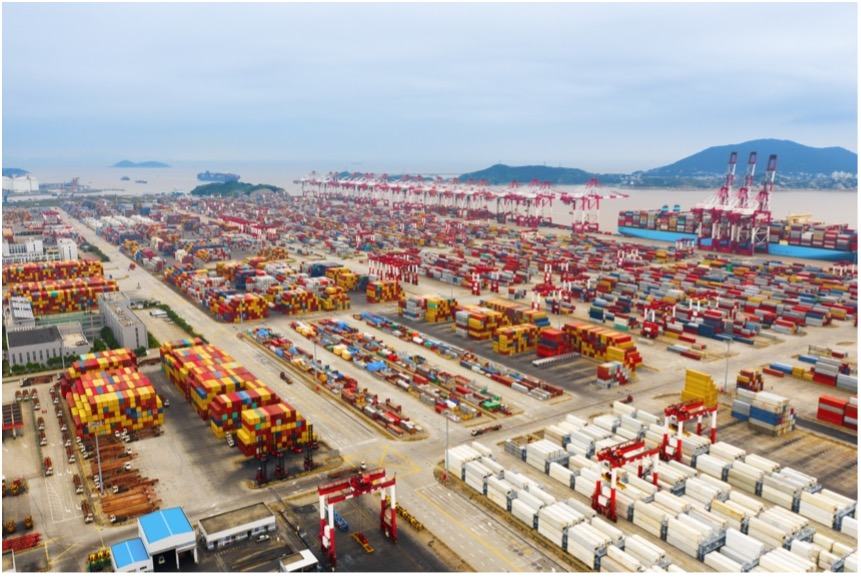
This article is second in a series that aims to educate readers on the dynamic nature of free trade zones (FTZs) and key issues that warrant addressing, and offers a means by which suppliers of secure track and trace technologies may find opportunities in this potential new market. The first article can be found in the March 2023 issue of this newsletter.
FTZs – an economic growth tool for both legitimate and illicit trade
FTZs have boomed in recent decades as governments fight to attract new businesses and foreign investments. In 1975, it was estimated that 79 FTZs existed in a few dozen countries. By 2019, data from the Organisation for Economic Co-operation and Development (OECD) indicated that FTZs had grown by 4,300%, with at least 3,500 FTZs mapped across 130 countries, employing more than 66 million workers.
The goal of most FTZs is to facilitate trade and economic growth by eliminating or delaying tariffs, minimising bureaucratic requirements, eliminating or dramatically reducing customs procedures, and providing other tax and business-related incentives.
The general concept is to entice investors to produce goods in and trade goods out of the zones, creating employment and generating tax revenues for the host country.
FTZs have proven to produce economic benefits, not just for their local economies but for the growth in global trade, and have been heavily promoted by development organisations such as the World Bank and International Monetary Fund.
There are many different types of zones, such as free trade zones, commercial free zones, duty-free areas, export processing zones, freeports, enterprise zones, and single factory zone schemes. While the details may differ, they all relate to a delineated ‘secure area’ offering special incentives and regulatory regimes.
FTZs are complex, differentiated, and unique in terms of the trade-related practices that occur within them, including their overall ownership and management (government, private, private public partnerships) and the controls that regulatory authorities have, or do not have, over them. FTZs service maritime traffic as well as air and ground traffic. Many are located at international airports and national frontiers from which goods can be transported overland.
The complexities of the zones allow for various colours of trade. The black market deals in banned, counterfeit or stolen items, which are sold, traded or enter the market illegally and which are, usually, pursued by authorities. The grey market involves legal products that are distributed through channels unofficial, unauthorised, or unintended by the original manufacturer. The white market is the legal, official, authorised, and intended market for goods and services.
The opportunity cost of FTZs
An OECD and EU Intellectual Property Office study confirmed the link between FTZs and trade in counterfeit products. It found that the number and size of FTZs in a country correlated with an increase in the value of counterfeit and pirated products by that economy. Each additional FTZ in an economy contributes a 5.9% average increase in the value of illicit trade. The benefits to host economies therefore come at a cost as, in reality, governments are forgoing revenue, given that gains from FTZs often fail to offset the losses from illicit trade supported by the zone.
According to a World Customs Organisation (WCO) survey, almost 40% of member administrations are not involved in the establishment of FTZs, and are also not involved in approving the applications of companies wanting to operate in the FTZ. The ease of setting up entities inside FTZs has been highlighted by many studies as a key enabling factor for illicit trade. In many ways, it is an intentional ‘blind spot’ that puts investment in the zone first and the risks to the host country and global economy second.
The OECD’s Task Force on Countering Illicit Trade (TF-CIT) recently stated that ‘there is a risk that, without additional transparency and oversight, the economic benefits from FTZs could be jeopardised’.
There is undisputed evidence that illicit trade flourishes in and around FTZs for a wide variety of reasons: proximity to trade routes, relaxed regulatory regimens, private ownership and management of zones and, of course, the duty and tax benefits. This provides a fertile breeding ground for many forms of illicit trade, including, inter alia, narcotics, counterfeits, grey market goods, protected wildlife, weapons, and other goods that are simply leaking into local regional and global economies, without the regulations and taxes that normally would have been required.
FTZs are not just used for black market and illicit goods
There is a massive grey market for legitimate, original goods that, for a number of reasons, have been lost by the original manufacturer and end up in FTZs.
Some global firms control their supply chains from the point of origin to the end buyer. Many do not. And this is where grey market goods come in. They are genuine, but not in the market they are meant to be – the global firm has not intended for them to be there.
FTZs are the world’s largest secret hiding place for grey market goods, which are normally siphoned off from supply chains from one market and sold on another market to take advantage of price variants.
We spoke to a former managing director of one of the world’s largest brands in the excise industry. He had the following to say: ‘grey market goods are a monster of our own making. If you boil it down, it comes to this: we made the product, shipped it, got paid for it but are not happy with where it found its home.
‘Large multinationals are not perfect. We have marketing, sales, and logistics and although we cooperate and coordinate, in essence, we have different objectives and our rewards in terms of salaries and bonuses are based on different measures.
‘A sales executive, for example, who is not hitting his targets, may very well sell to a third-party buyer in an FTZ to get his product numbers up, and that product ends up on the grey market. How can we expect governments to police our supply chains if we can’t do it ourselves’?
Black market and counterfeits made easy
The WCO has reported that Dubai’s Jebel Ali FTZ is one of the world’s worst-offending centres for the transshipment of counterfeit consumer goods, as counterfeiters try to stay one step ahead of customs authorities, who target a higher proportion of shipments entering ports from countries deemed suspicious. This oldest, and probably largest, FTZ is attached to Jebel Ali, one of the Middle East’s busiest shipping ports.
In 2022, it was reported that the port handled 1 billion tonnes of container cargo over the course of 10 years. In 2022 alone, it handled 14 million twenty-foot equivalent units (TEU). A mass quantity of consumer products transshipping through this port include counterfeit pharmaceuticals and tobacco.
It is estimated that the United Arab Emirates (UAE) has 20 cigarette factories, many of which are based in the Jebel Ali FTZ. In the past, customs officials have closed factories found to be producing counterfeit cigarettes infringing on the trademark rights of legitimate brands. However, even where genuine products are made, there can still be illegal activity when legitimate cigarettes are sold to smugglers, who then ship the tobacco to other countries with the aim of evading import tax and sales duties.
Counterfeiters use transit or transshipment routes through multiple, geographically diverse FTZs, which blurs the picture. This is just one way that illicit traders disguise the true nature and origin of the products. Once introduced into an FTZ, counterfeit or grey market goods may pass through a series of economic operations, as described in the aforementioned tobacco example, including assembly, manufacturing, processing, warehousing, re-packaging and re-labelling. Once these operations are complete, the goods can be imported directly to the national territory of the hosting state or re-exported to another country for distribution, or to another FTZ where the process is repeated.
In an unregulated FTZ, counterfeiters can manufacture or import goods, including raw materials or sub-components, just as they would outside the FTZ. Methods of deception range from straightforward smuggling in containers with false walls and cover-loads, to mis-declaration of goods.
In most countries, shipping and customs documents do not have to provide brand names. And since FTZs are not required to provide the same documentation as direct imports, illicit traders exploit these gaps by providing information that does not correspond with the actual goods.
Often, domestic and FTZ-related companies can even be unwitting partners to these practices. A printer, for example, may produce trademark-infringing packaging materials under the direction of third parties purporting to be legitimate licence holders.
The COVID-19 pandemic increased the trade in dangerous fake goods, especially in the case of counterfeit medicines where broken supply chains and shifting demand created new potential for criminal activity. This overall increase in fakes impacted not only medicines and personal protective equipment, but many other goods that could also pose health and safety risks, including consumer goods and spare parts for vehicles.
Intellectual property lawyers Marius Schneider and Nora Ho Tu Nam are concerned that Africa’s plethora of FTZs already unite organised crime groups specialising in the trade in illicit medicines.
‘At ports like Mombasa, and other FTZs, pharmaceutical products are packaged and repacked in ways that disguise their origins,’ explained Schneider. ‘There’s no doubt that the use of FTZs is facilitating and boosting trade in counterfeit pharmaceuticals. Could they have a role to play in crime around COVID vaccines? Definitely. Because in our experience they aren’t policed properly, and they are also very open to corruption.’
The UAE, in an attempt to limit the damage being caused (in part, by operations in the Jebel Ali FTZ), has increased its efforts to eliminate fake medicines and medical products from reaching consumers. Some of its initiatives include the use of an app that detects counterfeit medical products, and a pharmaceutical track and trace system.
No man’s land – trying to find justice in the FTZs
The major issue brand owners face when dealing with counterfeits in FTZs is the question of jurisdiction between customs and FTZ administrations per country. There is frequent uncertainty as to the authority of custom agents without a raid warrant in an FTZ.
Often, entry by customs officials into an FTZ is not allowed and access to warehouses may be restricted. In addition to jurisdictional issues, the complexity of intellectual property legislation varies by country and FTZs do not have uniform regulations.
Communication among the agencies themselves is also a challenge. If customs can seize illicit goods, they often seek to destroy the goods immediately, as this abruptly resolves the immediate issue of the existence of the illegitimate goods. But if the seized goods are destroyed, this can weaken, and possibly put an end to a legal case, as there is no evidence to bring forward in court.
When it comes to prosecuting counterfeiters, the issue of a lack of clear jurisdiction becomes even more apparent. When counterfeit litigation arrives before a court, three requirements must be met in order for the process to proceed: proof of the counterfeit product, the exact location of these counterfeit products, and the identity of the responsible party. Counterfeit litigation is already complicated outside of the FTZs – within FTZs, it is even more so.
While agencies attempt to understand the complex dynamics of FTZs, organised criminal actors continue to move illicit goods, launder money, and more.
There is a clear lack of due diligence in terms of product flow in and out of FTZs, as well as a general lack of political will to curb illicit trade. Often, judges attempt to protect FTZs as they are often located in impoverished areas, and there is little political benefit to disrupting normal economic activity.
Third-party solutions needed
Is there an appetite for more regulation and control of FTZs? It depends on whom you ask. Customs authorities tend to prefer more control. However, one of the benefits of an FTZ is reduced customs controls.
Perhaps this is a gap in the market that can be filled by new thinking and innovative technologies that can still provide the benefits FTZs have to offer, while also providing more control and assurance that goods from FTZs are compliant. Authentication of goods, track and trace and new data technologies may be the answer to finding the right balance.
The next article in the series will focus on best practices and technologies for better management and oversight of FTZs.
Michael Eads is the CEO of Sovereign Border Solutions (SBS), a global consultancy specialising in global trade and customs policy and related systems and technology.
Sarah Smiley is the Director of Trade Policy and Regulatory Compliance of SBS.
Subscriber content
Read the full article
Full access to Tax Stamp & Authentication News™ articles, newsletters and archives.