
Accessories Top List of Fake Goods Seized in EU

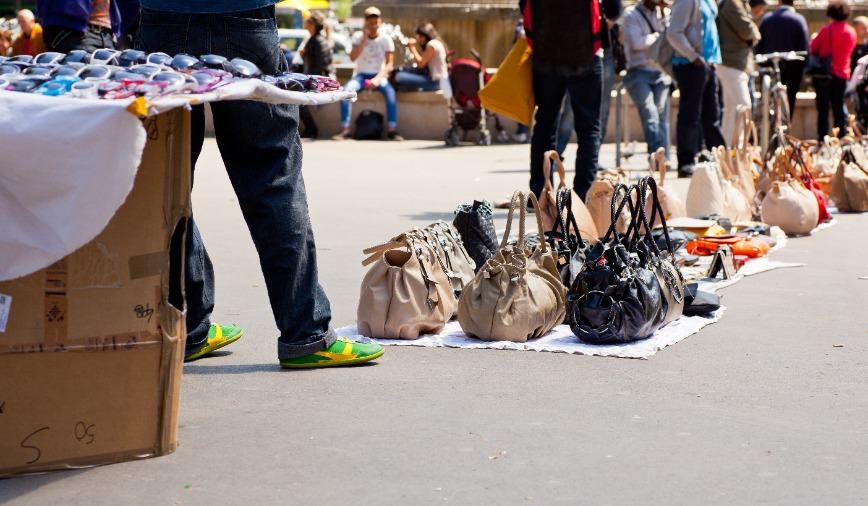
Intellectual property infringing products with a value of almost €2 billion were seized in the EU’s internal market and at external borders in 2020, according to an annual seizures report 1 published at the end of last year.
For the first time, the report was prepared jointly by the EU Intellectual Property Office (EUIPO) and Directorate General for Taxation and Customs Union, bringing together data from within the EU as well as at its borders.
Accessories were the most commonly intercepted counterfeit products in 2020 (both in terms of the number of items seized and their estimated value), followed by packaging materials, recorded CDs/DVDs, labels, tags and stickers, and clothing. Together these accounted for around half of all intercepted goods.
The results were compiled from data supplied by police, customs and market surveillance authorities at the EU’s external borders and in the internal market.
2020 was of course the year that the COVID-19 pandemic started to take hold, resulting in depressed trade during the first few months as fewer goods crossed borders. But while the total number of seizures was down by 34% compared to 2019, the value of fake goods seized at EU borders rose by 2.4% to €778 million.
As in previous years, China was the main source country for the majority of counterfeit goods entering the EU across all product categories, with Hong Kong a key source of mobile phones and accessories, as well as labels, tags and stickers. Turkey also featured prominently for clothing, accessories and medicines.
There was a larger increase in the number of counterfeit goods stopped within the EU market, up 4.6% to 46 million, although the value fell from €1.8 billion in 2019 to €1.3 billion in 2020. The value figure has however been skewed by a number of factors, including the exit of the UK from the EU and other data gaps.
Subscriber content
Read the full article
Full access to Tax Stamp & Authentication News™ articles, newsletters and archives.