
2D Barcodes Herald New Authentication and Brand Awareness Possibilities

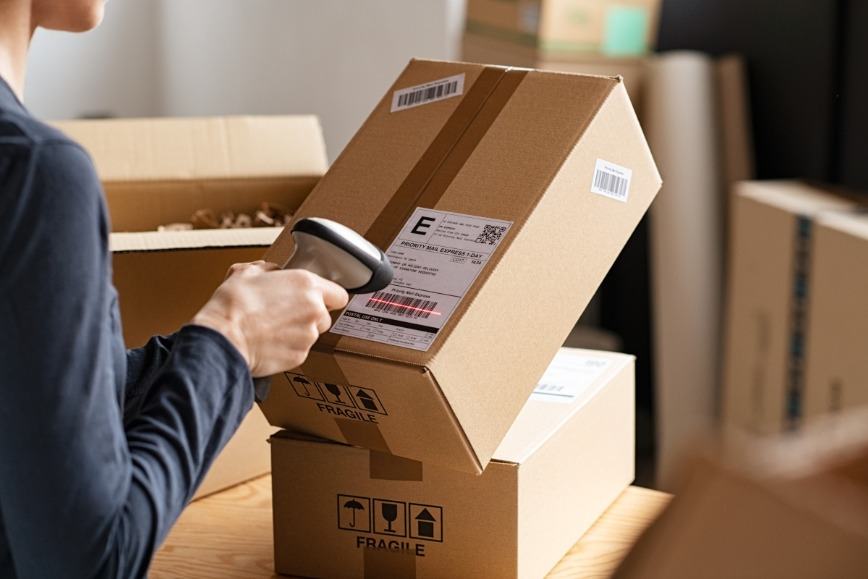
The UPC (Universal Product Code) linear barcode has offered price lookup functionality for decades. However, the classic barcode is no longer keeping up with today’s growing demands for greater product information transparency, traceability, and authentication.
The industry is therefore moving toward two-dimensional (2D) barcodes that are able to carry more information. 2D barcodes allow for a single, standardised way to meet both supply chain needs and evolving consumer requirements.
The information carried by 2D barcodes can also help enable:
Improved inventory management
Enhanced recall readiness
Greater sustainability and ethical sourcing
Better product authentication
Greater brand trust.
The industry has set a date to make the transition to accepting 2D barcodes at point-of-sale – referred to as ‘Sunrise 2027’.
To help prepare for the transition away from linear codes, retailers are experimenting with a new 2D barcode standard capable of sharing much more information than the traditional zebra-shaded stripes seen on most consumer products, according to the notfor-profit information standards organisation GS1 US.
The standard could also be used in warehouse and logistics settings, but GS1 is currently focused on the ‘point of sale’ scanners used at retail stores and cash registers, according to Carrie Wilke, the group’s Senior Vice President, Standards & Technology.
In support of the switch over, GS1 has published a ‘Barcode Capabilities Test Kit’ to help retailers evaluate their readiness to transition from linear UPC to data-rich 2D barcodes. Companies can use the kit to measure their ability to process the new codes both with their front-end scanning hardware — such as those found in self-checkout aisles at grocery stores — and also the back-end software systems that process the data.
According to Wilke, the 2027 target date is an optional timeline set by the retail industry in collaboration with GS1 US to equip consumers with more information about the products they buy. Retailers will not be required to change over to the new standard at any specific time. Rather, the project is a phased migration plan for implementing 2D barcodes, which will guide brands through labelling transition considerations while further ensuring reliability of 2D barcode scanning.
Retailers that do choose to implement the new barcodes will be able to communicate far more data to consumers than a basic price tag, adding information on product sustainability, traceability, ingredients, packaging, and specific batch and lot numbers, expiration dates, and on-demand discounting, Wilke stated. In addition, the new standard is easier for scanners to read than current UPC codes, which can be obstructed in conditions like steep angles, bad lighting, or wrinkled labels.
‘Global retailers, brands and solution providers have been moving toward the use of 2D barcodes to provide consumers with detailed product information and transparency,’ Wilke said in a release.
‘However, there are many other supply chain benefits, including improved inventory management, recall readiness, sustainability, ethical sourcing, product authentication and brand trust. A single 2D barcode conveys limitless information in a machine-readable format, and while the transition is a multi-step process, GS1 US will be collaborating with industry to align on capabilities for success.’ As a neutral global standards body, GS1 is coordinating the transition effort to ensure that recommendations and guidance include the needs of all stakeholders to produce a fully interoperable, global solution. GS1 US will continue to work with the retail industry globally to create requirements, conduct testing, analyse results and provide recommendations to optimise 2D barcode placement, read priority and scanning performance in both the dual (UPC + 2D) and single (2D) marking scenarios. This includes testing with the University of Memphis AIDC Lab. Insights will also be incorporated into guidance developed for the industry globally.
‘While the transition to 2D barcodes is still in its infancy, we understand that benefits around sustainability, traceability, supply chain visibility and meeting the needs of consumers are creating a great deal of interest across industry,’ said Marcia Mendez, Senior Program Manager, Walmart.
‘Ultimately, suppliers will likely drive this evolution as they increasingly label their products with 2D barcodes; however, retailers will need to ensure that not only can they scan 2D barcodes, but also read and ingest the data, which we’ve learned are two very different capabilities during the pilot project’.
Subscriber content
Read the full article
Full access to Tax Stamp & Authentication News™ articles, newsletters and archives.