
Ecuador Under Pressure?

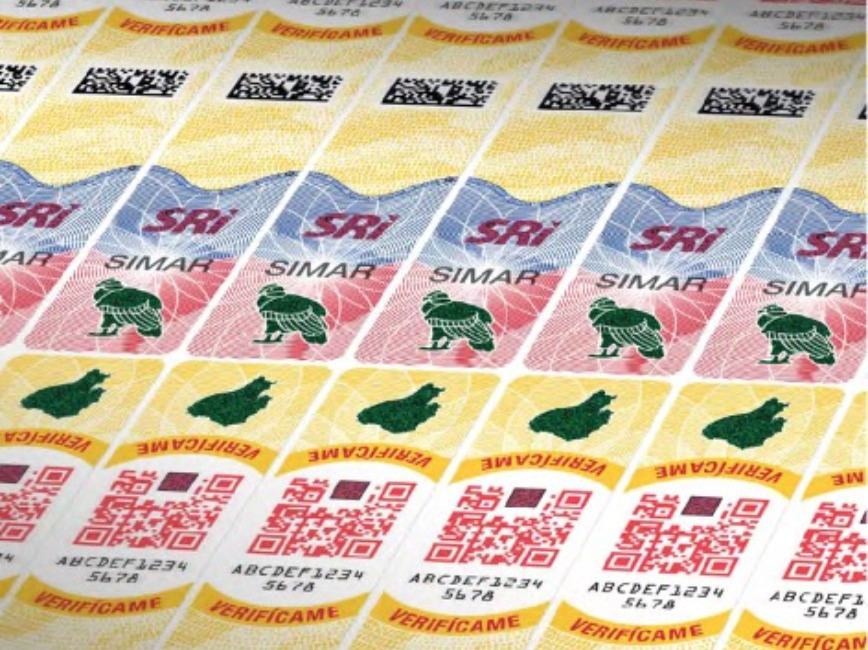
In the August 2021 issue of Tax Stamp & Traceability News™, we covered some rather controversial changes that Ecuador’s tax authority, Servicio de Rentas Internas (SRI) had pushed through back in April in the form of Resolution NACDGERCGC21-00000019.
Since then, the situation has not improved, with the programmed dismantling of the SIMAR system (System for Identification, Marking, Authentication, Tracking and Tracing). SIMAR is currently used to trace and control industrial beer, alcoholic beverages and cigarettes, and has already generated over $100 million in additional tax revenues since its inception in 2016.
The new resolution basically allows the taxpayers themselves to select and directly hire their own supplier of the mandatory system for identifying, marking, authenticating, tracking and tracing excise products, as long as that supplier is in no way ‘related’ to any of the taxpayers subject to control.
To illustrate the application of this resolution, Philip Morris (PMI), for example, could potentially hire any provider to track and trace its production and import volumes, together with any subsequent taxes payable. This would be in full compliance with the resolution.
It is important to remember that PMI has, in other countries, specifically used Codentify/Inexto to track and trace and report its production, and that in past public statements, PMI has declared Inexto to be fully independent from Codentify and Philip Morris. So, is it just pure coincidence, then, that part of Inexto’s management team, including its CEO Philippe Chatelain, come from long careers at PMI and hold patents for Codentify, in conjunction with PMI?
But let’s go back to Ecuador and look at the effects of the existing track and trace system, SIMAR.
The tobacco and beer industries initially lobbied strongly against the SIMAR system and were successful in overturning SRI’s plan to have them bear the cost of the system. Following the official launch of SIMAR, beer production declarations doubled and after one year in operation, tax revenues significantly increased.
However, we now hear that the tobacco and beer industries have changed their tune and are fully supportive of the resolution passed last April, even if they will be made to pay for the system. This is an unusual reaction from the corporate world under the best of circumstances.
Furthermore, it is surprising that the SRI’s main arguments in favour of this new model are that it will reduce government costs and ‘democratise’ control by allowing multiple providers to participate as suppliers of track and trace and authentication systems.
In our experience, it is highly unusual for tax authorities to want to ‘democratise’ the control aspect of their mandate, as it would seem clear, even to the uninitiated tax controller, that such a model provides a tempting opportunity for taxpayers to avoid or circumvent said controls.
In fact, most international organisations that offer expert advice on how to make governments more efficient, such as the International Monetary Fund or the World Bank, specifically recommend governments not to democratise, but rather to ‘monopolise’ the need for control, either internally or with the help of an independent and competent partner.
With respect to the SRI’s argument that the proposed new model will reduce costs, it is difficult to appreciate how adding several different providers, control systems, tax stamps or markings, additional hardware and software, as well as hiring and training additional and existing enforcement officials would be less expensive.
Moreover, if this decree is ultimately enforced, Ecuador will face several, rather obvious risks:
Conflict of interest between the provider and taxpayer, as the state cannot independently verify levels of production and/or imports without controlling the track and trace provider.
Potential non-compliance with the WHO FCTC Protocol, which Ecuador has signed and which seeks to prevent any interference in independent compliance measures to control tobacco production, import and sales.
Non-compliance with the existing tax law in Ecuador, which states that any tax stamp in the country must be a public (government), not private, document. It is improbable that any provider chosen by any taxpayer would have the legal power to issue a government document.
Confusion among enforcement officials faced with identifying and authenticating a multitude of different tax stamps coexisting in the country.
Increased administrative costs and issues for the state with regard to managing and reconciling many different systems and databases.
Security issues stemming from the need to correctly and securely manage data from various, non-connected providers.
Onerous expenditure conditions for smaller providers required to invest in systems that are beyond their budget (and that are currently borne by the government supplier under the existing system).
Ecuador’s now not-so-new President, Guillermo Lasso, should, in conjunction with international experts, carefully review NACDGERCGC21-00000019 – a resolution born out of a previous administration, yet which came into effect at the very beginning of Mr Lasso’s term – and decide if he would really like to see this resolution, with all its risks and cost implications, implemented in Ecuador.
On the other hand, maybe he would do well to follow Ecuador’s lead during the COP26 climate change conference, which acknowledged the important role of tobacco control in supporting recovery from COVID-19 and encouraged parties to the FCTC Protocol (which include Ecuador), to take strong action in this regard.
If the president chooses this alternative direction, a logical next step would be to call for a new international public tender for a provider of the next phase of Ecuador’s current and much lauded tax stamp and traceability system.
Subscriber content
Read the full article
Full access to Tax Stamp & Authentication News™ articles, newsletters and archives.