
UK Government Appoints Dentsu Tracking to Provide Tobacco Traceability


Her Majesty’s Revenue and Customs (HMRC) has appointed Dentsu Tracking, a specialised brand of Dentsu International Switzerland, as provider of the UK’s standalone tobacco track and trace system.
To this end, HMRC and Dentsu have signed a five-year concession contract, under which Dentsu will deliver an operational system by 1 July 2022.
As a former member of the European Union, the UK already has a tobacco track and trace system in place, which was introduced in 2019 as part of an EU-wide traceability scheme mandated under the EU Tobacco Products Directive (TPD). The TPD also calls for tobacco products to carry at least five security features, which, in the case of the UK – and five other member states that don’t use tax stamps – were applied in the form of a non-fiscal authentication label provided by De La Rue.
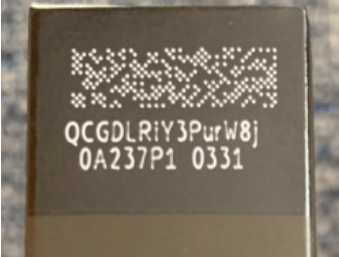 Current unique identifier on pack of UK cigarettes.
 Non-fiscal authentication label on pack of UK cigarettes.
Until now, the UK’s track and trace system has also been provided by De La Rue. While this system has passed to Dentsu, De La Rue will continue to provide the authentication labels.
Given that the UK is no longer part of the EU traceability system (except for Northern Ireland, that is, which is obliged to track its tobacco products under both the EU and UK system), it has been obliged to amend part of its tobacco track and trace regulations to ensure the continued effective functioning of the scheme as a standalone national system. At the same time, such amendments have been kept to a minimum, in order to ensure the least possible disruption to businesses.
In particular, the amendments:
Introduce a requirement to establish a national data repository into which all data relating to cigarettes and hand-rolling tobacco, manufactured or imported into the UK, must be entered.
Remove the need for manufacturers and importers in Great Britain (ie. the UK minus Northern Ireland) to establish and submit data to a primary data repository.
Provide for the unique identifier (used to track cigarettes and hand-rolling tobacco product through the supply chain) to be associated with another unique identifier issued outside of the UK, as part of a code-pairing mechanism. This is to ensure that the UK traceability scheme is compatible with other territories’ schemes while avoiding the need to physically mark multiple unique identifier codes on tobacco products.
As a comparison, under the EU traceability system, the storage of all track and trace data takes place at two levels: primary and secondary. Individual manufacturers and importers have their own primary repository for storing data relating to their products, which is established by an independent third-party provider contracting directly with the manufacturer.
A copy of all data stored in all primary repositories across the EU is then sent instantaneously, via a routing server, to a single secondary repository covering the entire EU. The secondary repository (which is also provided by Dentsu) enables member states and the European Commission to access and query data stored in the entire repositories system.
There are, therefore, no intermediate data repositories at national, member state level – unlike the UK standalone system, with its single national repository.
Subscriber content
Read the full article
Full access to Tax Stamp & Authentication News™ articles, newsletters and archives.