
Microchipping Cheese

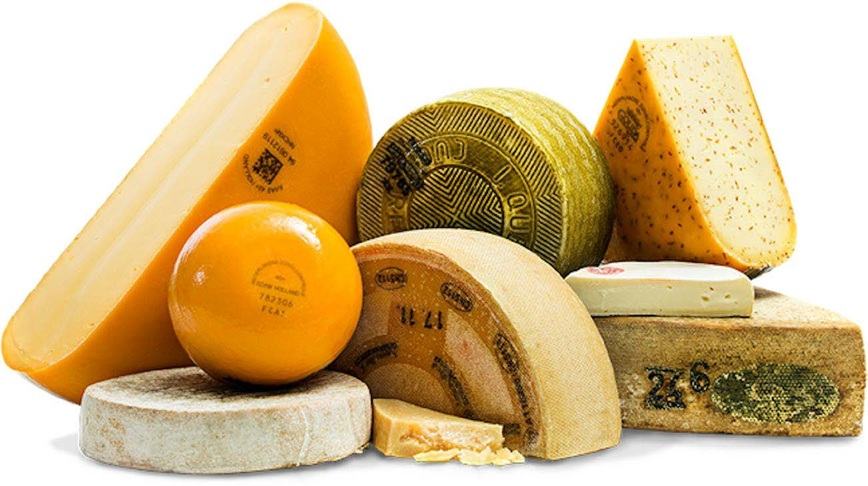
A partnership between p-Chip Corp, Kaasmerk Matec and the Consorzio del Parmigiano Reggiano has led to the creation of a new digital traceability tag for parmesan cheese.
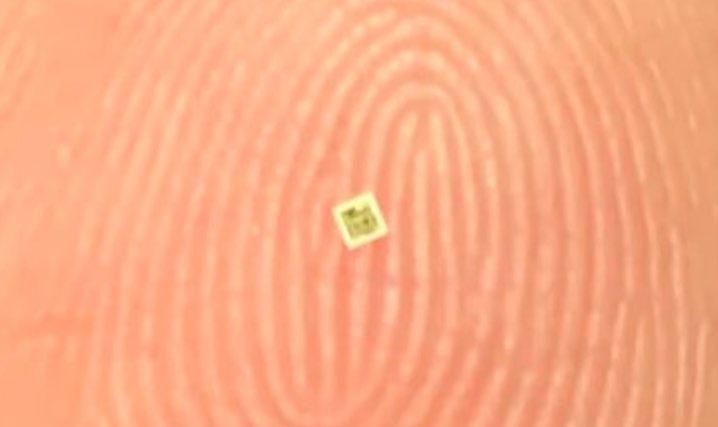
The purpose of the tag is to ensure the originality of the product and protect it from counterfeiting and other types of fraud, which are big issues in the cheese industry.
The tag consists of a p-Chip micro- transponder. Micro-transponders are implantable, silicon microchips measuring 500 square microns – or the size of a grain of sand. They have been described as the only way to uniquely identify animals, but can also be embedded into just about anything else.
p-Chip Corp produces micro-transponders with unique serial numbers for track and trace, which are used by the Consorzio del Parmigiano Reggiano on its parmesan cheese wheels. The chips are embedded into casein labels, which are, in turn, embedded into the cheese rind. The labels (or cheese marks) are produced by Kaasmerk Matec.
The labels are incorporated into the cheese very early on in the production process – at the moment the curd is separated from the whey – so that they, together with the chip, become one with the cheese.
Bill Eibon, Chief Technology Officer, p-Chip Corp, describes the chip as a ‘passive taggant’.
‘It sits dormant on an object and when you put modulated light of a specific frequency on it, this wakes up the circuit, which checks its memory and emits an encoded micro RF signal that a specific p-Chip reader picks up and decodes into a unique serial ID,’ he explained.
Micro-transponders versus RFID versus barcodes
Although the implementation of the p-Chip may overlap with that of RFID tags, 2D barcodes, and even the physical embossing of objects, the comparison stops there, according to p-Chip Corp.
While RFID is a widely used technology, it is also more expensive than the p-Chip, which costs just a few pennies per piece. RFID is also much larger, more fragile, and more challenging to attach to objects. p-Chip, on the other hand, is highly resistant to heat and chemicals, can be attached to almost anything, and can be scanned through paper, glass, animal tissue, frost… you name it.
As for barcodes, although inexpensive, they offer minimal security, can be easily duplicated, and are large and fragile, said the company.
Granular visibility
p-Chip Corp is currently focusing its attention on (amongst others) the food industry, where manufacturers need granular visibility, down to every ingredient, product, and process, as well as visibility right across the supply chain (see also ‘Traceability in the Era of Smarter Food Safety’).
The tiny size, durability, ease of integration, and cost-effectiveness of p-Chip allow it to be implemented at a scale that can generate this granular visibility.
Subscriber content
Read the full article
Full access to Tax Stamp & Authentication News™ articles, newsletters and archives.