
Cigarettes Flagged as Illicit by Cloned ID Number, Not by Security Label


In France and the UK, there have been recent news stories of cigarette packs identified in the market as illicit because they were all carrying the same ID number (when this number should in fact be unique to each pack). What was not mentioned in these reports, however, was whether or not the packs were carrying authentication labels, which they are obliged to do under the EU Tobacco Products Directive (TPD).
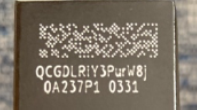
This is disconcerting news, given that it is primarily the authentication labels, with their array of multilevel security features, which are supposed to be helping people identify whether a product is illicit or not.
The role of the ID number (or unique identifier), which is also required under the TPD, is to track and trace the product, but not necessarily to authenticate it. This is because a unique identifier, without any physical security features, can often be easily copied, to the extent that it looks just like – and could ostensibly perform the same function as – a genuine code. Which means it is virtually impossible to know which is the real thing and which is the fake, just by comparing two codes side by side.
And to make matters worse, the chances are that products carrying identical, cloned codes are not conveniently lined up on the same shelf in the same shop, just waiting to be compared. Which means that they are likely to go unnoticed.
In the case of the UK news story (covered by oxfordmail.co.uk), the illicit cigarettes in question were seized by the Oxfordshire County Council’s Trading Standards team. Jody Kerman, Operations Manager for the team, reported that it was the first time that counterfeit plain packaging cigarettes, selling at full price alongside compliant products, from an otherwise legitimate retailer, had been detected in the Oxford area.
Mr Kerman advised that, in order to spot counterfeit product, people should examine the unique identifier (which is required to be printed on the bottom of every pack of cigarettes sold in the UK). If two or more packs are discovered with the same code, this could be a sign of a counterfeit product. He added that the code 5OE WW9 6AR JFC, in particular, was known to be on a batch of counterfeits circulating in the area.
However, at no point did he mention in the article the need to check that the requisite authentication label was present on the product, and to use the security features on that label to validate the product (which, in the case of the UK, and France, include colour-changing ink and microprint, as well as covert features for inspection by officials).
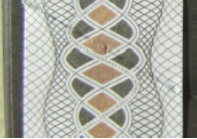
So, why was no mention made of the label? Was it because the existence and attributes of the label had not been communicated well enough to the public and other stakeholders, with the result that nobody knew what to look for?
Although the UK’s HM Revenue & Customs has posted a whole page on its website describing the security features on the labels – which one would hope
the Oxfordshire County Council’s Trading Standards would be aware of – it’s not likely that many members of the public would have visited this site.
Which means that the communication needed to be much stronger and ‘in the consumer’s face’.
The only remaining anti-counterfeiting barrier on plain packs
Authentication labels on tobacco products could be considered even more important now that the UK (as well as France) have introduced standardised plain packaging for cigarettes.
Plain packaging has been loosely defined as a restriction in the branding on the outside of cigarette packs to make them less appealing for younger users. These restrictions involve limiting the colours, imagery, corporate logos and product trademarks.

Removing the branding on cigarette packaging and replacing it with generic health warnings simplifies the task for counterfeiters and criminals wishing to divert both authentic and fake cigarettes.
A basic survey of UK supermarkets in 2020 revealed that a pack of 20 cigarettes ranged in retail price between £7.95 for a Pall Mall brand and £13.05 for a Silk Cut brand. It is relatively simple for a counterfeiter to reproduce the plain packaging cartons for Silk Cut and fill it with cheaper sticks, thereby immediately making a profit. The distressing health warning images on the plain packs are unlikely to be scrutinised by a purchaser, so they may not be alerted to poor quality printing (which is an indication of a potentially counterfeit product).
Tax stamps and non-fiscal authentication labels are able to carry security technologies equivalent to a banknote and can therefore be considered the only remaining barriers to copying the whole cigarette pack. And by being positioned across the carton seal, they also act as tamper-resistant tools that prevent packs from being reused.
Using a printed digital code instead of a physical tax stamp or authentication label would provide no visual authentication feature to the pack, and although such a code may be useful for tracking and tracing the product, any security benefit to the consumer should be considered minimal.
A taste of things to come
At the end of the day, though, it all depends on what people are prepared to do if they want to authenticate a pack of cigarettes. And usually what they are prepared to do involves using the easiest method available, which seems to be that of checking whether packs of cigarettes sitting side by side on a shelf have the same ID number or not.
Is this a taste of things to come… or even things that are already here? In other words, will people become gradually more reliant on pure coding and numbers (eventually with the use of a smartphone) to determine the authenticity of something, with little regard for whether these codes and numbers are secure enough to even be considered as authentication features?
www.gov.uk/guidance/security-features-for-tobacco-track-and-trace
Subscriber content
Read the full article
Full access to Tax Stamp & Authentication News™ articles, newsletters and archives.