
Counterfeit Cigarettes Might be Making a Comeback

KPMG’s annual study of the illicit trade in tobacco in Europe is a robust and well-established study of illicit trade trends in Europe since its inception in 2006. The study utilizes a complex model of reported shipment volumes, incorporates empty-discarded pack data and runs it through an algorithm that accounts for border traffic, cross-border purchases and duty-free volumes.
The study, since its inception, has been commissioned and funded by Philip Morris International. While critics of the industry have often cited this as a reason to discredit or disregard the results, the robustness of the analysis and the accuracy of the reports over the last 15 years have proven their mettle by accurately analyzing and predicting illicit trade trends in Europe. For years, the study results have highlighted that illicit trade has been shifting away from cross-country smuggling of genuine cigarettes to the production and trafficking of illicit whites.
Separately, and as reported in Tax Stamp & Traceability News™, May 2021, Europol has released its Serious and Criminal Organized Crime Assessment 2021 (SOCTA-21), which highlights that criminal organizations are increasingly producing their own illicit tobacco products, rather than just smuggling genuine products. Most alarmingly, Europol reported that the production of these illicit tobacco products now often occurs directly in the European Union (EU), in modern and professional production facilities, which often have been established to be within proximity of intended destination markets.
The 2021 KPMG report, which covers the 27 EU member states (EU27), as well as the UK, Norway, and Switzerland, soberingly affirms that these trends not only have held up, but some have accelerated. Overall illicit trade has increased year over year and now accounts for 7.8% of total consumption in 2020. The tax loss for governments in the EU27 for this illicit product amounts to approximately €8.5 billion.
But probably the most interesting finding of this year’s report was that the increase of illicit cigarettes, which consists of contraband, counterfeit, and illicit whites, was mostly driven by an unprecedented 87% surge in counterfeit consumption. Much of this counterfeit consumption was driven by a significant uptick in France.
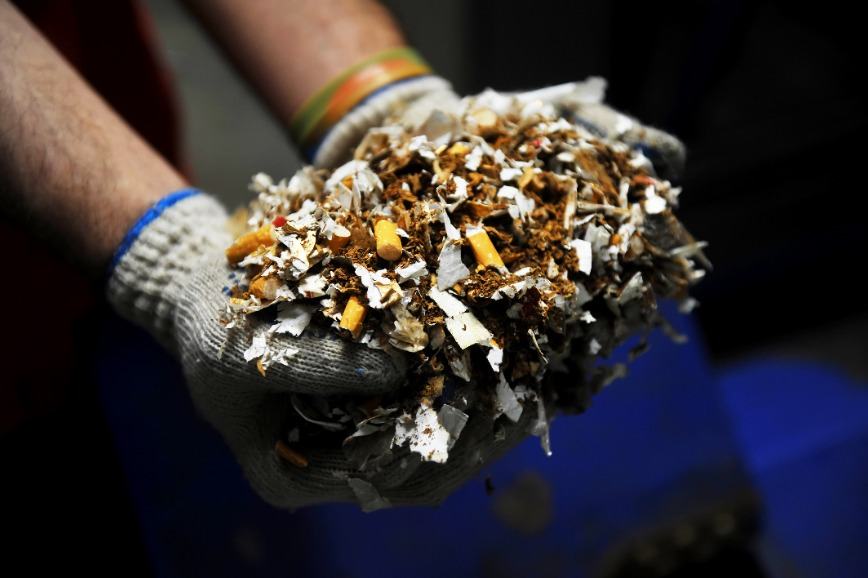
A recent seizure in Nantes in May 2021 highlights how significant the counterfeit influx is. In the Nantes seizure alone, law enforcement seized 250,000 sticks or 5 tons of counterfeit cigarettes. French law enforcement estimates that this trafficking network alone had imported and distributed more than 75 tons of counterfeit cigarettes. According to Europol, this criminal group was fully dismantled during the operation. However, France has the highest cigarette prices in central Europe and will continue to be an attractive market for criminals.
Impact of COVID lockdowns and border closures
The COVID-19 pandemic had a remarkable impact on the world of illicit trade. Unfortunately, and sadly, the global crisis didn’t stop illicit trade, but it simply morphed it into a new shape. Blocked by border closures and hampered by lockdowns, illicit networks simply adapted and shifted their ‘business models’ to fit this new reality.
Instead of smuggling and trafficking genuine cigarettes along arduous international routes and having to navigate multiple closed or more fortified borders, the criminals simply established illicit production facilities in the heart of Europe. The Europol SOCTA report highlights a plethora of these new illicit production centers.
These facilities then produce to local demand – domestic counterfeit, illicit whites and, notably in 2020, counterfeit versions of duty-free cigarettes. The uptick in illicit trade volume in France, which in turn drove the European results, was driven predominantly by counterfeit Marlboro, the majority of which bore Duty Free labeling.
It is not totally clear why the criminals decided to convert back to counterfeiting Marlboro Duty Free cigarettes. Ongoing investigations and next year’s report will show if this was a fad, a data anomaly, or if this will be a trend to stay.
My thoughts are that this was a deviation in the data driven by a single large illicit network, which was taken out by the enforcement action described earlier. Producing, trafficking, and selling illicit whites in the long term will continue to be an easier and more lucrative business.
However, the business of counterfeiting illicit whites might become more relevant in the near future.
According to the KMPG report, certain illicit white ‘brands’ have started to develop some ‘brand loyalty’ and are therefore now bearing marks for the country of origin, most notably Belarus. This is certainly an ironic twist given the history of illicit whites and could lead to the counterfeit of these products in the future. However, given the lack of authentication features, this will be hard to see in the data.
Implications
While the sharp increase in counterfeit cigarettes and counterfeit duty-free cigarettes will, in my opinion, be a fad, the KPMG study clearly shows that illicit trade is here to stay, with a newly retooled production and distribution channel. The pandemic forced criminals to get local and move their production closer to intended markets.
This signifies a significant investment by these organized groups, and they are likely to capitalize on this in the foreseeable future, which will translate into:
A continued increase in smuggling of locally produced counterfeit and illicit white product.
A continued decrease of smuggling of genuine brands across borders or continents (although the illicit trade of genuine brands still remains high, at over 40% of total illicit trade).
When illicit markets shift from global systems, where illicit or counterfeit product is manufactured overseas and illegally imported, or from global trafficking of genuine products, to localized sophisticated production facilities, the enforcement models need to be localized as well. As a result, enforcement, technology, and policy will also have to morph and adapt to address these new challenges:
Harmonization of tax regimes: the rapid increase of illicit trade in France was likely driven by the fact that cigarette prices in France are among the highest in Europe. Lockdowns and stay-at-home orders disrupted reputable retailers and illicit trade was able to flourish under the pricing umbrella that high taxes provide. Harmonizing tax regimes to have a unified and homogenous tax across all the EU27 would provide a significant disincentive to traffic genuine cigarettes.
Increased funding for localized tobacco enforcement: localized intelligence to identify, investigate and enforce against these tobacco facilities requires human asset intelligence and boots on the ground. Law enforcement across countries needs to be funded to sustain significant human intelligence.
Global track and trace of raw materials: raw materials for illicit cigarette production are widely available across the globe, but several key inputs, including raw leaf tobacco, cellulose acetate (for filters) and cigarette paper, are unique to cigarette production and should be globally monitored and tracked.
Elimination of duty-free sales: the WHO Framework Convention on Tobacco Control failed to end duty-free sales globally and the re-emergence of counterfeit duty-free cigarettes in France was a reminder of a darker time. While not a global driver of illicit trade, they seem to be an unnecessary relic of the past. They should be eliminated globally as they incentivize black market sales or allow for the mimicry of cheap counterfeits.
The European Commission eliminated intra-EU duty-free with a six-year transition period after the single market was created. Post-ban studies have shown that most of the duty-free volume was replaced with duty-paid sales elsewhere.
Comprehensive implementation of tobacco tax stamp programs: while stamps themselves won’t stop illicit actors from producing illicit tobacco products, the fact that France, at the time of the data collection of the report, did not have tax stamps on its cigarette products likely did not help to deter illicit trade.
Tax stamps are an important tool to prove excise tax evasion and help law enforcement to quickly verify the authenticity of products. In combination with effective penalties these become an increasingly powerful tool.
Increased penalties and fines for tax fraud, tax evasion, stamp forgery and money laundering: criminal tobacco operations will not be utilizing genuine tax stamps for their illicit operations. As such they will either not apply any tax stamps or apply counterfeit tax stamps. Increasing and escalating penalties for crimes related to these criminal acts will provide an important deterrent, especially when paired with a strengthened asset recovery regime in the EU.
Registration, limitation, and destruction of production machinery: increased illicit production of illicit whites or counterfeit cigarettes will require increased use of cigarette production equipment.
Cigarette production machinery is specialized, and access should be limited to registered industry participants. Governments need to embark on efforts to catalogue and register existing equipment and then restrict the movement, sale, or disposal of obsolete equipment. Governments should require the destruction of obsolete equipment and ban the resale of old equipment.
Increased asset seizure and forfeiture authorities: criminal organizations are driven by illicit profits. Disrupting the creation and accumulation of wealth by illicit trade organizations through aggressive seizure and forfeiture laws is the key to disrupting and disincentivizing criminal actors.
While counterfeit cigarettes might not be making a comeback, illicit cigarettes are here to stay. They account for billions in illicit trade profits and are responsible of the loss of billions in tax revenue.
The COVID-19 pandemic has shown that illicit trade networks are incredibly resilient and adaptable. Illicit tobacco enforcement regimes, technologies and policies equally need to be as resilient and adaptable to keep up with the criminals.
Subscriber content
Read the full article
Full access to Tax Stamp & Authentication News™ articles, newsletters and archives.