
Sustainability in Product Labelling - Some Thoughts on the Future


The inspiration for this article came from following the deliberations of the COP 26 summit last month and reading the Reconnaissance International report that preceded it - ‘Cash: A Roadmap to Sustainability’. I believe that there will be an increasing imperative to consider the sustainability aspects of our industry and, in particular, what industries and technologies are likely to do well from this focus and how our industry can profit from these.
I considered a number of technologies, firstly from the printing sector as this is my background. For example, de-inking systems to clean print substrates for recycling or low energy fusing for toner printing could be potential topics. But as another good example of the genre I have picked product labelling, and in particular how trends towards intelligent packaging can illustrate this approach.
Sustainability needs
Over the last few years, sustainability has moved up the corporate agenda, from a ‘nice to have’ to a ‘must have’ for shareholders, investors and customers. There is, and will continue to be a growing need for printing, labelling, track and trace and packaging companies to step up to the mark on sustainability. ‘Design for recycling’ is becoming something of a mantra.
One well publicised requirement is the need to reduce the complexity of packaging, and a particular challenge in this respect is the use of mixed materials as this complicates the recycling process. It could be considered that there is a conflict here with another market driver: the need to provide some form of digital interface to the packaging.
It is, however, not as simple as that as smart packaging can also enable the ‘circular economy’ of the future by containing information about its composition to aid the recycling process.
Printed, flexible and paper electronics
We are not alone in considering intelligent packaging technologies. Companies such as American Semiconductor with their Smart Wine Bottle, Ynvisible and PragmatIC are exploring this area. But for intelligent packing solutions, particularly those that would use some form of RFID/NFC technology, we could also usefully look further afield for sectors that are addressing similar sustainability drivers.
One such sector is smart buildings, where companies such as InviSense and Laiier are seeking to add printed sensors into the construction of buildings for environmental monitoring. This sector has similar drivers to intelligent packaging in that there is another physical/digital transition underway. We should monitor their response to inform our own.
Now may be a good time to take a second look at printed and flexible electronics for sustainable and intelligent packaging solutions. After a number of false starts the technology is moving beyond simply developing demonstrators into real projects for real customers. Companies such as Prismade are active in this area and engaged with our applications.
Sustainability also dictates a move away from certain materials to sustainable alternatives. That implies pressure to move away from many fossil fuel-based plastic substrates and metal-based conductors. Both of these trends could prove to be of interest to some parts of our industry.
Paper engineering
Security printing has a long and distinguished history in high technology print on paper. Paper is currently being considered as both a substrate and material in flexible electronics and we could take advantage of this trend, adding value to our paper-based production processes.
Specific papers for this task are available from companies such as the Felix Schoeller Group, but options also exist for electronics on other paper types with inks from companies such as Saralon and research projects at VTT in Finland.
The use of paper is not limited to substrates. Research projects at Empa in Switzerland are using cellulose-based materials to construct supercapacitors as a recyclable, non-toxic alternative to batteries. Duke University is conducting work to fashion cellulose derivatives as a dielectric to fabricate printed transistors.
Projects such as these are providing the components for future sustainable paperbased electronic solutions. Now may not be the time to completely abandon paper in our industry. It may provide a route to sustainable labelling that can harness many processes with a long history in our industry.
Carbon inks
Carbon-based inks are again a technology we are well used to and are now appearing as sustainable alternatives to metals as conductors and exotic materials as semiconductors.
In the form of nanotubes or graphene they are emerging in real applications. Companies such as Haydale and Advanced Materials Development from University of Surrey are bringing such materials to market.
In summary
The thread of sustainability will connect us to many other sectors and we should view this as an opportunity for growth. Track and trace is seen by some analysts as focus areas to enable the circular economy. There should be opportunities for our industry here.
High technology labelling, paper substrates and carbon inks are all familiar areas in our industry. Sustainability may provide us with further opportunities for these. Printed and flexible electronics may provide us with a vehicle to deliver on this.
The topics of printed electronics and carbon inks have been covered in outline in this article. They are described in greater depth in the new publication from Reconnaissance entitled ‘Printing Beyond Colour’ (see page 8).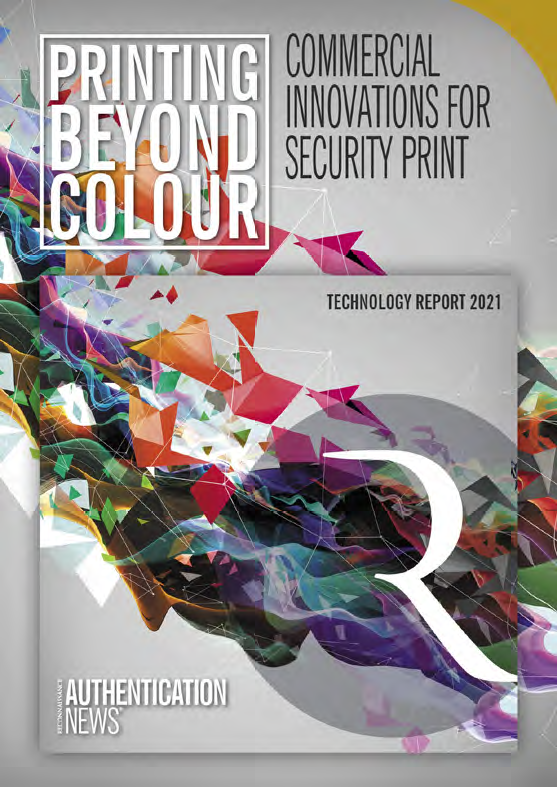
Subscriber content
Read the full article
Full access to Tax Stamp & Authentication News™ articles, newsletters and archives.