
US Cannabis Model – The New Regulatory Frontier for Governments
In the United States, state and local governments have been facing the challenges of regulating cannabis and hemp for medicinal and adult use. These challenges are now going international as more countries consider regulatory programs.
Cannabis regulatory frameworks have primarily focused on protecting public health, ensuring public safety and implementing sound fiscal policies. However, in the past few years, social equity programs, economic diversity and development, appellations and proof of origin, and organic certifications have also emerged as increasing priorities. In this article, we present considerations for using lessons learned with other regulated products for realizing regulatory objectives for cannabis.
US cannabis evolution in brief
Under US federal law, cannabis is classified as a Schedule 1 narcotic under the Controlled Substances Act. As an illegal substance, mandatory sentences and penalties for violation of the Controlled Substances Act have historically been tiered based on the number of plants under cultivation (fewer than 50 plants, 50-99 plants, 100-999 plants), or the amount of product being distributed or sold.
Several states have taken regulatory initiatives that have created frameworks for the sale of cannabis for medical and/or adult use within state boundaries. In 1996, California voters passed Proposition 215, the ‘Compassionate Use Act’, permitting the use of medical cannabis for any illness upon the recommendation of a physician. In 2012, Washington and Colorado became the first states to legalize adult use of marijuana through Initiative 502 and Amendment 64 respectively.
As state policy evolved, in 2013, the US federal government, through the Department of Justice, issued what became known as ‘the Cole Memo.’ The Cole Memo elaborated that federal law enforcement would not enforce federal marijuana prohibition in states that ‘legalized marijuana in some form and... implemented strong and effective regulatory and enforcement systems to control the cultivation, distribution, sale and possession of marijuana’.
In other words, the federal government signaled that local state governments could pursue a policy of legalization of medicinal and/or adult use cannabis under certain circumstances without an ongoing threat of intervention from the Department of Justice.
In 2018, the federal government rescinded its Cole Memo guidance, but this has had little practical impact. As of 2021, 36+ US states have passed either medicinal or adult use cannabis programs, and hemp (cannabis with less than 0.3% THC) is now classified as an agricultural product that is fully legal and without restriction for interstate commerce.
Cannabis from seed-to-sale
Starting with Colorado in 2013, governments have deployed seed-to-sale (S2S) platforms as solutions for regulating cannabis supply chains. These systems were intended to provide state regulators with insight into all supply chain activities and required industry members to report all activity in real-time for verification and validation.
As noted previously, federal sentencing and penalty minimums were tiered based on cultivation plant counts. As a result, S2S systems have heavily focused on deploying technology to track and tag each cannabis plant being cultivated.
Unlike programs for tobacco and alcohol, current cannabis S2S solutions don’t provide physical marking security at the retail unit level. This creates significant compliance gaps, as authorities cannot visually differentiate legal from illicit products. The deployment of these solutions is also siloed within each jurisdiction, so potential future cross-border impacts are not designed into the solution frameworks.
Built for the uncertain regulatory environment that existed in 2013, the practical impact of S2S systems has been the imposition of immense data entry requirements on the industry, as well as large costs in terms of personnel and infrastructure, and requirements for granularity of information that overwhelm both licensees and state resources.
Furthermore, despite the investment in these solutions, there is continued widespread counterfeiting of cannabis brands and products, with the illicit and black market holding onto more than 50% market share in many jurisdictions.
Using tax stamps for cannabis products?
Tax Stamp & Traceability News™ readers are well familiar with regulatory frameworks that fight illicit trade in excisable products. Excise stamps have long been used in the US and around the world as a mechanism for capturing legitimately owed taxes, ensuring products adhere to regulatory requirements and preventing fraud and diversion in areas such as tobacco and alcohol. In fact, many US states previously issued narcotic tax stamps as a mechanism for prosecuting tax evasion on illegal controlled substances.
Given the similarities in illicit trade patterns (ie. smuggling, tax under-declaration), it would make sense to consider solutions based on traceable and secure tax stamps for consumer packaging units of cannabis product.
The advent of new technologies has led to the evolution and expansion of tax stamp functionality, from simple marking of excise products to secure vehicles of information. Interactive data features on the stamp tied to supply chain information (eg. provenance, testing, production) enable authorities, businesses, customs officials, and consumers to have real-time visibility of products being imported, distributed and sold.
This model is especially applicable in international markets, where cross border commercialization will require proper controls to determine the origin of the cannabis and its compliance with local regulations, as well as prevent illicit trade within and outside of jurisdictional borders.
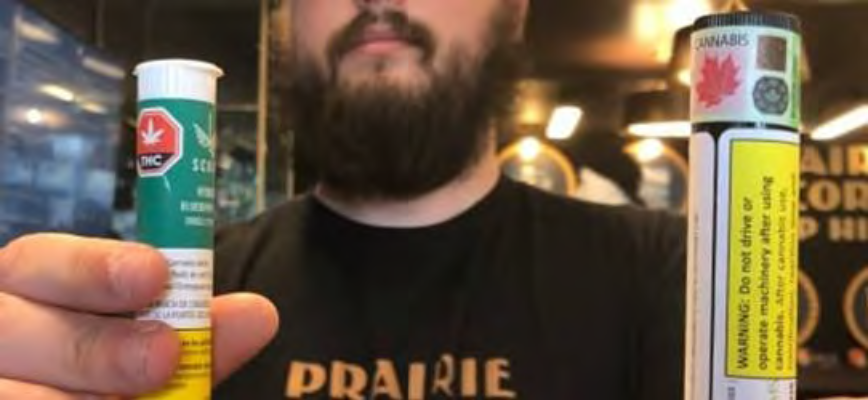
This is currently the case in Canada where, in 2018, recreational cannabis was legalized nationally and the Canada Revenue Agency (CRA) expanded its existing tobacco excise stamping program to include medical and recreational cannabis. Under the CRA program, excise stamps are required on all duty-paid cannabis items intended for retail sale, and the program utilizes differentiated provincial designs to both identify medical versus recreational cannabis products and identify the territory in which the product is intended for sale.
This approach has worked well with tobacco and alcohol track and trace stamping programs, therefore cannabis administrators could perhaps learn a lesson or two from these programs when it comes to regulating this new excisable product type.
Subscriber content
Read the full article
Full access to Tax Stamp & Authentication News™ articles, newsletters and archives.