
Pan-Latin American Analysis: Part II


In last month’s Tax Stamp & Traceability News™, we published the first of a two-part review of tax stamps and traceability programmes in Latin America. In Part I, we described the situation in Argentina, Brazil, Chile, and the Dominican Republic. This month, we give a brief update on Central American countries, together with more in-depth coverage of Costa Rica and Ecuador, where there have been several key developments.
Central America
Since June 2017, Mexico has been using security codes on cigarette packs to fight against tobacco illicit trade. However, the control model for the codes has been influenced by the tobacco industry through the Mesa de Combate a la Ilegalidad, a public-private taskforce set up by the Mexican tax authority, Servicio de Administración Tributaria (SAT) to combat lllegal practices.
In the 2017 activity report of this taskforce, it is mentioned that SAT and the tobacco industry had formed a strategic alliance to promote a culture of legality ‘taking advantage of the use of technology and through the implementation of traceability models and systems’. As a result, INEXTO was hired directly by the tobacco industry to print the security codes and furnish fiscal information reports, without going through the certification process established by SAT.
This situation has not yet been denounced by local NGOs, as was the case, for example, in Pakistan, where a tender was recently cancelled after being awarded to a consortium with INEXTO.
Heading due south, Guatemala, Honduras, Nicaragua, and El Salvador have not made any announcements with respect to either improving existing tax stamp systems (Guatemala) or implementing new ones. Nicaragua, in particular, is facing a looming deadline to implement tobacco tracking and tracing, in line with its obligations as party to the WHO FCTC Protocol to Eliminate Illicit Trade in Tobacco Products.
Finally, Panama has been flirting with tax stamp implementation over the past couple of years, but although rumours abound, one shouldn’t hold one’s breath yet.
Costa Rica
Surprisingly, and after significant lobbying against its approval (by the Chamber of Commerce and organised local liquor producers), the Costa Rican Congress passed, in late February this year, Law 20.961, which specifically refers to the fight against tampering, adulteration, imitation and smuggling of alcohol beverages.
Until a few months prior to this, TRACIT (Transnational Alliance to Combat Illicit Trade), which is financed by members of the beverage and tobacco industries, had been very active in attempting to prevent the approval of Law 20.961, as it was felt that it would pave the way for a more complex tax stamp initiative.
One may innocently ask what TRACIT was afraid of. Why, if a system is made to prevent smuggling, alteration of legal products and tax evasion, could it negatively affect the beverage and tobacco industries?
These questions are repeatedly asked by any tax authority looking to implement a potent tax stamp and traceability system, and the quickest answer is that a well-designed system not only acts as a deterrent to criminal activity, but also undermines the perverse incentive that otherwise exists for some producers to declare less product than is actually produced in order to reduce their tax contribution level.
Law 20.961 states that ‘the competent authority to determine adulteration, imitation, clandestine manufacture or smuggling is the Fiscal Control Police, which must confiscate the adulterated, imitated or smuggled product’. Moreover, the law emphasizes that ‘all public authorities will be obliged to report, to the Fiscal Control Police, municipal police or municipal inspectors, cases of alteration, imitation, clandestine manufacture or smuggling of alcoholic beverages’.
In order to assure this happens, the Ministry of Finance will be obliged to maintain a traceability system that allows for the individual registration of all alcohol beverages, a level of control that has been lauded by politicians and others who support the new law.
To launch the project, the Ministry of Finance, in coordination with the Ministry of Economy, Industry and Commerce of Costa Rica has said that they will, in keeping with the new law, implement a mechanism for the identification and registration of national and foreign liquor.
This will consist of secure tax stamps or any other type of technological mechanism that is inalterable, non-replicable, reliable and trustworthy. It must also include a traceability mechanism and enable consumers and competent authorities to identify beverages with altered, imitated or contraband alcoholic content.
The penalties for disrespecting this law are quite stringent. They include provisional and precautionary closure of an establishment for 15 calendar days, and the initiation of a legal-administrative procedure that calls for the cancellation of respective municipal licenses and patents.
As of this writing, however, the tax authorities cannot rest easy yet. Although Law 20.961 has been passed, the regulations needed to enforce it have yet to be published.
Ecuador
One could posit that Ecuador currently has one of the most advanced tax traceability programs in the region. In place for several years now, there are two tax traceability systems currently operating in Ecuador.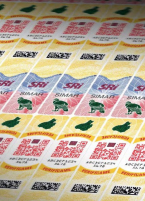
First is SIGVEF (Sistema de Gestión y Verificación de Etiquetas Fiscales) from the Ecuadorian National Customs Authority (SENAE), in place since 2015. And second is SIMAR, in force in Ecuador since 2017, under the jurisdiction of the Ecuadorian Internal Revenue Service (SRI).
SIGVEF’s main role is to guarantee the legal importation of alcohol beverages as well as to fight contraband and protect the health of Ecuador’s citizens. The SIGVEF system includes tax stamps that are applied before the products are nationalized, and the information is entered into a central database, which helps SENAE in the prevention of smuggling.
SIMAR, in line with initiatives implemented by the SRI to address tax evasion, has four main goals:
1. To strengthen and improve the traceability of tax paid on special consumption products.
2. To reduce tax evasion, alteration of products and illegal competition, as well as increase tax revenues.
3. To create a mechanism, available to the public, that will help determine which products appear suspicious and/or harmful for their health.
4. To promote national security against organized crime involved in contraband and/or production of fraudulent products.
SIMAR, developed and implemented by SICPA, recently published the official results of this system. As of April 2021, SIMAR had marked 3.9 billion products nationwide, consisting of industrial and craft beer, alcohol beverages and cigarettes, on which a special consumption tax known as ICE (Impuesto a los Consumos Especiales) is paid. As a result, SIMAR was able to increase tax revenue by almost $103 million.
Also in April, the second phase of the SIMAR solution, the aggregation phase, was implemented for the national production of cigarettes.
Aggregation allows the identification of individual items within an outer package to be recorded and associated with a unique identifier applied to that package, as part of a parent-child relationship. The identifier can then be used to record the movement of the outer package (together with the movement of its contents) through the distribution chain. In the case of cigarettes, this parent-child relationship can record the hierarchy between packs and cartons, cartons and master cases, and master cases and pallets.
Aggregation allows SIMAR to better control ICE tax levied on first sales (eg. sales between manufacturers and distributors). This is key from a fiscal point of view, as it is at this point that ICE is initially recorded. Ecuador is the only country in Latin America where aggregation has been implemented.
In July 2021, a webinar was held to discuss the results of an in-depth study of the effects of the SIGVEF/SIMAR systems in Ecuador. The information was compiled and analysed by a team formed by Corporación Líderes para Gobernar (Leaders for Government) as well as analysts from the UTPL University in Ecuador and UNAM University in Mexico. The study shows a positive impact for Ecuador of both programs and offers a set of recommendations to consolidate and enhance the benefits of the systems:
Public awareness campaign to foster the use of the verification apps by consumers.
Increased inter-institutional cooperation to provide an adequate level of market control.
Extension of the marking to imported cigarettes in order to reduce smuggling in Ecuador.
Strengthening of the sanctioning regime.
Despite the positive results of SIGVEF and SIMAR, not everything is rose-coloured in Ecuador.
Reverting to fragmented EU model
In April this year, the SRI General Director, Ms Marisol Andrade, issued resolution N° NAC-DGERCGC21-19, which basically changes how tax stamps will work in Ecuador. Unfortunately, this resolution was not contested, despite its reverting to a more European model of tax stamp laws, something which would not appear to be the best solution for an emerging market.
In brief, the new resolution allows for multiple tax stamp and system suppliers, with different types and designs, and, worst of all, the ICE taxpaying companies can choose which system or stamp to apply to their products.
This is hardly in line with the recommendations of international organizations such as the World Bank, as well as tobacco economic experts such as Tobacconomics (click here for more on this). Neither is it in line with the provisions of the WHO FCTC Protocol itself, which calls for private producers to not be allowed to ‘monitor’ themselves, and for traceability systems to be under the sole supervision and control of the national tax authority.
Also, under the new resolution it will be more difficult to trace or identify real versus counterfeit stamps, not only for the tax authorities, but also for the public. Different designs and systems naturally weaken the security inherent in a unique and strong tax stamp system. Although currently in full force, one can only hope that time and further information will provide incentives to repeal this resolution.
And finally, to add a little more spice to Ecuador’s current reality, the Pontificia Catholic University of Ecuador recently published a study on cigarette smuggling which seems to point the finger at the potential muddle that this new resolution could inadvertently help to expand.
In brief, currently, the most smuggled brand in Ecuador is Marlboro via Colombia. Interestingly, these cigarettes are produced and imported from Mexico to Colombia, in numbers far greater than the Colombian national demand, allowing for the extra product to regularly enter the Ecuadorian market as non-tax paying contraband.
It is difficult to understand how the tobacco companies involved, who are famed worldwide for their accurate and efficient market studies, are somehow providing too much product to one of their export markets and are also blissfully unaware that their product is illegally and untraceably crossing borders.
Subscriber content
Read the full article
Full access to Tax Stamp & Authentication News™ articles, newsletters and archives.