
Recent Developments in Document Biometrics for Tax Stamps

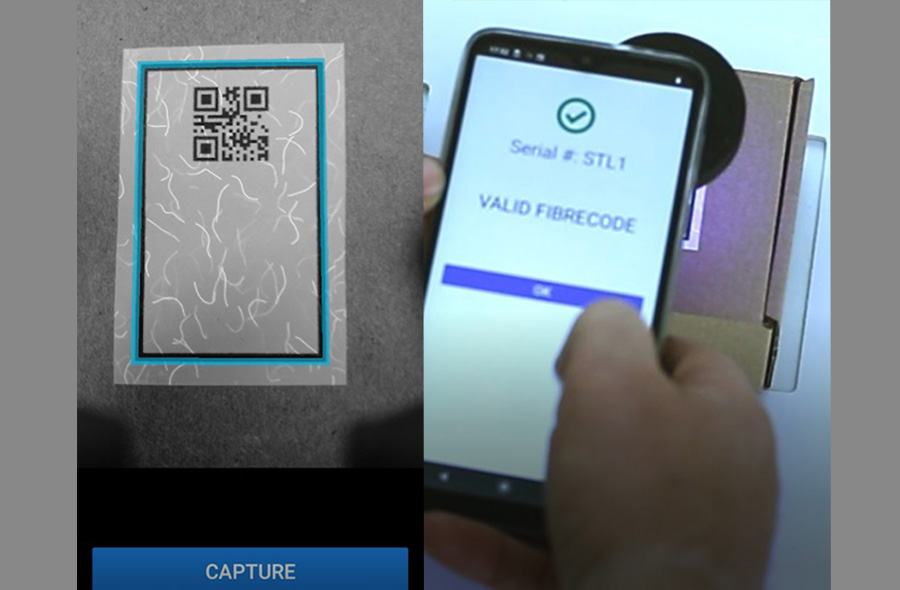
The term ‘biometrics’ is commonly used to describe technologies that employ human features that are unique to individuals – such as fingerprints or retinal eye patterns – as a way to identify those individuals. But the term is also employed, within the authentication industry, to describe technologies which use the intrinsic microscopic or molecular properties unique to items such as tax stamps to identify and thereby authenticate those items. Hence the term ‘document biometrics’, or ‘fingerprinting’.
Examples of such technologies include the recording of the tiny, naturally occurring imperfections in the way that fibres in paper settle. Another detects the unique 3D structure of substrates in a predefined area, while another identifies variations in the printing or the applied security features on a document.
Capturing these unique characteristics, digitising them and storing them in a database, in the form of a picture or, more usefully – through an algorithm – as a unique code, provides a means of matching the item with the captured information. Alternatively, or complementarily, many of these methods allow the printing of the algorithm-generated code onto the product, so that with the correct reader the product can be self-verifying, ie. it can be re-scanned and the result checked against the record of the original scan without the need for additional equipment or access to a network.
Subscriber content
Read the full article
Full access to Tax Stamp & Authentication News™ articles, newsletters and archives.