
New Report Showcases Opportunity and Growth for Tax Stamps

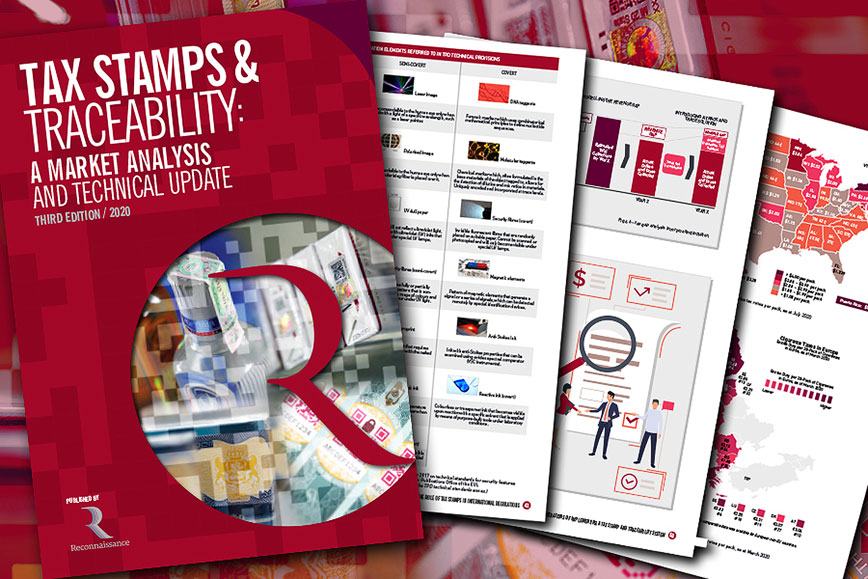
New investment in track and trace systems, rising excise taxes and wider commercial applications will drive tax stamp growth in the next five years, according to Reconnaissance International’s new tax stamp report.
The third edition of ‘Tax Stamps & Traceability: A Market Analysis and Technical Update’ identifies cannabis and vaping products as new markets for tax stamps to tap into, at a time when the continued trade in illicit tobacco and alcohol sees revenue agencies using the devices as effective weapons in the fight against noncompliance and illicit trade.
The report also points to the fact that by 2023, tobacco products in at least 60 countries will need to have secure track and trace systems in place to comply with the WHO FCTC Protocol to Eliminate Illicit Trade in Tobacco Products, which could open up additional tax stamp markets and more commercial opportunity for an established product.
More than 120 billion tax stamps are used annually, the report says, to secure tobacco and liquor excise revenues, and often as part of product authentication and secure track and trace programmes. However, it adds that while the number of countries adopting tax stamps continues to rise, the market for cigarettes and spirits is falling in the face of declining global tobacco consumption and a marginal increase in the sale of spirits.
Coming against the backdrop of WHO’s framework designed to curb the illicit trade in tobacco products, the report is the only one of its kind to cover the global alcohol and tobacco tax stamp market, and considers both the current and future tax stamp and traceability environment in specific countries and regions.
Cannabis and fuel marking, among other products, are identified as emerging markets for tax stamps and in-product tax markers, where they can be used effectively to protect against the threat of illicit trade and secure taxes lost to criminals and other nefarious activity.
The question of why paper-based tax stamps, as opposed to digital alternatives, continue to provide the best protection against acts of non-compliance and illicit trade is considered as part of a section looking at the current landscape, the evolution of tax stamp programmes and what’s compelling some countries to extend take up while others will not consider using them.
Further sections examine the practical steps involved in creating tax stamp and traceability programmes and feature a quantitative analysis of current and future volumes based on consumption data obtained from GlobalData. Information on the different types of tax stamps and systems being deployed across the globe, with an assessment of their impact and effectiveness, are also included.
Nicola Sudan of Reconnaissance International, and the report’s editor, said: ‘whether your country, state or jurisdiction currently uses a tax stamp scheme, or is considering investing in such a scheme, it would be beneficial to find out what a modern programme can deliver and why now is the right time to introduce one or expand your current scheme. This report will aid in making the right decisions and choices’.
Full details of how to purchase the report – which is available in electronic and printed form – are available on our estore.
Subscriber content
Read the full article
Full access to Tax Stamp & Authentication News™ articles, newsletters and archives.