
Illicit Trade in Southeast Asia – Cambodia

In the February issue of Tax Stamp & Traceability News™, we launched a series of articles by Chander S Jeena, on the illicit tobacco trade in Southeast Asia and how it is being dealt with. This month we continue the series with an update on the situation in Cambodia.
Cambodia has the lowest tariffs on tobacco products among ASEAN countries, which has led to serious public health issues and tax revenue losses in the country. (ASEAN – which stands for Association of Southeast Asian Nations – is a regional grouping that promotes economic, political and security cooperation among its 10 members. In addition to Cambodia, these, comprise Brunei, Indonesia, Laos, Malaysia, Myanmar, the Philippines, Singapore, Thailand and Vietnam.)
In addition to the low tariffs, contraband and smuggling are a big issue for Cambodia, a situation that is not helped by the fact that, according to the Royal University of Phnom Penh, 28% of all imported cigarettes are sold on the Cambodian market without carrying tax stamps.
According to the Cambodia Movement for Health (CMH), speaking to The Phnom Penh Post, untaxed cigarettes are either being distributed to cigarette sellers by cigarette company agents, or the sellers are buying the illicit product from wholesalers.
The CMH said if the government could effectively prevent tax evasion, Cambodia would receive an additional 7% tax revenue on the current tobacco tax rate.
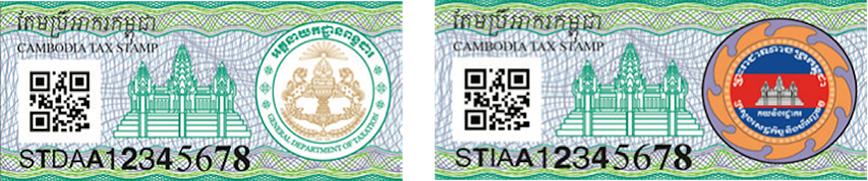
The Ministry of Economy and Finance said there were measures in place to prevent illegal products that evaded taxes. One measure involved, back in 2017, the upgrading of the country’s cigarette tax stamps. The current stamps carry security features consisting of visible and invisible fibres, guilloche design, watermark, invisible UV logo, and a tamper-evident die–cut pattern. They are serialised with a 13-digit sequential number and QR code, containing information on the manufacturing facility and intended market of retail sale.
However, in the absence of a clear policy and other effective measures for tackling illicit trade and closing the many loopholes that exist in the country, the government’s efforts will continue to remain ineffective.
In addition to these challenges within the country, Cambodia is responsible for proliferating illicit trade in other parts of the world. According to a European Commission report on EU customs enforcement of intellectual property rights in 2018, nearly half (49.39%) of confiscated counterfeit cigarettes entering the European Union emanated from Cambodia, making it the bloc’s main source of fake cigarettes, ahead of Georgia and China.
So the government still has a lot of work to do to reduce both the inflow of untaxed imported cigarettes into Cambodia and the outflow of counterfeit goods to the EU.
Subscriber content
Read the full article
Full access to Tax Stamp & Authentication News™ articles, newsletters and archives.